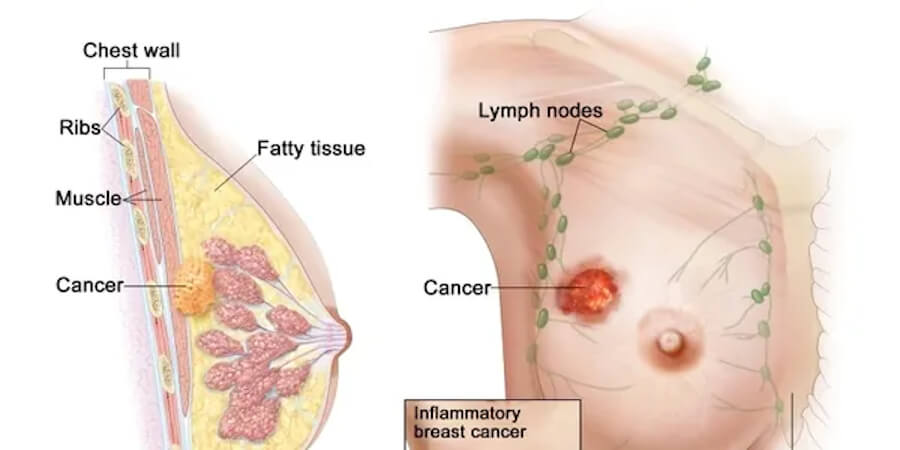
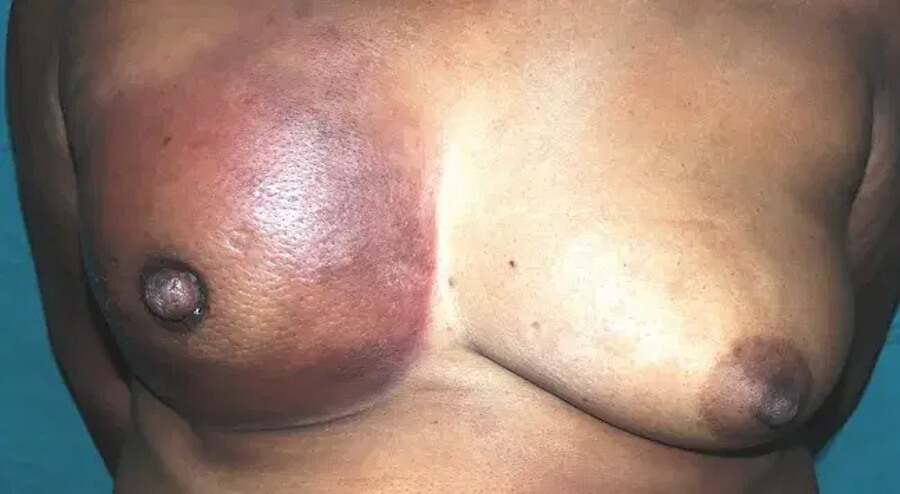
Inflammatory breast cancer (IBC) is a rare and highly aggressive form of breast cancer characterized by rapid onset of erythema, edema, and peau d’orange (orange-peel appearance) of the breast skin, typically without a palpable mass. It is a clinical-pathologic entity rather than a distinct histologic subtype, defined by the presence of tumor emboli within dermal lymphatics that obstruct lymphatic drainage and produce the inflammatory appearance. IBC accounts for approximately 1% to 5% of all breast cancers but disproportionately contributes to breast cancer mortality, responsible for an estimated 8–10% of breast cancer deaths. All cases of IBC are classified as at least Stage III at diagnosis, and the disease carries a historically poor prognosis, though modern trimodality therapy has substantially improved outcomes.
📋 ICD-10 Classification
Historically, IBC lacked dedicated diagnostic codes, creating barriers to accurate tracking and care coordination. Effective October 1, 2025, three specific ICD-10-CM codes were established under the parent category C50.A- (Malignant inflammatory neoplasm of breast):
-
C50.A0 — Malignant inflammatory neoplasm of unspecified breast
-
C50.A1 — Malignant inflammatory neoplasm of right breast
-
C50.A2 — Malignant inflammatory neoplasm of left breast
These codes represent a major advocacy achievement by organizations including Susan G. Komen and the IBC Network Foundation, enabling more accurate medical records, improved care coordination, and smoother insurance processes.
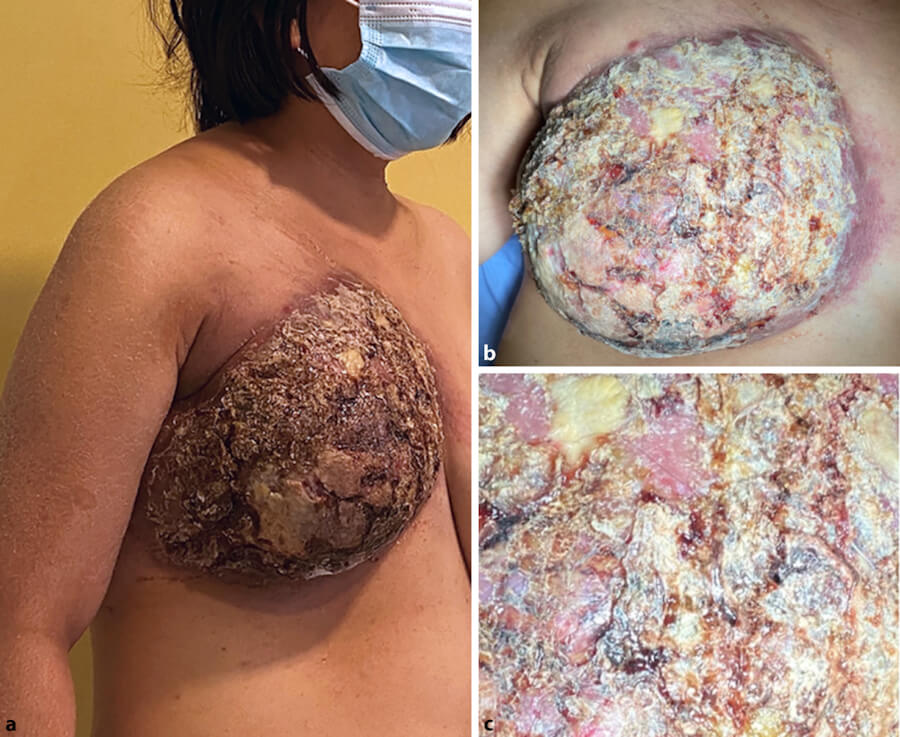
🧬 What Causes IBC?
The exact cause of IBC remains incompletely understood, and no IBC-specific genetic mutations have been identified. The disease is believed to arise from the rapid proliferation of aggressive breast cancer cells that invade the dermal lymphatic vessels of the breast skin, forming tumor emboli that obstruct lymphatic drainage and produce the characteristic inflammatory signs.
Risk factors for IBC generally overlap with those for other breast cancers, but certain associations are notably stronger or distinct:
-
Age: IBC tends to occur at a younger age than non-inflammatory breast cancer, with an average age at diagnosis of approximately 51 years (versus 57 for non-IBC).
-
Race and ethnicity: IBC is more prevalent among Black women compared to White women, and incidence appears to be increasing particularly among White patients.
-
Obesity and high BMI: Excess body weight is a modifiable risk factor.
-
Breastfeeding: Some studies have identified breastfeeding as a significant risk factor, though the relationship is complex.
-
Smoking: History of smoking has been associated with increased IBC risk.
-
Family history and genetic mutations: While no IBC-specific mutations exist, BRCA1, BRCA2, and other inherited mutations that increase overall breast cancer risk may also elevate IBC risk.
🛡️ How to Avoid and Prevent IBC
There is no proven way to completely prevent IBC, and the methods used for prevention are similar to those for other breast cancers. Risk-reducing strategies include:
-
Maintaining a healthy body weight, as obesity is a modifiable risk factor.
-
Avoiding smoking and limiting alcohol consumption.
-
Breastfeeding, which has complex associations with IBC risk and may be protective in some contexts.
-
For women with inherited high-risk mutations (e.g., BRCA1/BRCA2), risk-reducing mastectomy and enhanced surveillance may be considered, though these are not specific to IBC.
Given the aggressive nature of IBC and the absence of a precursor lesion that can be detected on routine screening, awareness of symptoms and prompt medical evaluation are the most critical strategies for reducing morbidity and mortality.
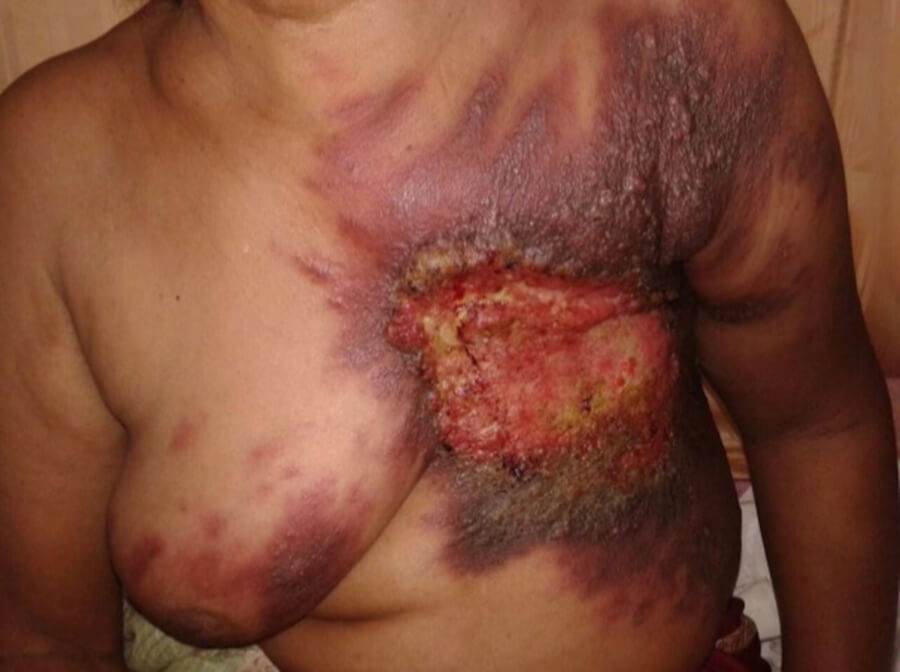
🔬 Types and Molecular Subtypes
IBC is not a distinct histologic type; most cases are invasive ductal carcinoma, though some are invasive lobular carcinoma. The disease is more meaningfully classified by molecular subtype, which guides treatment and influences prognosis:
-
HER2-positive: More common in IBC than in non-inflammatory breast cancer. HER2-targeted therapies (trastuzumab, pertuzumab) have significantly improved outcomes for this subtype.
-
Hormone receptor-positive (HR+)/HER2-negative: This subtype may have worse survival compared to HR+/HER2+ or HR−/HER2+ disease.
-
Triple-negative (HR−/HER2−): Associated with the worst survival outcomes among IBC subtypes, with a median progression-free survival of approximately 7.9 months in metastatic disease.
Some historical classifications have distinguished true IBC (primary or secondary inflammatory signs with pathologic confirmation) from pseudo-IBC (inflammatory signs without dermal lymphatic involvement), but modern practice emphasizes the clinical-pathologic definition.
🩺 Symptoms and Early Signs
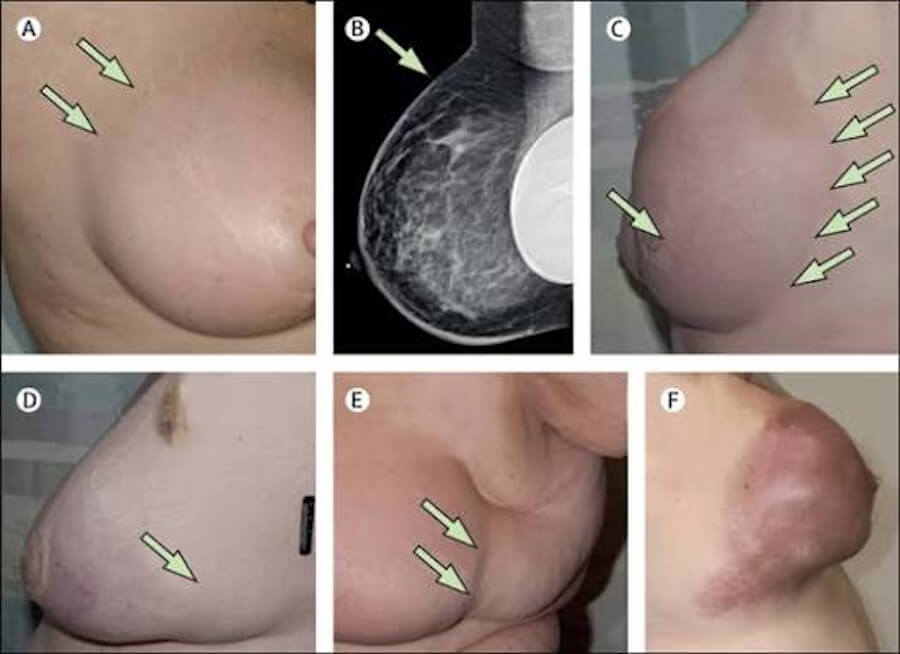
IBC rarely presents with a distinct breast lump; instead, symptoms are driven by lymphatic obstruction and develop rapidly—within weeks to months. The classic diagnostic criteria include:
-
Rapid onset (≤6 months) of breast erythema, edema, and/or peau d’orange
-
Erythema occupying at least one-third of the breast
-
Diffuse breast enlargement and warmth
-
Peau d’orange (thickened, dimpled skin resembling an orange peel)
Additional signs include nipple inversion or retraction, breast pain or tenderness, and a rash-like appearance that may be mistaken for cellulitis, mastitis, or dermatitis. Survivor accounts emphasize the suddenness of onset: one patient described symptoms appearing “literally overnight,” with redness, puffiness, and rapid enlargement of the breast. Because these symptoms overlap with benign inflammatory conditions, any non-lactational breast redness that does not resolve with antibiotics within 7 days warrants urgent evaluation.
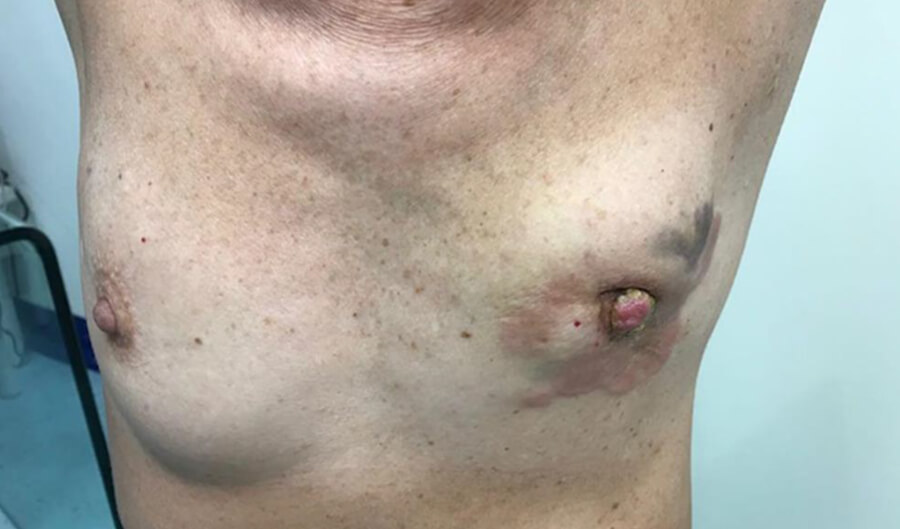
🖥️ Diagnosis: Imaging and Biopsy
The diagnosis of IBC is primarily clinical, based on the characteristic history and physical examination, and must be confirmed with tissue sampling.
Imaging serves to characterize the extent of disease and guide biopsy but is not sufficient alone for diagnosis. Mammography has a sensitivity of approximately 68% for IBC, and ultrasound is used to evaluate the breast and regional lymph nodes. Breast MRI demonstrates high sensitivity (up to 98–100%) and may be used in certain situations, though routine use is not universally recommended. Staging imaging—including CT scans of the chest, abdomen, and pelvis, bone scans, and PET-CT—is performed to assess for distant metastasis.
Tissue diagnosis requires a core needle biopsy of the breast to confirm invasive carcinoma, often combined with skin punch biopsies (at least two) to demonstrate dermal lymphatic tumor emboli. Biopsy specimens are tested for estrogen receptor (ER), progesterone receptor (PR), and HER2 status to guide systemic therapy.
💊 Treatment Types
The standard of care for non-metastatic IBC is trimodality therapy (TMT), consisting of neoadjuvant systemic therapy, followed by modified radical mastectomy (MRM), and then post-mastectomy radiation therapy (PMRT).
Neoadjuvant chemotherapy is the first step, aimed at shrinking the tumor and treating micrometastatic disease. For HER2-positive disease, trastuzumab and pertuzumab are incorporated into the neoadjuvant regimen. For hormone receptor-positive disease, adjuvant endocrine therapy is recommended after local therapy.
Surgery consists of modified radical mastectomy with axillary lymph node dissection (ALND). Breast-conserving surgery (lumpectomy) is not appropriate for IBC because the disease is diffuse and lacks a distinct lump. Immediate breast reconstruction is generally not recommended due to the need for post-mastectomy radiation and the risk of compromising oncologic outcomes.
Radiation therapy to the chest wall and regional lymph nodes (including internal mammary and supraclavicular basins) is a critical component of TMT, reducing the risk of locoregional recurrence.
Systemic therapy for metastatic (Stage IV) disease may include chemotherapy, hormone therapy, HER2-targeted therapy, immunotherapy, CDK4/6 inhibitors, and PARP inhibitors, depending on the molecular subtype.
📊 Stages and Metastasis
All inflammatory breast cancers are classified as at least Stage III at diagnosis because the disease involves the breast skin (classified as T4d in the TNM system).
-
Stage III (non-metastatic): The cancer has spread into the skin of the breast and may involve nearby lymph nodes or structures, but has not spread to distant organs.
-
Stage IV (metastatic): The cancer has spread beyond the breast and nearby lymph nodes to distant parts of the body, such as the bones, liver, lungs, or brain.
IBC has a high propensity for early distant metastasis. Up to 25% of patients present with metastatic disease at diagnosis, and 29.4% of patients in a large prospective registry developed metastasis during follow-up.
📈 Cure Rate, Survival Rate, and Life Expectancy
The prognosis for IBC has historically been poor, but modern trimodality therapy has improved outcomes. Survival estimates vary by stage and molecular subtype:
| Stage / Setting | 5-Year Relative Survival | Other Outcomes |
|---|---|---|
| Regional (Stage III) | 53% | 3-year OS ≈74%; 5-year OS ≈70% with optimal TMT |
| Distant (Stage IV) | 22% | Median OS 2.9–4.2 years; 3-year OS ≈29% |
| All stages combined | 40% | — |
| HER2+ (Stage III) | 5-year OS ≈80.5% | — |
| Triple-negative (metastatic) | Worst outcomes | Median PFS ≈7.9 months |
Without treatment, IBC is rapidly fatal, with historical 5-year survival rates of less than 5%. With modern guideline-concordant trimodality therapy, Stage III patients can achieve 5-year survival rates approaching 70%, and even Stage IV patients may achieve 5-year survival of up to 50% in contemporary series. Survival is strongly influenced by molecular subtype, response to neoadjuvant therapy (pathologic complete response rate ≈23.7%), and stage at diagnosis.
🕊️ Palliative Care
Given the aggressive nature of IBC and its potential for poor prognosis, palliative care is an essential component of comprehensive management, particularly for patients with metastatic or incurable disease. Palliative care focuses on symptom management, pain control, and quality of life.
Palliative radiotherapy is effective for relieving breast pain, bleeding, ulceration, and discharge in patients with incurable IBC. Hypofractionated radiotherapy regimens can safely and effectively provide symptom palliation. Palliative care teams affiliated with cancer centers can organize home nursing, social work, and end-of-life care, and should collaborate closely with the oncology team to optimize symptom management.
Patients and families should be engaged in shared decision-making about goals of care, and palliative care should be introduced early alongside disease-directed therapy when appropriate, rather than being reserved for end-of-life care alone.
❓ Five Questions and Answers
Basics, Definition, & Unique Biology
1. What is Inflammatory Breast Cancer (IBC)? IBC is a rare, aggressive form of breast cancer in which cancer cells block dermal lymphatic vessels in the breast skin, causing rapid redness, swelling, and peau d’orange without a typical lump.
2. How common is inflammatory breast cancer (accounts for ~1% to 5% of all breast cancers)? Approximately 1–5% of all breast cancers, but it contributes to 8–10% of breast cancer deaths.
3. Why is it called “inflammatory” breast cancer if it isn’t an infection? The name reflects the inflamed appearance of the breast; the redness is caused by tumor blockage of lymphatics, not by infection.
4. Does IBC actually involve cellular inflammation, or is the redness caused by blocked lymphatics? The “inflammation” is clinical, not true cellular inflammation; it results from tumor emboli obstructing dermal lymphatics.
5. What happens when breast cancer cells block the dermal lymphatic vessels in the skin? Lymphatic drainage is obstructed, leading to edema, erythema, and peau d’orange.
6. Is IBC considered a distinct clinical subtype or a histological subtype? IBC is a clinical-pathologic entity defined by clinical skin changes, not a distinct histologic subtype.
7. What primary histological type of breast cancer usually underlies IBC (most often invasive ductal carcinoma)? Most cases are invasive ductal carcinoma.
8. Can invasive lobular carcinoma present as inflammatory breast cancer? Yes, invasive lobular carcinoma can present with inflammatory features, though less commonly.
9. Is IBC a fast-growing cancer? Yes, IBC is one of the fastest-growing and most aggressive breast cancers.
10. How quickly does IBC develop and progress (often within days, weeks, or a few months)? Symptoms typically evolve rapidly, often within weeks to no more than 6 months.
11. Is IBC always classified as an advanced cancer at initial diagnosis (at least Stage III)? Yes, all non-metastatic IBC is at least Stage III (T4d).
12. Why is there no Stage I or Stage II in inflammatory breast cancer? Because skin involvement (T4d) automatically classifies the disease as Stage III or IV.
13. What defines “locally advanced” breast cancer in the context of IBC? Locally advanced IBC involves extensive skin changes and often regional lymph nodes without distant metastasis (Stage III).
14. What is the key diagnostic criteria for IBC regarding skin involvement (must cover at least 1/3 of the breast)? Erythema must involve at least one-third of the breast.
15. What is the time frame requirement for symptom onset in formal IBC diagnosis (symptoms must develop within 6 months)? Symptoms must develop within 6 months.
16. How does IBC differ from typical invasive ductal carcinoma (IDC)? IBC presents with diffuse skin changes and lacks a discrete mass, whereas IDC usually forms a lump.
17. Does IBC usually present as a solid, hard breast lump? No, IBC typically lacks a distinct lump.
18. Why is IBC famously known for NOT having a distinct lump? Because cancer spreads through skin lymphatics rather than forming a solid mass.
19. What is dermal lymphatic invasion (DLI)? Tumor emboli within dermal lymphatic vessels, the pathologic hallmark of IBC.
20. Does every case of IBC show tumor emboli in dermal lymphatics on skin biopsy? No; a negative skin biopsy does not exclude IBC if clinical criteria are met.
21. Can a skin biopsy be negative for tumor emboli and still be clinical IBC? Yes, clinical IBC can be diagnosed without biopsy-proven dermal lymphatic invasion.
22. What is E-cadherin overexpression in IBC tumor emboli? E-cadherin helps tumor cells adhere and form emboli that travel through lymphatics.
23. How do IBC tumor emboli use E-cadherin to stick together and travel through lymphatics without adhering to blood vessel walls? E-cadherin-mediated cohesion allows emboli to survive in circulation and lodge in lymphatics.
24. What is tumor hyper-angiogenesis and lymphangiogenesis in IBC? IBC promotes new blood and lymphatic vessel formation, supporting rapid growth and spread.
25. Is IBC considered a highly immunogenic or immunosuppressive tumor microenvironment? IBC has a complex microenvironment that can be immunosuppressive, but it also shows immune cell infiltration.
26. What molecular subtypes are most frequent in IBC (HER2-positive and Triple-Negative)? HER2-positive and triple-negative subtypes are overrepresented in IBC.
27. What percentage of IBC cases are HER2-positive (~35–40%)? Approximately 35–40%.
28. What percentage of IBC cases are Triple-Negative (TN-IBC) (~20–40%)? Approximately 20–40%.
29. What percentage of IBC cases are Hormone Receptor-positive (ER+/PR+) (~30–40%)? Approximately 30–40%.
30. Is hormone receptor-positive status less common in IBC than in non-inflammatory breast cancer? Yes, HR-positive disease is less common in IBC.
31. What is the average age of diagnosis for IBC (~52–59 years)? Average age is approximately 52–59 years.
32. Is IBC diagnosed at a younger average age than non-IBC breast cancer? Yes, IBC tends to occur at a younger age.
33. Can young women in their 20s or 30s develop IBC? Yes, IBC can occur in young women.
34. Can pregnant or lactating women develop IBC? Yes, and it is often mistaken for mastitis.
35. Why is IBC frequently missed during pregnancy or postpartum (often mistaken for mastitis or clogged ducts)? Symptoms overlap with benign lactation-related conditions.
36. Can men get inflammatory breast cancer? Yes, but it is extremely rare.
37. How rare is male IBC (<1% of male breast cancers)? Male IBC is exceedingly rare, likely <1% of male breast cancers.
38. Is IBC aggressive because of delayed diagnosis or distinct underlying biology? Both delayed diagnosis and aggressive biology contribute.
39. What genomic alterations are enriched in IBC (TP53, MYC, EGFR, FGFR, PIK3CA)? TP53 mutations, MYC amplification, and EGFR pathway alterations are common.
40. What is the role of NF-kB activation in driving inflammatory signaling in IBC? NF-κB drives expression of inflammatory cytokines and promotes tumor survival.
41. What cytokines drive the red, swollen appearance of the breast (IL-6, IL-8, TNF-alpha)? IL-6, IL-8, and TNF-α contribute to the inflammatory phenotype.
42. Is IBC linked to specific viral exposures (e.g., MMTV-like viruses – unproven)? No proven viral cause; MMTV-like sequences have been investigated but not confirmed.
43. What is the difference between primary IBC and secondary IBC? Primary IBC arises de novo; secondary IBC is skin recurrence after prior non-inflammatory breast cancer.
44. What is secondary IBC (recurrence of prior non-inflammatory cancer in the skin)? Inflammatory skin changes resulting from recurrent cancer in the chest wall skin.
45. Is secondary IBC treated the same way as primary IBC? Management is individualized; it often follows similar principles but depends on prior therapies.
46. Why does IBC have a higher rate of distant early metastasis than non-IBC? Rapid lymphatic and hematogenous dissemination occurs early.
47. What organs are most commonly affected by metastatic IBC (lungs, liver, bones, brain)? Lungs, liver, bones, and brain are common sites.
48. Why is lymph node involvement almost universally present at initial IBC diagnosis? Because tumor emboli readily enter regional lymphatics.
49. What regional lymph node groups are affected in IBC (axillary, internal mammary, supraclavicular)? Axillary, internal mammary, and supraclavicular nodes are commonly involved.
50. What is “peau d’orange” (orange peel skin) in IBC? Thickened, dimpled skin resembling an orange peel due to edema and hair follicle tethering.
51. What causes the dimpling and pitting of skin in peau d’orange (edema pulling down on skin pores attached to Cooper’s ligaments)? Edema fluid accumulates, and the skin pores are tethered by Cooper’s ligaments, creating pits.
52. Can IBC affect both breasts at the same time (bilateral IBC)? Yes, bilateral synchronous IBC can occur but is uncommon (<2–5%).
53. What is the incidence of synchronous bilateral IBC (<2–5%)? Less than 2–5%.
54. Is IBC more common in women with higher Body Mass Index (BMI / obesity)? Yes, obesity is associated with increased IBC risk.
55. Is IBC statistically more common in Black women? Yes, IBC incidence is higher among Black women.
56. Why do Black women experience higher rates of IBC and younger presentation? Multifactorial, including genetic, socioeconomic, and access-to-care factors.
57. What is the cell proliferation rate (Ki-67 score) in typical IBC (usually very high, >40–60%)? Ki-67 is typically very high, often >40–60%.
58. Is IBC considered a medical emergency? Yes, IBC requires urgent evaluation and initiation of treatment.
59. Why is urgent consultation required once IBC is suspected? Because the disease progresses rapidly; delay worsens outcomes.
60. What is the international consensus clinical definition of IBC (M.D. Anderson / consensus guidelines)? Rapid onset of erythema, edema, and/or peau d’orange involving ≥1/3 of the breast, often with a palpable mass, of ≤6 months’ duration.
61. What is the difference between IBC and locally advanced non-inflammatory breast cancer (LABC)? IBC is defined by diffuse inflammatory skin changes; LABC may include large tumors or nodal disease without diffuse skin involvement.
62. Can neglect of a neglected, neglected primary tumor cause skin redness that mimics IBC? Yes, a neglected tumor can cause skin changes that mimic IBC (pseudo-IBC).
63. How do doctors differentiate true primary IBC from a neglected non-IBC tumor invading skin? Clinical history, tempo of onset, and biopsy showing dermal lymphatic emboli favor true IBC.
64. Why is rapid skin redness (onset <6 months) the key distinction from chronic neglected tumors? Rapid onset is characteristic of IBC; neglected tumors typically evolve slowly.
65. What is the role of cancer stem cells (CSCs) in IBC resistance to standard therapies? CSCs may contribute to drug resistance and recurrence.
66. Why do IBC tumor emboli survive so well in lymph and blood circulation? They resist anoikis and evade immune detection.
67. What is the role of macrophage infiltration in the IBC tumor microenvironment? Tumor-associated macrophages promote invasion and immunosuppression.
68. What is the difference between inflammatory breast cancer and inflammatory skin conditions? IBC is cancer; inflammatory skin conditions are benign and respond to standard dermatologic therapy.
69. Why does IBC frequently get misdiagnosed as cellulitis or mastitis? Overlapping signs of redness, warmth, and swelling.
70. How many weeks of ineffective antibiotic treatment often pass before IBC is suspected (typically 2 to 6+ weeks)? Often 2–6 weeks or more of failed antibiotics before biopsy.
71. Why is diagnostic delay the single biggest hazard for IBC outcomes? Delay allows rapid disease progression and metastasis.
72. Does IBC cause systemic fever or elevated white blood cell counts in early stages? Usually not; absence of fever and normal WBC count are clues against simple infection.
73. Why does normal blood work make doctors misjudge IBC as a minor infection early on? Lack of systemic inflammatory markers falsely reassures clinicians.
74. What is the historical origin of the name “inflammatory breast cancer” (coined by Sir Charles Bell in 1821)? The term was introduced by Sir Charles Bell to describe the inflamed appearance.
75. Is IBC getting more common, or are detection methods improving? Incidence appears stable or slightly declining; improved awareness may affect detection.
76. What is the global incidence rate of IBC? Approximately 3 per 100,000 in the US.
77. Are there geographic clusters of higher IBC incidence (e.g., North Africa, Egypt)? Yes, higher rates are reported in parts of North Africa.
78. What is the difference between epidemic / endemic North African IBC and Western IBC? North African IBC may present at younger ages and with more aggressive features.
79. How does tumor-stromal interaction differ in IBC compared to standard invasive ductal cancer? IBC shows prominent lymphovascular invasion and a distinct stromal microenvironment.
80. What role does COX-2 expression play in inflammatory breast cancer biology? COX-2 promotes inflammation and angiogenesis.
81. What is the role of RhoC GTPase overexpression in IBC cell motility and invasion? RhoC enhances cell motility and invasive capacity.
82. What is the role of WNT/beta-catenin signaling in IBC? WNT/β-catenin signaling contributes to tumor progression.
83. Does IBC show higher rates of lymphovascular invasion (LVI) than any other breast cancer? Yes, LVI is a hallmark of IBC.
84. Can IBC be diagnosed in women who have had previous breast reduction or augmentation surgery? Yes, though prior surgery may alter presentation.
85. Does breast implant rupture cause IBC? No; implant rupture does not cause IBC.
86. Can IBC develop in remaining chest wall tissue after a prior lumpectomy or mastectomy? Yes, local recurrence can present with inflammatory changes.
87. What is the role of circulating tumor cells (CTCs) and tumor clusters in IBC metastasis? CTC clusters have high metastatic seeding capacity.
88. Why do CTC clusters in IBC have a much higher metastatic seeding capacity than single CTCs? Clusters are more resistant to anoikis and immune attack.
89. Is there a specific genetic biomarker unique to IBC? No single IBC-specific biomarker exists.
90. Why is IBC diagnosed by clinical presentation + biopsy, rather than a single molecular marker? Diagnosis relies on clinicopathologic criteria; no unique molecular marker is available.
91. How does the American Joint Committee on Cancer (AJCC) classify IBC (T4d designation)? IBC is classified as T4d.
92. What does T4d mean in AJCC TNM staging (inflammatory carcinoma)? Inflammatory carcinoma with diffuse skin involvement.
93. What is the minimum stage for T4d disease (Stage IIIB, IIIC, or IV)? At least Stage IIIB; Stage IV if metastatic.
94. Can IBC ever present as T1, T2, or T3 (no, by definition all IBC is T4d)? No; by definition, all IBC is T4d.
95. What multidisciplinary team is needed to treat IBC (surgical, medical, radiation oncologists, radiologist, pathologist)? A multidisciplinary team including medical, surgical, and radiation oncology, radiology, and pathology.
96. Why should IBC patients be treated at high-volume specialized comprehensive cancer centers? Specialized centers have greater expertise and better outcomes.
97. What specialized IBC clinics exist in the United States (e.g., MD Anderson, Dana-Farber, Morgan Welch IBC Program)? MD Anderson’s Morgan Welch IBC Clinic, Dana-Farber, Memorial Sloan Kettering, and others.
98. What basic guidelines govern IBC care (NCCN Guidelines)? NCCN Guidelines recommend trimodality therapy.
99. Where can patients find verified scientific explanations of IBC biology? NCCN, American Cancer Society, NCI, and the IBC Network Foundation.
100. What is the single most important biological fact to understand about IBC (it spreads through skin lymphatics, not as a single discrete lump)? IBC spreads through dermal lymphatics, causing diffuse skin changes rather than a discrete lump.
Signs, Symptoms, & Visual Changes
101. What are the early symptoms of inflammatory breast cancer? Rapid onset of breast redness, swelling, warmth, and peau d’orange.
102. What does inflammatory breast cancer look like? A red, swollen, warm breast with skin dimpling resembling an orange peel.
103. What color is the skin discoloration in IBC (pink, red, purple, dark red, or bruised appearance)? Often pink, red, or purplish, sometimes bruise-like.
104. Does the skin redness in IBC look like a sunburn or a rash? Yes, it can resemble sunburn or a rash.
105. How much of the breast must be red to meet IBC diagnostic criteria (at least one-third)? At least one-third of the breast.
106. Can IBC start as a tiny red mark that looks like an insect bite or hive? Yes, it can start subtly and rapidly spread.
107. How fast does the redness spread across the breast? Rapidly, often over days to weeks.
108. Does the redness in IBC feel warm or hot to the touch? Yes, the breast often feels warm.
109. What is breast swelling (edema) in IBC? Diffuse fluid accumulation causing breast enlargement.
110. Does one breast suddenly become much larger than the other in IBC? Yes, rapid unilateral enlargement is common.
111. How fast can breast size increase in IBC (doubling in size over days or weeks)? Rapidly, sometimes within days to weeks.
112. Does the affected breast feel unusually heavy, firm, or dense? Yes, due to edema and tumor infiltration.
113. What does “peau d’orange” look and feel like on the breast? Thickened, dimpled skin with exaggerated pores, like an orange peel.
114. Why does the skin look pitted, dimpled, or like an orange peel? Edema and tethering of skin pores by Cooper’s ligaments.
115. What happens to the skin pores in the affected area (pores become exaggerated and indented)? Pores become prominent and indented.
116. What nipple changes occur with inflammatory breast cancer? Nipple flattening, inversion, or retraction can occur.
117. Can IBC cause the nipple to become flattened or inverted (retracted)? Yes.
118. Can IBC cause nipple discharge? Yes, though less common than skin changes.
119. What skin texture changes happen in IBC (thickening, ridges, welts)? Skin thickening, ridging, and welts can occur.
120. Does IBC cause breast pain or tenderness? Yes, pain and tenderness are common.
121. What kind of pain does IBC cause (aching, sharp, burning, or throbbing sensation)? Aching, burning, or throbbing pain.
122. Can IBC present without any pain at all? Yes, some patients have no pain.
123. Does IBC cause breast itching (pruritus)? Yes, itching can occur.
124. Why does IBC cause persistent, severe itching in the breast or nipple? Skin edema and inflammation can irritate nerve endings.
125. Can IBC cause swollen lymph nodes under the arm (axilla)? Yes, axillary lymphadenopathy is common.
126. Can IBC cause swollen lymph nodes above or below the collarbone (supraclavicular/infraclavicular)? Yes, supraclavicular and infraclavicular nodes may be involved.
127. What does a swollen underarm lymph node feel like in IBC (hard, fixed, or tender mass)? Hard, fixed, or tender mass.
128. Is there usually a palpable lump inside the breast tissue in IBC? No, a discrete lump is often absent.
129. What percentage of IBC patients have no distinct lump on physical exam (~50–60%)? Approximately 50–60%.
130. If a lump IS present in IBC, what does it feel like (ill-defined, thick, or diffuse area)? Ill-defined, thick, or diffuse induration.
131. Can IBC cause skin bruising or purple discoloration without trauma? Yes, bruise-like discoloration can occur.
132. Can IBC cause open sores, skin ulceration, or nodules on the breast skin? Yes, in advanced disease.
133. What are satellite skin nodules in advanced IBC? Small tumor nodules in the skin surrounding the primary area.
134. Can IBC cause changes in the color or appearance of the areola? Yes, the areola may become red, swollen, or retracted.
135. Does IBC cause the breast to feel abnormally rigid or fixed to the chest wall? Yes, the breast may feel fixed.
136. Can IBC symptoms appear in a woman who is breastfeeding? Yes, and they are often mistaken for mastitis.
137. How do IBC symptoms differ from a clogged milk duct? A clogged duct usually resolves with massage/feeding; IBC does not and progresses.
138. How do IBC symptoms differ from mastitis (breast infection)? Mastitis responds to antibiotics within 7–10 days and often has fever; IBC does not.
139. What is the key difference between mastitis and IBC (mastitis usually causes systemic fever/chills and responds to antibiotics within 7–10 days; IBC does neither)? Lack of fever and failure to respond to antibiotics point to IBC.
140. How do IBC symptoms differ from duct ectasia or breast abscess? Abscess usually has a focal fluid collection; IBC is diffuse.
141. How do IBC symptoms differ from Paget’s disease of the nipple? Paget’s affects the nipple-areola with eczema-like changes; IBC affects the whole breast skin.
142. Can Paget’s disease co-exist with inflammatory breast cancer? Yes, but they are distinct entities.
143. How do IBC symptoms differ from dermatitis or eczema of the breast skin? Dermatitis usually responds to steroids; IBC does not.
144. How do IBC symptoms differ from an insect bite or cellulitis on the chest? Cellulitis responds to antibiotics; IBC does not.
145. What happens if you take antibiotics for suspected mastitis and the symptoms do NOT improve? Urgent biopsy is required.
146. How many days of non-responding antibiotics should prompt an immediate biopsy for IBC (no more than 7–10 days)? No more than 7–10 days.
147. Can skin discoloration in dark skin tones look purple, brownish, or hyperpigmented rather than red? Yes, erythema may appear darker or purplish in darker skin.
148. Why is IBC skin redness sometimes missed or delayed in women with dark skin tones? Subtle color changes may be overlooked.
149. Can IBC cause arm swelling (lymphedema) on the affected side prior to treatment? Yes, if axillary lymphatics are blocked.
150. Why does arm swelling occur in untreated IBC (blocked axillary lymphatic drainage)? Tumor obstruction of axillary lymphatics.
151. Can IBC cause neck swelling or tightness? Yes, if supraclavicular nodes are involved.
152. Does IBC cause localized warmth without fever? Yes, warmth without systemic fever is typical.
153. Why does the affected breast feel noticeably warmer than the opposite healthy breast? Increased blood flow and inflammation-like changes.
154. Can IBC cause a feeling of intense pressure or tightness in the chest? Yes, due to swelling and skin tension.
155. Can IBC symptoms start suddenly overnight? Yes, rapid onset is characteristic.
156. How long do symptoms typically persist before a patient sees a doctor (often weeks to 2 months)? Often weeks to a few months.
157. Can IBC cause skin ridges or a web-like pattern on the breast? Yes, skin thickening and ridging can occur.
158. What does “erythema” mean on a clinical breast exam report? Redness of the skin.
159. What does “edema” mean on a clinical exam report? Swelling due to fluid accumulation.
160. What physical changes signal that IBC may have spread to distant body sites? Bone pain, cough, abdominal pain, headaches, weight loss.
161. What symptoms indicate IBC has spread to the lungs (shortness of breath, persistent dry cough, chest pain)? Shortness of breath, cough, chest pain.
162. What symptoms indicate IBC has spread to the bones (deep, aching bone pain, severe back or hip pain)? Persistent bone pain, especially back or hip.
163. What symptoms indicate IBC has spread to the liver (jaundice, right upper belly pain, severe nausea)? Jaundice, right upper quadrant pain, nausea.
164. What symptoms indicate IBC has spread to the brain (persistent headaches, vision changes, confusion, weakness)? Headaches, vision changes, neurological deficits.
165. Can unexplained weight loss or severe fatigue be an early sign of metastatic IBC? Yes.
166. Can IBC cause skin changes that extend beyond the breast onto the chest wall, neck, or back? Yes, in advanced disease.
167. What is “carcinoma en cuirasse” in advanced cutaneous breast cancer spread? Extensive induration and thickening of the skin (“armor-like”) due to tumor infiltration.
168. Does IBC cause bleeding from the skin? Yes, ulcerated lesions can bleed.
169. Can IBC cause localized hives, welts, or rash-like raised bumps? Yes, skin changes can mimic hives.
170. Why is self-examination often unreliable for catching early IBC (because there is no lump to feel)? Because IBC often lacks a palpable lump.
171. What visual signs during a mirror check should raise immediate concern? New redness, swelling, peau d’orange, or nipple changes.
172. Can bra cup size changes on one side be a sign of swelling from IBC? Yes.
173. What physical signs indicate that treatment for IBC is working (fading redness, shrinking breast size, softening skin)? Decreasing erythema, swelling, and skin induration.
174. Can skin changes in IBC temporarily fluctuate or appear slightly lighter/darker day to day? Yes, but they do not resolve.
175. Why does visual fluctuation cause patients to falsely hope the condition is improving? Temporary changes can be misleading.
176. Can IBC develop in women who have had a prior reduction mammoplasty? Yes, though prior surgery may alter presentation.
177. Can IBC present as skin changes over a breast implant? Yes, but implants do not cause IBC.
178. What red flag symptoms require an emergency or urgent same-week diagnostic appointment? Rapidly spreading redness, swelling, peau d’orange, or a new mass.
179. What questions will a physician ask during a clinical breast exam for suspected IBC? Onset, duration, progression, response to antibiotics, and associated symptoms.
180. How do doctors document the percentage of breast skin involved (e.g., photography, clinical diagrams)? Clinical photographs and diagrams.
181. Can an IBC rash spread across the midline of the chest to the other breast? Yes, in advanced disease.
182. Does IBC cause nipple scaling or crusting similar to eczema? Yes, especially if Paget’s disease coexists.
183. Can IBC cause a feeling of localized tenderness when wearing a bra or clothing? Yes, skin sensitivity is common.
184. Why does clothing contact irritate the skin in IBC? Skin edema and inflammation increase sensitivity.
185. Can IBC present during or right after pregnancy? Yes, and it is often mistaken for mastitis.
186. Why are pregnancy-associated breast changes so dangerous when masking IBC symptoms? They delay recognition and diagnosis.
187. How do physical symptoms of triple-negative IBC differ from HER2-positive IBC? Symptoms are similar, but TN-IBC may be more aggressive.
188. Is skin redness more intense in certain molecular subtypes? No consistent difference; redness reflects lymphatic obstruction.
189. What physical signs indicate local recurrence after prior treatment for IBC? New skin redness or nodules along the scar.
190. Can IBC recur as red skin spots along a surgical mastectomy scar? Yes.
191. What should a survivor do if they notice new skin redness near a mastectomy scar? Seek immediate evaluation.
192. How quickly can a local IBC recurrence spread across the chest wall? Rapidly, over weeks.
193. Can IBC cause localized nerve pain or tingling in the chest? Yes, due to nerve involvement.
194. What physical exam maneuvers does a specialist perform (palpation of all regional node basins, skin assessment)? Comprehensive palpation of breast, axilla, supraclavicular, and infraclavicular areas.
195. Why is a photo record of breast skin changes crucial for tracking progression before biopsy? It provides objective baseline documentation.
196. How do doctors distinguish radiation dermatitis from recurring IBC skin changes? Timing, distribution, and biopsy if needed.
197. What warning signs should prompt a second opinion if a doctor prescribes a second round of antibiotics? Lack of response after 7–10 days should prompt biopsy, not more antibiotics.
198. What is the single most critical message regarding IBC symptoms? Redness, swelling, or orange-peel skin that does not clear with antibiotics is cancer until proven otherwise.
199. Redness, swelling, or orange-peel skin that does not clear with antibiotics is cancer until proven otherwise. Correct.
200. Where can patients find certified visual photo guides illustrating IBC symptoms? The IBC Network Foundation and American Cancer Society websites.
Causes, Risk Factors, & Misdiagnoses
201. What causes inflammatory breast cancer? The exact cause is unknown; it involves aggressive tumor biology with dermal lymphatic invasion.
202. What genetic or cellular mutations initiate IBC development? TP53, MYC, and EGFR pathway alterations are common.
203. Is IBC caused by a specific virus or bacterial infection? No proven infectious cause.
204. Is IBC caused by injury, trauma, or a blow to the breast? No; trauma does not cause IBC.
205. Is IBC caused by wearing underwire bras or tight clothing? No; bras do not cause breast cancer.
206. Is IBC caused by using aluminum antiperspirants or deodorants? No; no causal link.
207. Is IBC caused by breast implants or implant rupture? No.
208. What are the primary risk factors for developing inflammatory breast cancer? Young age, Black race, obesity, and possibly breastfeeding history.
209. How does age impact IBC risk (more common in younger women, average age 52–59)? IBC occurs at a younger average age than non-IBC.
210. How does race or ethnicity impact IBC risk? Higher incidence among Black women.
211. Why do Black women have a statistically higher risk of developing IBC? Multifactorial, including genetic and access-to-care factors.
212. How does body weight / obesity affect IBC risk? Obesity is associated with increased risk.
213. Why does high BMI correlate with increased risk of IBC? Obesity-related hormonal and inflammatory factors.
214. Does age at first pregnancy affect IBC risk (younger age at first pregnancy carries slightly higher statistical risk)? Some studies suggest younger age at first birth may be associated with higher risk.
215. Does breastfeeding impact IBC risk (breastfeeding lowers risk, similar to other breast cancers)? Breastfeeding is generally associated with lower breast cancer risk.
216. Is inflammatory breast cancer hereditary? Most cases are not hereditary.
217. Do BRCA1 or BRCA2 gene mutations increase the risk of IBC? BRCA mutations increase overall breast cancer risk, including IBC.
218. What percentage of IBC cases are linked to inherited BRCA mutations? A small minority, similar to other breast cancers.
219. Is there a specific “IBC gene” that can be tested for? No IBC-specific gene exists.
220. Do PALB2, CHEK2, or TP53 gene mutations increase IBC risk? TP53 mutations in particular may increase risk.
221. If a mother had IBC, does her daughter have a higher risk of getting IBC specifically? Family history increases overall breast cancer risk, but IBC-specific risk is not well defined.
222. How does family history of general breast cancer affect IBC risk? It increases overall risk.
223. Does hormone replacement therapy (HRT) raise the risk of developing IBC? HRT may increase breast cancer risk generally; IBC-specific data are limited.
224. Do oral contraceptives (birth control pills) raise IBC risk? No consistent strong link.
225. Does dense breast tissue increase IBC risk? Density increases breast cancer risk generally.
226. How does dense breast tissue complicate the detection of underlying tumors in IBC? It can mask masses on mammography.
227. Does alcohol consumption raise the risk of IBC? Alcohol increases overall breast cancer risk.
228. Does cigarette smoking increase the risk of developing IBC? Smoking is associated with higher breast cancer risk.
229. Does prior chest radiation therapy (e.g., for Hodgkin lymphoma) raise IBC risk? Yes, prior chest radiation increases breast cancer risk.
230. Can environmental toxins, heavy metals, or chemical exposures cause IBC? No proven causal link.
231. Does diet play a direct role in causing or preventing IBC? Diet influences risk indirectly through weight and metabolism.
232. Why is misdiagnosis so common in inflammatory breast cancer? Symptoms mimic benign infections.
233. What percentage of IBC patients are initially misdiagnosed with a benign condition (~50–70%)? A large proportion are initially misdiagnosed.
234. What is the most common misdiagnosis for IBC (Mastitis / bacterial breast infection)? Mastitis.
235. What is Mastitis, and why do its symptoms mirror IBC so closely (both cause redness, swelling, heat, pain)? Mastitis is a breast infection with overlapping signs.
236. Why do primary care doctors and gynecologists frequently prescribe antibiotics first? Because infection is far more common.
237. Is prescribing 1 week of antibiotics reasonable when breast redness and swelling appear? It is reasonable initially, but lack of response mandates biopsy.
238. Why is prescribing a SECOND or THIRD course of antibiotics dangerous when symptoms persist? It delays cancer diagnosis and allows progression.
239. What other benign conditions are mistaken for IBC (cellulitis, breast abscess, duct ectasia, dermatitis, spider bite)? Cellulitis, abscess, dermatitis, and insect bites.
240. Why is IBC sometimes misdiagnosed as severe eczema or contact dermatitis of the breast? Skin changes can resemble dermatitis.
241. Why is IBC in lactating women almost universally assumed to be a clogged duct or mastitis initially? Lactation makes benign conditions more likely.
242. How does diagnostic delay due to misdiagnosis affect patient survival? Delay worsens outcomes.
243. What is the average time delay between first symptom onset and correct IBC diagnosis (often 1 to 4+ months)? Often 1–4 months or longer.
244. How far can IBC progress during a 2-month diagnostic delay? Significant local progression and possible metastasis.
245. Why is patient self-advocacy crucial when breast redness does not clear up? It prompts timely biopsy.
246. What should you say to your doctor if antibiotics fail to clear breast redness? “I want to be evaluated for inflammatory breast cancer, including a skin punch biopsy.”
247. “I want to be evaluated for inflammatory breast cancer, including a skin punch biopsy”. Correct.
248. Why do standard screening mammograms frequently fail to diagnose early IBC? Diffuse edema obscures masses.
249. Why is a normal screening mammogram result dangerously reassuring in suspected IBC? It can falsely reassure and delay diagnosis.
250. How does diffuse edema hide calcifications or masses on mammography? Increased water content obscures detail.
251. Can a prior history of benign breast disease (fibroadenomas, cysts) raise IBC risk? No specific link to IBC.
252. Does Atypical Ductal Hyperplasia (ADH) or LCIS increase IBC risk? They increase general breast cancer risk.
253. Are women who had previous non-inflammatory breast cancer at higher risk for secondary IBC? Yes, prior breast cancer increases risk of recurrence, including inflammatory recurrence.
254. Does night shift work or circadian disruption raise IBC risk? Associated with modestly higher breast cancer risk generally.
255. Does chronic mental stress cause inflammatory breast cancer? No direct causal link.
256. Does Type 2 Diabetes or insulin resistance raise IBC risk? Associated with higher breast cancer risk.
257. Does high bone mineral density correlate with IBC risk? No specific link.
258. Can fertility treatments or IVF cause IBC? No proven link.
259. Does diethylstilbestrol (DES) exposure raise IBC risk? DES exposure is associated with higher breast cancer risk.
260. Are there modifiable vs non-modifiable risk factors for IBC? Modifiable: weight, alcohol; non-modifiable: age, race, genetics.
261. Can lifestyle modifications (weight loss, exercise) reduce IBC risk? They reduce overall breast cancer risk.
262. Can IBC be prevented completely? No; risk reduction is partial.
263. Why are there no specific screening guidelines tailored to preventing IBC? Because IBC is rare and lacks a detectable precursor.
264. Why is general population screening ineffective for catching IBC early (because it develops rapidly between annual mammograms)? Rapid growth means it can arise between screenings.
265. What role does public health education play in reducing IBC diagnostic delays? Awareness of symptoms prompts earlier presentation.
266. How are medical residency programs working to improve primary care recognition of IBC? Education on red flags and biopsy thresholds.
267. What misdiagnosis red flags should emergency room and urgent care staff be trained on? Failure of antibiotics, lack of fever, peau d’orange.
268. Why is an urgent care clinic visit for a “red, swollen breast” a critical opportunity for IBC screening? It is a common first point of contact.
269. What steps should a patient take if their doctor dismisses their concerns about IBC? Seek a second opinion from a breast specialist.
270. How do you get an immediate second opinion from a specialized breast surgeon? Through referral or self-referral to a high-risk clinic.
271. Does having a negative blood infection marker (like low CRP or normal WBC) rule out mastitis? No, mastitis can occur with normal markers.
272. Why can mastitis exist with normal blood work, complicating the distinction from IBC? Because infection may be localized without systemic markers.
273. Does a lack of fever prove that a swollen breast is NOT mastitis? No, mastitis can occur without fever.
274. Can a true bacterial infection co-exist alongside an underlying IBC tumor? Yes, superinfection can occur.
275. Why can initial partial response to antibiotics occur even when IBC is present (due to temporary reduction of secondary surface infection)? Antibiotics may treat a secondary infection, giving false reassurance.
276. Why does temporary partial improvement on antibiotics dangerously delay IBC diagnosis? It mimics response and postpones biopsy.
277. What role does patient age play in doctor bias against considering cancer (assuming young women only have infections)? Young age can lead to anchoring bias toward benign causes.
278. Why must doctors remember that IBC commonly strikes young premenopausal women? Because it does, and age should not exclude the diagnosis.
279. Can male breast infections be confused with male IBC? Yes, similar presentation.
280. What genetic testing panel should be ordered if an IBC patient has a strong family history? BRCA1/2 and other high-penetrance genes.
281. Does finding a BRCA mutation change the active treatment plan for IBC? It may influence surgical decisions and PARP inhibitor eligibility.
282. How does genetic status influence surgical decision-making regarding the opposite healthy breast? BRCA carriers may consider contralateral prophylactic mastectomy.
283. What environmental carcinogen studies are currently investigating IBC risk? Ongoing research into endocrine disruptors and other exposures.
284. Is there an association between chemical hair relaxers or straighteners and IBC risk? Some studies suggest an association, but causality is unproven.
285. Does gut microbiome diversity impact IBC risk or immune response? Emerging research area; not yet clinically actionable.
286. What is a Polygenic Risk Score (PRS) and does it apply to IBC? PRS is not specifically validated for IBC.
287. Why is research into IBC risk factors historically lagging behind non-inflammatory breast cancer? Because IBC is rare and understudied.
288. How are international IBC registries working to gather data on global causes? They collect clinical and biological data to advance understanding.
289. What key risk factor questions should you ask your medical team? Family history, genetic testing, and lifestyle factors.
290. Can risk-reducing medications (Tamoxifen, Anastrozole) prevent IBC in high-risk women? They reduce ER-positive breast cancer risk generally.
291. What is the consensus on prophylactic mastectomy for preventing IBC in BRCA carriers? Risk-reducing mastectomy is considered in BRCA carriers.
292. Can IBC develop after a prophylactic mastectomy (extremely rare, but possible in residual skin/chest wall)? Yes, but the risk is very low.
293. What summary points distinguish mastitis from IBC? Mastitis: responds to antibiotics in 7–10 days, often fever. IBC: does not respond, rare fever, peau d’orange.
294. Mastitis: responds to antibiotics in 7–10 days, often has fever/chills, occurs mostly during lactation. IBC: does NOT respond to antibiotics, rarely has fever, occurs at any age, skin shows orange-peel pitting. Correct.
295. What is the single most urgent message regarding suspected breast infections? If a breast infection does not clear completely after one short course of antibiotics, demand a biopsy immediately.
296. If a breast infection does not clear completely after one short course of antibiotics, demand a biopsy immediately. Correct.
297. What medical specialties manage the diagnostic workup for misdiagnosed breast cases? Breast surgery, oncology, radiology, and pathology.
298. Where can patients find advocacy tools to present to reluctant doctors? IBC Network Foundation and patient advocacy organizations.
299. What official medical resources document IBC diagnostic criteria? NCCN Guidelines and WHO classification.
300. What is the key takeaway regarding IBC causes and misdiagnosis? IBC has no single cause, but prompt recognition of antibiotic-unresponsive breast inflammation is critical.
Diagnosis, Biopsy, & Diagnostic Tests
301. How is inflammatory breast cancer diagnosed? Clinical presentation plus tissue biopsy (skin and/or breast core).
302. Why is IBC a clinical-pathological diagnosis? It requires both characteristic clinical findings and pathologic confirmation of invasive cancer.
303. What does “clinical-pathological diagnosis” mean (requires BOTH clinical symptoms AND biopsy proof of invasive cancer)? Diagnosis is based on clinical signs plus biopsy evidence.
304. What is the first diagnostic step when IBC is suspected? Thorough clinical breast examination and urgent biopsy.
305. What happens during a thorough clinical breast exam for suspected IBC? Assessment of skin changes, extent of erythema, palpation of breast and regional nodes.
306. What imaging tests are ordered for suspected IBC (diagnostic mammogram, breast ultrasound, breast MRI)? Diagnostic mammogram, ultrasound, and often MRI.
307. What does IBC look like on a Diagnostic Mammogram? Diffuse skin thickening, increased density, and trabecular thickening.
308. What key features does a mammogram show in IBC (diffuse skin thickening, increased breast density, trabecular thickening, microcalcifications)? These features are common.
309. Why can a mammogram fail to show a clear tumor mass in IBC? Because the cancer is diffuse and infiltrative.
310. What does IBC look like on a Breast Ultrasound? Diffuse edema, skin thickening, and possible underlying mass or lymphadenopathy.
311. How does ultrasound help locate underlying parenchymal masses or fluid collections? It can identify a dominant mass or abscess.
312. How does ultrasound evaluate axillary, infraclavicular, and internal mammary lymph nodes? It assesses nodal size, shape, and cortex.
313. What is a suspicious lymph node on ultrasound (thickened cortex, loss of fatty hilum, rounded shape)? These features suggest metastasis.
314. What does IBC look like on a Breast MRI (Magnetic Resonance Imaging)? Non-mass enhancement, skin thickening, and edema.
315. Why is Contrast-Enhanced Breast MRI the most sensitive imaging modality for IBC? It detects diffuse infiltrative disease and skin involvement.
316. How does MRI reveal diffusely infiltrating tumor networks, skin thickening, and chest wall involvement? High soft-tissue contrast.
317. What biopsy procedures are required to confirm an IBC diagnosis? Skin punch biopsy and core needle biopsy of the breast.
318. What is a Skin Punch Biopsy? Removal of a small cylinder of skin for histologic examination.
319. How is a skin punch biopsy performed on the breast skin (using a small 2–4 mm circular tool under local numbing gel)? A small circular tool obtains a skin core after local anesthesia.
320. Where on the breast is the skin punch biopsy taken (from the area of thickest redness or orange-peel pitting)? From the most affected area.
321. Is a skin punch biopsy painful? Local anesthesia minimizes pain; mild discomfort afterward.
322. What does the pathologist look for in a skin punch biopsy specimen (tumor emboli blocking dermal lymphatic vessels)? Dermal lymphatic tumor emboli.
323. What happens if the skin punch biopsy does NOT show tumor emboli in dermal lymphatics? IBC can still be diagnosed clinically if core biopsy shows invasive cancer.
324. Can you still have IBC if the skin biopsy is negative for tumor emboli (YES, if clinical signs are present and parenchymal core biopsy shows invasive cancer)? Yes.
325. What is a Core Needle Biopsy (CNB) of the underlying breast tissue? A procedure to obtain tissue cores for histology and biomarkers.
326. Why is a core needle biopsy performed alongside a skin punch biopsy (to collect enough tissue for diagnosis and biomarker testing)? To confirm invasive cancer and assess ER/PR/HER2.
327. What is a Fine Needle Aspiration (FNA) or core biopsy of suspicious axillary lymph nodes? Sampling of lymph nodes to confirm nodal involvement.
328. Why is confirming lymph node involvement critical during the diagnostic workup? It determines stage and prognosis.
329. How long does it take to get pathology results back after an IBC biopsy (typically 3 to 7 days)? Usually within a week.
330. What key biomarker tests are run on the IBC biopsy sample (ER, PR, HER2, Ki-67)? ER, PR, HER2, and Ki-67.
331. What is Estrogen Receptor (ER) and Progesterone Receptor (PR) status testing? Immunohistochemistry to determine hormone responsiveness.
332. How is HER2 status evaluated (Immunohistochemistry / IHC and FISH testing)? IHC and FISH.
333. What does HER2-positive status mean in IBC (tumor overexpresses HER2 protein, making it eligible for HER2-targeted drugs)? Eligible for trastuzumab and pertuzumab.
334. What does HER2-low status mean in IBC? Low HER2 expression; may be eligible for newer antibody-drug conjugates.
335. What does Triple-Negative status mean in IBC (ER-negative, PR-negative, HER2-negative)? Lacks all three receptors; aggressive subtype.
336. What is PD-L1 biomarker testing, and why is it performed for triple-negative IBC? To determine eligibility for immunotherapy.
337. What staging imaging scans are mandatory IMMEDIATELY after an IBC diagnosis is confirmed? PET-CT or CT chest/abdomen/pelvis and bone scan.
338. Why is systemic staging imaging required for EVERY IBC patient before treatment starts (to check for distant metastatic spread)? To rule out Stage IV disease.
339. What is a PET-CT scan (Positron Emission Tomography)? A whole-body imaging test that detects metabolic activity.
340. Why is FDG PET-CT the preferred whole-body staging scan for IBC? High sensitivity for distant metastases.
341. How does a PET-CT scan detect metabolic activity in distant organs, bones, and lymph nodes? Increased glucose uptake by cancer cells.
342. What is a CT scan of the Chest, Abdomen, and Pelvis (used if PET-CT is unavailable)? Alternative staging imaging.
343. What is a Technetium-99m Bone Scan (used to evaluate bone metastases if PET-CT is not done)? A bone-specific imaging test.
344. What is a Brain MRI scan, and when is it ordered for IBC (if neurological symptoms exist or in high-risk HER2+/triple-negative cases)? For neurological symptoms or high-risk subtypes.
345. What baseline blood tests are ordered during an IBC diagnostic workup (CBC, CMP, Liver Function Tests, LFTs)? CBC, CMP, and LFTs.
346. Are serum tumor markers (CA 15-3, CA 27.29, CEA) useful in baseline IBC evaluation? Not routinely; they are not sensitive for early disease.
347. What is liquid biopsy / circulating tumor DNA (ctDNA) testing in IBC? A blood test that detects tumor DNA; used experimentally.
348. How is ctDNA used to monitor minimal residual disease (MRD) during IBC treatment? Emerging tool for detecting residual disease.
349. What is a cardiac evaluation (Echocardiogram or MUGA scan) required before IBC treatment? Baseline heart function assessment.
350. Why is baseline heart function checked (because Anthracycline chemo and Herceptin carry potential cardiac side effects)? To monitor cardiotoxicity.
351. How do pathologists differentiate IBC from other invasive breast cancers under the microscope? By the presence of dermal lymphatic tumor emboli and clinical correlation.
352. What specific immunohistochemistry (IHC) stains confirm tumor emboli in lymphatic channels (D2-40 / Podoplanin, CD31)? D2-40 and CD31.
353. What is D2-40 lymphatic endothelium staining? A marker that highlights lymphatic vessels.
354. What happens if a core biopsy shows DCIS (in situ cancer) but clinical signs look like IBC? Repeat deeper biopsy is needed to find invasive cancer.
355. Why must repeat deep core biopsies be performed to find the underlying invasive cancer driving IBC symptoms? Because DCIS alone does not cause dermal lymphatic invasion.
356. What is genomic tumor profiling (Next-Generation Sequencing / NGS) for advanced IBC? Molecular profiling to identify actionable mutations.
357. Why is NGS ordered on IBC tissue samples (to identify actionable genetic targets like PIK3CA, BRCA, NTRK)? To guide targeted therapy.
358. How do doctors evaluate if an IBC patient is eligible for clinical trials? Through molecular profiling and trial matching.
359. Why is immediate clinical trial evaluation recommended at the time of initial IBC diagnosis? To access novel therapies early.
360. What diagnostic steps are taken if an IBC patient is pregnant? Ultrasound-first, with shielding for necessary imaging.
361. Is breast ultrasound and core biopsy safe during pregnancy? Yes.
362. Is chest CT or PET-CT safe during pregnancy (modified shielding or non-radiation MRI protocols used)? Modified protocols are used.
363. How is diagnostic staging performed in elderly or frail IBC patients? Individualized, often with less intensive imaging.
364. What diagnostic steps evaluate whether chest wall muscle (pectoralis) is involved? MRI or CT.
365. What diagnostic steps evaluate supraclavicular lymph node involvement? Ultrasound and PET-CT.
366. Why is supraclavicular node positivity classified as N3 / Stage IIIC disease? Because it represents advanced regional spread.
367. What diagnostic steps evaluate internal mammary lymph nodes (behind the breastbone)? PET-CT or MRI.
368. How long after diagnostic biopsies should systemic chemotherapy begin (ideally within 1 to 2 weeks)? As soon as staging is complete, ideally within 1–2 weeks.
369. What is the danger of delaying treatment after an IBC diagnosis is confirmed? Rapid disease progression.
370. Why is a chemo port (Port-a-Cath) placed before starting systemic therapy? For safe and reliable venous access.
371. How is a Port-a-Cath placed in a minor surgical procedure? Under local anesthesia.
372. What diagnostic steps are taken if a patient presents with secondary IBC (skin recurrence after prior cancer)? Biopsy of the skin lesion.
373. How is a biopsy of a suspected scar line recurrence performed? Skin punch or core biopsy.
374. Why is getting a second pathology opinion from an expert academic pathologist recommended for IBC? To confirm the diagnosis and subtype.
375. How do you transfer pathology tissue slides and blocks to a specialized cancer center? Through the hospital’s pathology department.
376. What is a Multidisciplinary Breast Tumor Board review? A team of specialists reviews the case to agree on staging and treatment.
377. How does a tumor board review ensure all radiologists, pathologists, and oncologists agree on the IBC diagnostic stage? Through consensus review.
378. What diagnostic coding (ICD-10 code) is used for inflammatory breast cancer (C50.911, C50.912, C50.919)? New codes C50.A0, C50.A1, C50.A2 are now available.
379. How do financial navigators assist with emergency insurance pre-authorizations for staging PET scans? They expedite approvals.
380. What questions should you ask your oncologist when receiving your diagnostic path report? Ask about subtype, stage, biomarkers, and treatment plan.
381. What questions should you ask about your HER2 and hormone receptor status? How they affect treatment options.
382. What questions should you ask about your PET scan staging results? Whether there is any distant spread.
383. What questions should you ask about clinical trial availability? What trials are open for your subtype.
384. How can patients organize their diagnostic reports into a personal medical binder? Keep printed copies of all reports.
385. What digital health platforms store diagnostic imaging discs and pathology reports? Patient portals and health apps.
386. How do nurse navigators guide patients through diagnostic staging appointments? They coordinate scheduling and provide support.
387. Can skin punch biopsy sites leave a small permanent scar on the breast skin? Yes, a small scar may remain.
388. How should biopsy sites be cared for to prevent infection before starting chemotherapy? Keep clean and dry; monitor for signs of infection.
389. What happens if a skin punch biopsy bleeds excessively due to hyper-vascular IBC tissue? Pressure and hemostatic measures are used.
390. How do surgeons achieve hemostasis at skin biopsy sites in vascular IBC lesions? Pressure, cautery, or sutures.
391. What imaging checks verify that a metallic biopsy marker clip was placed accurately? Post-biopsy mammogram.
392. How does baseline photographic documenting of skin redness help track chemotherapy treatment response? Provides objective comparison.
393. Why are standardized clinical photos taken at baseline, mid-chemo, and post-chemo? To document response.
394. How does liquid biopsy complement tissue biopsy in advanced IBC staging? It can detect emerging resistance mutations.
395. What biomarker alterations predict resistance to standard chemotherapy? Various, including TP53 and PIK3CA alterations.
396. Why is rapid diagnostic completion essential for IBC? To start treatment before further progression.
397. What diagnostic summary confirms a complete IBC workup? Clinical exam + skin/tissue biopsy confirming invasive cancer + whole-body PET-CT staging + biomarker panel.
398. Clinical exam + skin/tissue biopsy confirming invasive cancer + whole-body PET-CT staging + biomarker panel. Correct.
399. Where can patients read expert diagnostic guidelines from the National Comprehensive Cancer Network (NCCN)? NCCN website.
400. What is the single most reassuring fact about accurate diagnosis (once correctly diagnosed, effective aggressive therapy can begin immediately)? Prompt trimodality therapy offers the best chance for control.
Stages, Staging, & Prognosis
401. What are the stages of inflammatory breast cancer? Stage III (IIIB or IIIC) or Stage IV (metastatic).
402. Is inflammatory breast cancer always Stage III or Stage IV at diagnosis? Yes.
403. Why is there no Stage 0, Stage I, or Stage II in inflammatory breast cancer? Because T4d designation automatically places it at least Stage III.
404. What percentage of IBC patients are diagnosed at Stage III (~70%)? Approximately 70% have non-metastatic Stage III disease.
405. What percentage of IBC patients are diagnosed at Stage IV (de novo metastatic) (~30%)? Approximately 30% have metastatic disease at presentation.
406. What is Stage IIIB inflammatory breast cancer? T4d tumor with N0–N1 nodes and M0.
407. What defines Stage IIIB (T4d tumor involving skin, N0 or N1 lymph nodes, M0 no distant spread)? Skin involvement with limited nodal disease.
408. What is Stage IIIC inflammatory breast cancer? T4d with N2–N3 nodes (e.g., supraclavicular) and M0.
409. What defines Stage IIIC (T4d tumor, N2 or N3 lymph nodes e.g. supraclavicular nodes, M0 no distant spread)? Extensive regional nodal involvement without distant metastasis.
410. What is Stage IV metastatic inflammatory breast cancer? Any T, any N, M1 (distant metastasis).
411. What defines Stage IV (T4d tumor, Any N, M1 distant metastasis to bones, lungs, liver, brain, or distant nodes)? Distant spread.
412. How does the AJCC TNM 8th Edition Staging System classify IBC? As T4d.
413. What does ‘T4d’ stand for in TNM staging (Inflammatory carcinoma)? Inflammatory carcinoma.
414. How does Prognostic Stage differ from Anatomical Stage in AJCC 8th Edition? Prognostic stage incorporates biomarkers (ER, PR, HER2, grade).
415. How does incorporating HER2, ER, PR, and Grade alter prognostic stage in IBC? It can refine survival estimates.
416. What is the overall survival rate for inflammatory breast cancer? Approximately 40% 5-year relative survival for all stages.
417. What is the 5-year relative survival rate for Stage III (regional) IBC (~50–55%)? Approximately 53%.
418. What is the 5-year relative survival rate for Stage IV (distant metastatic) IBC (~20–25%)? Approximately 22%.
419. What is the 10-year survival rate for inflammatory breast cancer (~35–40%)? Approximately 35–40%.
420. Why have survival rates for IBC significantly improved over the past two decades? Due to trimodality therapy and HER2-targeted agents.
421. How did the introduction of trimodality therapy (chemo + surgery + radiation) double survival rates for IBC? It improved local control and reduced distant recurrence.
422. How did HER2-targeted therapies (Herceptin, Perjeta) dramatically improve prognosis for HER2-positive IBC? They significantly improve pathologic complete response and survival.
423. Why is prognosis generally worse for IBC than for non-inflammatory breast cancers? Because of rapid progression and early metastasis.
424. What factors most strongly influence an individual IBC prognosis? Stage, molecular subtype, and response to neoadjuvant therapy.
425. How does achieving a Pathologic Complete Response (pCR) after chemotherapy impact prognosis? pCR is associated with markedly improved survival.
426. What is Pathologic Complete Response (pCR) in IBC (no active cancer cells found in excised breast or lymph node tissue after chemo)? Absence of invasive cancer at surgery.
427. Why do IBC patients who achieve pCR have vastly higher 5-year survival rates (>80%)? Because pCR indicates excellent treatment response.
428. What factors predict a higher likelihood of achieving pCR (HER2-positive status treated with dual block, high grade, triple-negative on chemo-immunotherapy)? HER2-positive disease and triple-negative disease with immunotherapy.
429. How does molecular subtype impact IBC survival rates? Triple-negative has the worst outcomes; HER2-positive has improved with targeted therapy.
430. What is the prognosis for HER2-positive IBC treated with modern targeted therapy (historically worst, now among the best outcomes)? Improved, with 5-year PFS around 81% in some trials.
431. What is the prognosis for Triple-Negative IBC (TN-IBC) (more aggressive, higher early recurrence risk, but improving with immunotherapy)? Worst prognosis among subtypes.
432. What is the prognosis for Hormone Receptor-positive (ER+/PR+) IBC (lower pCR rates, but long-term control with endocrine therapy)? Intermediate prognosis.
433. How does age at diagnosis affect IBC prognosis? Younger age may be associated with more aggressive disease.
434. Do younger women with IBC have different survival outcomes than older women? Data are mixed; younger women may have more aggressive subtypes.
435. How does race or ethnicity influence stage-specific survival in IBC? Black women have worse survival, partly due to disparities.
436. Why do Black women with IBC experience lower survival rates (disparities in clinical trial access, treatment delays, higher triple-negative rates)? Multifactorial disparities.
437. What is Disease-Free Survival (DFS) in IBC? Time without cancer recurrence.
438. What is Progression-Free Survival (PFS) in metastatic IBC? Time without disease progression.
439. What is Overall Survival (OS)? Time from diagnosis to death from any cause.
440. When is the risk of IBC recurrence highest (within the first 2 to 3 years after finishing treatment)? Highest in the first 2–3 years.
441. If an IBC patient remains disease-free for 5 years, does their recurrence risk drop significantly (YES, risk drops substantially after 5 years)? Yes.
442. What is the risk of local vs distant recurrence in IBC? Distant recurrence is more common.
443. Why is trimodality therapy essential to prevent local chest wall recurrence? It provides comprehensive local and systemic control.
444. What is Residual Cancer Burden (RCB) index (RCB-0, RCB-I, RCB-II, RCB-III) after neoadjuvant chemo? A standardized measure of residual disease.
445. How does RCB score predict 5-year recurrence risk in IBC? Higher RCB correlates with worse outcomes.
446. What is the prognosis for Stage IV de novo metastatic IBC today? Median overall survival is approximately 2.9–4.2 years, with some long-term survivors.
447. Can Stage IV IBC be treated as a manageable chronic condition with modern systemic drugs? For some patients, yes.
448. Are there long-term, multi-year survivors living with Stage IV IBC? Yes, with modern therapies.
449. What is “No Evidence of Disease” (NED) status in metastatic IBC? No detectable cancer on imaging.
450. How is NED status achieved and maintained in Stage IV disease? Through effective systemic therapy.
451. What prognostic tools or risk calculators estimate individual IBC outcomes? No IBC-specific calculator; clinical judgment and registry data are used.
452. Why are standard online breast cancer calculators (e.g., PREDICT) inaccurate for IBC (because they fail to account for IBC’s unique skin biology)? They are not validated for IBC.
453. How do specialized IBC clinical centers evaluate individual prognostic risk? Through multidisciplinary assessment and registry data.
454. What is the impact of lymph node ratio (number of positive nodes vs total nodes removed) on prognosis? Higher ratio is associated with worse prognosis.
455. How does supraclavicular node involvement alter 5-year survival predictions? It indicates Stage IIIC and worse prognosis.
456. How does internal mammary node involvement alter prognosis? Also associated with worse outcomes.
457. What is the impact of surgical margin status on prognosis after mastectomy? Positive margins increase local recurrence risk.
458. Why do positive surgical margins significantly increase local recurrence risk in IBC? Residual tumor in the chest wall.
459. What is the prognosis for male inflammatory breast cancer? Poor, often due to delayed diagnosis.
460. Does male IBC have similar survival outcomes to female IBC when matched by stage? Generally similar when stage-matched.
461. How does patient performance status (ECOG score 0–4) affect survival projections? Poor performance status predicts worse outcomes.
462. How do underlying medical comorbidities (heart disease, diabetes) impact treatment tolerance and prognosis? They can limit treatment options and worsen outcomes.
463. What is the SEER database, and how does it report IBC survival statistics? A national cancer registry.
464. Why are SEER statistics often 5 to 10 years behind current clinical advancements? Data lag.
465. Why should newly diagnosed patients interpret older online survival statistics with caution? They may not reflect modern therapies.
466. How have modern ADCs (Enhertu, Trodelvy) and immunotherapies (Keytruda) rewritten survival trajectories for advanced breast cancer? They have improved outcomes for HER2-low and triple-negative disease.
467. What is the difference between clinical stage (cTNM) and pathological stage (pTNM) in IBC? Clinical stage is before surgery; pathologic stage is after surgery.
468. How is post-neoadjuvant stage reported (ypTNM)? With a “yp” prefix.
469. What does ypT0 ypN0 mean (pathologic complete response in both breast and lymph nodes)? pCR.
470. What is the survival outlook for patients with ypT0 ypN0 status after IBC chemo (>80–85% 5-year survival)? Excellent.
471. What happens if residual disease remains after chemo (ypT1-4, ypN1-3)? Higher recurrence risk; adjuvant therapy may be adjusted.
472. How do targeted post-neoadjuvant therapies (Kadcyla, Verzenio, oral Xeloda) improve outcomes for patients with residual disease? They reduce recurrence risk.
473. What is the prognosis for oligometastatic IBC (1 to 3 isolated metastatic lesions)? Potentially better with aggressive local therapy.
474. Can aggressive local treatment of oligometastatic IBC achieve durable long-term remission? In selected cases, yes.
475. How does baseline ctDNA level correlate with overall prognosis in IBC? Higher ctDNA may predict worse outcomes.
476. Does persistent ctDNA after surgery predict early recurrence? Yes, emerging evidence suggests so.
477. What is the role of brain MRI screening in predicting brain metastasis risk in HER2+ and TN-IBC? It can detect asymptomatic brain metastases.
478. How does proactive management of isolated brain lesions (SRS / Gamma Knife) extend overall survival? It provides local control.
479. Why is psychological hope a vital component of navigating an IBC diagnosis? It supports treatment adherence and quality of life.
480. What support networks connect long-term IBC survivors (>10–20 years post-diagnosis)? The IBC Network Foundation and online communities.
481. How do survivor stories from IBC advocacy groups demonstrate that IBC is curable? They provide hope and real-world examples.
482. What key prognostic questions should you ask your medical oncologist? What is my stage, subtype, and expected response to therapy?
483. What questions should you ask about your likelihood of achieving pCR? How will pCR affect my prognosis?
484. How does completing every planned cycle of chemotherapy impact overall survival? Full completion improves outcomes.
485. Why are dose-dense chemotherapy schedules critical for maximizing IBC survival? They deliver more frequent dosing, which may improve efficacy.
486. How does post-mastectomy radiation therapy (PMRT) directly improve overall survival in Stage III IBC? It reduces local recurrence, which can seed distant metastases.
487. What percentage of local recurrence is prevented by comprehensive post-mastectomy radiation? High local control rates (>80–85%).
488. How does long-term endocrine therapy (5–10 years) improve survival for ER+ IBC? It reduces recurrence risk.
489. What is the prognosis for recurrent IBC (local or distant)? Generally poor, but depends on extent and options.
490. What treatment approaches are used for IBC recurrence? Systemic therapy, targeted agents, and local therapy as appropriate.
491. How are second-line targeted agents extending life in recurrent IBC? Through novel mechanisms and combinations.
492. What clinical trials are specifically evaluating survival in treatment-resistant IBC? Various phase I–III trials.
493. Why should every IBC patient ask about clinical trial options at stage progression? To access new therapies.
494. How does receiving care at an NCI-designated Comprehensive Cancer Center statistically improve IBC survival rates? Through expertise and multidisciplinary care.
495. What specialized nursing care improves quality of life and survival during treatment? Oncology nursing and symptom management.
496. How do palliative care services improve survival and symptom management in Stage IV IBC? They enhance quality of life and may improve survival.
497. What is the consensus message regarding IBC prognosis today? Aggressive but potentially curable with modern trimodality therapy.
498. Inflammatory breast cancer is aggressive, but with prompt modern trimodality therapy, cure and long-term remission are entirely achievable. Correct.
499. Where can patients find published survival data from specialized IBC registries? MD Anderson and other cancer center websites.
500. What resources assist families in coping with prognostic statistics and emotional uncertainty? Social workers, support groups, and the IBC Network Foundation.
Trimodality Treatment & Systemic Therapy
501. What is Trimodality Therapy for inflammatory breast cancer? Neoadjuvant systemic therapy → modified radical mastectomy → post-mastectomy radiation.
502. Why is Trimodality Therapy the mandatory standard of care for non-metastatic IBC? It improves survival and local control.
503. What are the three sequential components of Trimodality Therapy? Neoadjuvant chemotherapy, surgery, and radiation.
504. Component 1: Neoadjuvant (Pre-operative) Systemic Therapy. First step: chemotherapy ± targeted therapy.
505. Component 2: Modified Radical Mastectomy (MRM). Surgery after systemic therapy.
506. Component 3: Post-Mastectomy Radiation Therapy (PMRT). Radiation after surgery.
507. Why must treatment ALWAYS begin with Neoadjuvant Systemic Therapy rather than immediate surgery? To shrink tumor, treat micrometastases, and improve operability.
508. What happens if a surgeon operates immediately on an untreated IBC breast (disastrously high local recurrence rates, inability to achieve clear margins, surgical wound failure)? Poor outcomes.
509. Why is immediate surgery strictly CONTRAINDICATED for newly diagnosed IBC? It increases recurrence risk and compromises margins.
510. What is the primary goal of Neoadjuvant Chemotherapy in IBC (shrinking tumor emboli, clearing skin redness, treating micrometastatic disease)? To achieve downstaging and treat systemic disease.
511. What chemotherapy regimens are used for Neoadjuvant Therapy in IBC? Anthracycline- and taxane-based regimens.
512. What is Dose-Dense AC-T chemotherapy (Doxorubicin/Adriamycin + Cyclophosphamide followed by Paclitaxel/Taxol)? A common dose-dense regimen.
513. How many cycles of neoadjuvant chemotherapy are typically given before surgery (usually 6 to 8 cycles over 4 to 6 months)? 6–8 cycles.
514. What platinum drugs (Carboplatin) are added to chemotherapy for Triple-Negative IBC? Carboplatin is often added.
515. What Immunotherapy (Pembrolizumab / Keytruda) is combined with chemo for Triple-Negative IBC (KEYNOTE-522 protocol)? Pembrolizumab is added for high-risk TNBC, including IBC.
516. What HER2-targeted drugs are combined with chemo for HER2-positive IBC (Trastuzumab / Herceptin + Pertuzumab / Perjeta)? Dual HER2 blockade.
517. What is dual HER2 blockade (Herceptin + Perjeta), and why is it standard of care for HER2+ IBC? It improves pCR and survival.
518. How is treatment response monitored during neoadjuvant chemotherapy (clinical exams, skin photos, mid-treatment PET-CT or MRI)? Clinical assessment and imaging.
519. What physical signs show that chemotherapy is working against IBC (fading redness, shrinking swelling, softening skin)? Decreasing erythema and induration.
520. What happens if the tumor does NOT respond or progresses during 1st-line neoadjuvant chemotherapy? Switch to alternative regimen.
521. How do oncologists switch chemotherapy regimens if early response is poor (e.g., switching to Gemcitabine/Navelbine or taxane alternatives)? Individualized based on subtype and prior agents.
522. What common side effects occur during anthracycline chemotherapy (AC) (hair loss, nausea, fatigue, temporary low blood counts, red urine)? Manageable with supportive care.
523. How is chemotherapy nausea managed with modern antiemetic drugs (NK-1 inhibitors, 5-HT3 antagonists, dexamethasone)? Combination antiemetics.
524. What common side effects occur during taxane chemotherapy (Paclitaxel/Docetaxel) (neuropathy, muscle aches, fatigue, nail changes)? Neuropathy and arthralgia.
525. How can cold gloves and booties help prevent taxane-induced peripheral neuropathy? Cooling reduces drug delivery to extremities.
526. What is neutropenia, and how do G-CSF injections (Neulasta, Udenyca) prevent neutropenic fever? They stimulate white blood cell production.
527. What is chemotherapy-induced alopecia (hair loss), and how long after chemo does hair regrow? Hair usually regrows within weeks to months after completion.
528. Is scalp cooling (cold capping) safe for IBC patients during chemotherapy? Often avoided due to theoretical concern about scalp metastases.
529. Why is scalp cooling controversial in IBC (due to theoretical concern of scalp metastases in lymphatic-dermal disease)? Fear of protecting cancer cells in the scalp.
530. What heart monitoring is required during anthracycline and HER2-targeted therapy (Echocardiogram every 3 months)? Regular echocardiograms.
531. How long after completing neoadjuvant chemotherapy is surgery performed (typically 3 to 6 weeks later)? 3–6 weeks.
532. What surgical evaluation is done before scheduling mastectomy (confirming skin inflammation has cleared and tumor is operable)? Clinical assessment of response.
533. What is Post-Neoadjuvant Systemic Therapy (Adjuvant Therapy) given AFTER surgery? Additional systemic therapy based on residual disease.
534. What treatment is given after surgery if a HER2-positive IBC patient has residual disease (T-DM1 / Kadcyla)? T-DM1.
535. What treatment is given after surgery if a HER2-positive IBC patient achieved pCR (finish 1 year of Herceptin + Perjeta)? Complete 1 year of dual HER2 blockade.
536. What treatment is given after surgery if a Triple-Negative IBC patient has residual disease (oral Capecitabine / Xeloda or continued Keytruda)? Capecitabine or continued pembrolizumab.
537. What treatment is given after surgery for Hormone Receptor-positive (ER+/PR+) IBC (Endocrine Therapy)? Endocrine therapy for 5–10 years.
538. What Aromatase Inhibitors (Anastrozole, Letrozole, Exemestane) are used for postmenopausal ER+ IBC? Aromatase inhibitors.
539. What is Tamoxifen, and when is it prescribed for premenopausal ER+ IBC? A SERM for premenopausal women.
540. What is Ovarian Function Suppression (Lupron / Zoladex injections) combined with AIs for premenopausal ER+ IBC? Ovarian suppression plus AI.
541. What CDK4/6 Inhibitors (Abemaciclib / Verzenio, Ribociclib / Kisqali) are added to endocrine therapy for high-risk ER+ IBC? For high-risk early breast cancer.
542. How long does endocrine therapy last for ER+ IBC (5 to 10 years)? 5–10 years.
543. What bone-protective medications are given during endocrine therapy (Zoledronic acid / Zometa, Denosumab / Prolia)? Bisphosphonates or denosumab.
544. What Antibody-Drug Conjugates (ADCs) are used for metastatic or refractory IBC? Enhertu and Trodelvy.
545. What is Fam-Trastuzumab Deruxtecan (Enhertu), and how does it target HER2-positive and HER2-low IBC? A HER2-directed ADC.
546. What is Sacituzumab Govitecan (Trodelvy), and how does it target Trop-2 in Triple-Negative and ER+ IBC? A Trop-2-directed ADC.
547. What Targeted Therapies are used for PIK3CA-mutated ER+ advanced IBC (Alpelisib / Piqray, Capivasertib / Truqap)? PI3K inhibitors.
548. What PARP Inhibitors (Olaparib / Lynparza, Talazoparib / Talzenna) are used for BRCA-mutated IBC? PARP inhibitors.
549. What is oral Capecitabine (Xeloda), and how is it used in adjuvant or metastatic IBC settings? An oral chemotherapy agent.
550. What is hand-foot syndrome caused by Xeloda, and how is it managed (pyridoxine, heavy moisturizing creams)? Managed with supportive care.
551. How do doctors manage immune-related adverse events (irAEs) from Pembrolizumab / Keytruda (colitis, thyroiditis, pneumonitis, rash)? Steroids and supportive care.
552. What steroids (Prednisone) are used to manage severe immunotherapy side effects? High-dose corticosteroids.
553. Can systemic chemotherapy cause permanent ovarian failure and chemo-induced menopause in young women? Yes, depending on age and regimen.
554. What fertility preservation options exist before starting IBC chemotherapy (embryo/oocyte freezing, Lupron ovarian suppression)? Embryo/oocyte cryopreservation.
555. Why must fertility preservation decisions be made rapidly due to urgent IBC chemo start dates? Because treatment cannot be delayed.
556. What is a chemo port (Port-a-Cath) infection, and how is it prevented? Rare; maintained with sterile technique.
557. How is blood clotting / DVT risk managed during systemic chemotherapy? Prophylaxis if indicated.
558. Are live vaccines safe during active chemotherapy or immunotherapy (NO, live vaccines are contraindicated)? No.
559. Are flu, COVID-19, and pneumonia vaccines recommended during chemotherapy (YES, non-live vaccines are recommended)? Yes.
560. How do oncologists adjust drug doses for patients with renal or hepatic impairment? Dose modifications.
561. What is a geriatric assessment for elderly IBC patients undergoing aggressive chemotherapy? Comprehensive evaluation of fitness.
562. How does physical exercise during chemotherapy improve treatment completion rates and reduce fatigue? It improves tolerance.
563. What dietary advice helps maintain weight and muscle mass during chemotherapy? High-protein, balanced diet.
564. Are herbal supplements safe to take during chemotherapy or immunotherapy? Often not; interactions possible.
565. Why can certain supplements (e.g., St. John’s Wort, high-dose antioxidants) interfere with chemo effectiveness? Enzyme induction or antioxidant effects.
566. What clinical trials are investigating novel systemic drug combinations for IBC? Multiple ongoing studies.
567. How can patients find active IBC clinical trials (ClinicalTrials.gov, IBC Network Foundation)? Through these resources.
568. What expanded access / compassionate use programs exist for experimental IBC drugs? Manufacturer programs.
569. What questions should you ask your medical oncologist before starting chemotherapy? Regimen, side effects, and monitoring.
570. What questions should you ask about biomarker testing results? How they guide therapy.
571. What questions should you ask about G-CSF growth factor support? Whether it is needed.
572. How do financial navigators assist with drug co-pay cards and foundation assistance? They identify resources.
573. What support resources exist for managing chemotherapy side effects at home? Oncology nursing and patient guides.
574. How does treatment sequencing (Chemo → Surgery → Radiation) maximize overall survival in IBC? It addresses systemic and local disease.
575. Why is breaking the sequence (e.g., skipping radiation or surgery) associated with high recurrence rates? It leaves residual disease untreated.
576. How do medical oncologists coordinate care with radiation oncologists and breast surgeons? Through multidisciplinary meetings.
577. What is the role of palliative systemic therapy in Stage IV de novo IBC? Disease control and symptom relief.
578. How does systemic treatment for Stage IV IBC differ from Stage III IBC (ongoing continuous systemic therapy rather than fixed-duration neoadjuvant chemo)? It is continuous until progression.
579. How long can Stage IV IBC patients maintain response on first-line targeted therapies? Variable; months to years.
580. What second-line and third-line systemic options are available when first-line therapy progresses? ADCs, clinical trials, and other agents.
581. How does ctDNA liquid biopsy track emerging drug resistance mutations in real-time? Emerging tool.
582. What is hyperprogression on immunotherapy (rare rapid tumor acceleration)? A rare phenomenon.
583. What is pseudoprogression on immunotherapy (temporary tumor swelling due to immune cell infiltration)? A treatment-related imaging change.
584. How do doctors distinguish true progression from pseudoprogression on restaging PET scans? Clinical correlation and repeat imaging.
585. What blood tests monitor liver and kidney function safety during weekly infusions? CMP.
586. How are port access infusions performed safely by oncology infusion nurses? Standard sterile technique.
587. How does scalp cooling / cold cap technology work if permitted by the care team? It reduces scalp blood flow.
588. What dental clearance is required before starting bisphosphonate (Zometa/Prolia) therapy? Dental exam.
589. Why is osteonecrosis of the jaw (ONJ) a rare risk of bone-targeted therapies? It can impair jaw healing.
590. How is cardiotoxicity monitored during long-term HER2 targeted therapy? Echocardiograms.
591. What happens if LVEF (left ventricular ejection fraction) drops on Herceptin (temporarily pausing treatment until heart recovers)? Treatment is held.
592. How do anti-diarrheal protocols manage side effects of neratinib, Enhertu, or Trodelvy? Loperamide prophylaxis.
593. What integrative medicine practices (acupuncture, massage) relieve chemo-induced neuropathy and nausea? Evidence-based supportive care.
594. How do oncology social workers support patients facing systemic treatment fatigue? Counseling and resource linkage.
595. What legacy or advocacy projects help patients stay engaged during long treatment cycles? The IBC Network Foundation.
596. What trusted web portals provide updated FDA drug approval notices for breast cancer? FDA and oncology news sites.
597. What is the message of progress regarding modern systemic therapies for IBC? New targeted agents and immunotherapies are improving outcomes.
598. New targeted agents, ADCs, and immunotherapies are dramatically extending life and improving response rates for IBC. Correct.
599. Always verify that your chemotherapy plan matches NCCN guideline recommendations for IBC. Correct.
600. Where can patients find certified oncology pharmacists to review drug interaction lists? Through their cancer center.
Surgical Management & Mastectomy Rules
601. What surgery is required for inflammatory breast cancer? Modified radical mastectomy (MRM) with axillary lymph node dissection.
602. Why is Modified Radical Mastectomy (MRM) the mandatory surgical procedure for IBC? It removes the breast, skin, and axillary nodes, achieving local control.
603. What organs/tissues are removed during a Modified Radical Mastectomy for IBC? Breast tissue, overlying skin, nipple-areola complex, and axillary lymph nodes.
604. Total breast tissue + involved overlying skin + nipple-areola complex + level I and II axillary lymph nodes. Correct.
605. Can an IBC patient have a Lumpectomy (breast-conserving surgery)? No; it is strictly contraindicated.
606. Why is Lumpectomy strictly CONTRAINDICATED for inflammatory breast cancer? Because IBC spreads diffusely through skin lymphatics, making partial removal impossible.
607. Why can lumpectomy NEVER be performed in IBC (because IBC spreads diffusely through skin lymphatics throughout the breast, making partial removal impossible and leading to local recurrence)? Correct.
608. Can an IBC patient have a Skin-Sparing Mastectomy? No; skin-sparing is contraindicated.
609. Why is Skin-Sparing Mastectomy CONTRAINDICATED for IBC (because cancerous tumor emboli reside inside the skin lymphatics, requiring complete skin excision)? Correct.
610. Can an IBC patient have a Nipple-Sparing Mastectomy? No.
611. Why is Nipple-Sparing Mastectomy CONTRAINDICATED for IBC (because the nipple and sub-areolar skin lymphatic pathways carry high tumor burden)? Correct.
612. Can an IBC patient undergo Immediate Breast Reconstruction (implants or flaps) at the time of mastectomy? No; immediate reconstruction is contraindicated.
613. Why is Immediate Breast Reconstruction strictly CONTRAINDICATED for IBC? Because it interferes with radiation and may leave residual skin disease.
614. Reason 1: Immediate reconstruction requires sparing skin flaps, which leaves cancerous dermal lymphatics behind. Correct.
615. Reason 2: Reconstructive tissue/implants interfere with delivering urgent, high-dose post-mastectomy radiation therapy. Correct.
616. Reason 3: Reconstruction delays post-mastectomy radiation, significantly increasing local recurrence and death risks. Correct.
617. What type of surgical closure is performed after MRM for IBC (Aesthetic Flat Closure / direct skin closure over chest wall)? Flat closure.
618. Why must surgeons achieve clear, negative surgical margins on the skin and deep pectoralis fascia? To reduce local recurrence.
619. What happens if surgical margins are positive after mastectomy in IBC (requires additional radiation boosting or surgical re-excision if feasible)? Additional treatment.
620. Why is Axillary Lymph Node Dissection (ALND) mandatory during IBC surgery? To remove involved nodes and stage the axilla.
621. What lymph nodes are removed during ALND (Level I and Level II axillary lymph nodes, usually 10 to 20+ nodes)? Level I and II nodes.
622. Can a Sentinel Lymph Node Biopsy (SLNB) be performed instead of ALND in IBC? No; SLNB is contraindicated.
623. Why is Sentinel Lymph Node Biopsy strictly CONTRAINDICATED in IBC (because tumor emboli block normal lymphatic channels, causing false-negative SLNB results)? Correct.
624. When can Delayed Breast Reconstruction be considered for an IBC survivor? After completing all treatment and achieving stable remission, often ≥1–2 years later.
625. What conditions allow delayed reconstruction (typically at least 1 to 2+ years after completing all radiation and systemic therapies, with clear scans)? Stable disease and healed tissues.
626. What autologous flap options (DIEP flap, Latissimus dorsi flap) are used for delayed post-radiation reconstruction? Autologous flaps are preferred.
627. Why do many IBC survivors choose to remain permanently flat (Aesthetic Flat Closure) without reconstruction? Personal preference and avoidance of additional surgery.
628. What is an Aesthetic Flat Closure, and how is it performed to create a smooth chest wall? Surgical contouring for a flat chest.
629. How long does a Modified Radical Mastectomy operation take (typically 2 to 4 hours)? 2–4 hours.
630. How long is the hospital stay after MRM for IBC (usually 1 to 2 days)? 1–2 days.
631. What surgical drains (Jackson-Pratt / JP drains) are placed during MRM? JP drains.
632. How many surgical drains are placed (usually 2 to 3 drains: chest wall and axilla)? 2–3 drains.
633. How do you care for surgical drains at home (stripping tubing, measuring fluid output daily)? Standard drain care.
634. How long do surgical drains stay in place after MRM (typically 2 to 3+ weeks, until drainage is <30 mL/day)? 2–3+ weeks.
635. What is a seroma, and how is it drained in clinic if fluid accumulates after drain removal? Needle aspiration.
636. What is a hematoma, and how is post-surgical bleeding managed? Evacuation if necessary.
637. What are the signs of wound infection after mastectomy (increased redness, warmth, pus, fever)? Standard signs.
638. How is wound infection managed before starting post-mastectomy radiation? Antibiotics and drainage.
639. Why is prompt surgical wound healing critical after MRM (to prevent delays in starting post-mastectomy radiation therapy)? To avoid treatment delays.
640. What is the maximum acceptable delay between mastectomy and radiation therapy (ideally <4 to 6 weeks)? Ideally within 4–6 weeks.
641. What is Lymphedema? Arm swelling due to lymphatic obstruction.
642. Why does removing axillary lymph nodes during ALND cause arm swelling (lymphedema)? Disrupted lymphatic drainage.
643. What percentage of IBC patients develop lymphedema after ALND plus radiation (~30–50%)? 30–50%.
644. How can lymphedema be prevented or managed after IBC surgery? Compression garments and therapy.
645. What is a Lymphedema Sleeve and Gauntlet, and when should it be worn? Compression garments during exercise or travel.
646. What is Complete Decongestive Therapy (CDT) performed by a certified lymphedema therapist (CLT)? A specialized therapy program.
647. What is Manual Lymph Drainage (MLD) massage? Gentle massage technique.
648. What is Axillary Web Syndrome (cording), and how is it treated with physical therapy? A cord-like structure; treated with stretching.
649. What is Post-Mastectomy Pain Syndrome (PMPS) or phantom breast pain? Persistent pain after mastectomy.
650. Why does numbness occur across the chest wall and inner arm after MRM (due to cutting of intercostobrachial nerves)? Nerve transection.
651. Will chest wall numbness improve over time (numbness is usually permanent, but nerve sensitivity adapts)? Often permanent but may improve.
652. How soon after MRM surgery can a patient drive a car (usually 2 to 3 weeks, once off narcotics and drains are out)? 2–3 weeks.
653. When can a patient resume light physical activity after MRM (walking immediately; upper body lifting restricted >10 lbs for 4–6 weeks)? Gradual return.
654. What surgical post-op garments or compression vests should be worn after MRM? Supportive bras.
655. What happens if surgical pathology after MRM reveals positive surgical margins? Additional treatment (re-excision or radiation boost).
656. What is surgical re-excision of chest wall margins, and when is it necessary? Removal of additional tissue.
657. What pathology information is checked in the excised mastectomy specimen (residual tumor size, margin distance, number of positive lymph nodes, treatment response)? All these features.
658. What is the surgical protocol if an IBC patient was diagnosed at Stage IV de novo metastatic? Surgery is generally not routine unless for palliation.
659. Is mastectomy performed for Stage IV de novo metastatic IBC? Selectively, for palliation or in exceptional responders.
660. What did clinical trials show regarding surgery for Stage IV IBC (routine surgery does NOT improve survival unless systemic disease is exceptional, well-controlled, or surgery is needed for palliative bleeding/pain control)? Correct.
661. When is a “Palliative Mastectomy” considered in Stage IV IBC (to control fungating, ulcerated, bleeding, or severely painful chest wall lesions)? For symptom control.
662. What surgical protocols apply if IBC affects a male patient? MRM with ALND.
663. Is MRM performed identically in male IBC patients (YES, complete breast, skin, nipple, and ALND)? Yes.
664. What surgical protocol applies if IBC affects both breasts (bilateral MRM)? Bilateral MRM.
665. How does a surgeon plan incisions when chest wall skin is tight or restricted by prior scarring? Careful preoperative planning.
666. What is a skin graft or rotational flap closure used when chest wall skin defects are too large to close directly? Reconstructive techniques.
667. What nerve blocks (PECS II block, Serratus Anterior block, Paravertebral block) manage post-op MRM pain? Regional anesthesia.
668. Why does effective regional nerve blockade reduce post-op opioid requirements and speed recovery? Better pain control.
669. What questions should you ask your breast surgeon before undergoing MRM for IBC? Confirm MRM, no reconstruction, and clear margins.
670. “Are you planning a full Modified Radical Mastectomy with Axillary Node Dissection?” Correct.
671. “Why are skin-sparing mastectomy and immediate reconstruction unsafe for my IBC?” Correct.
672. “How will you ensure clear surgical margins on my chest wall?” Correct.
673. “How quickly can you coordinate with my radiation oncologist after surgery?” Correct.
674. How do specialized fellowship-trained breast surgical oncologists handle complex IBC resections? With expertise.
675. Why should IBC surgery be performed by a surgeon who treats high volumes of IBC cases? Better outcomes.
676. What items should you pack in your hospital bag for MRM surgery recovery? Front-button shirts, drain holders.
677. How do you prepare your home for MRM recovery (drain holders, front-clasp shirts, extra pillows for arm elevation)? Practical preparations.
678. What prostheses (mastectomy bras, lightweight silicone forms) are available after healing? External prostheses.
679. Does health insurance cover mastectomy bras and breast prostheses under the Women’s Health and Cancer Rights Act (WHCRA)? Yes.
680. Can a patient swim or exercise with a chest wall prosthesis? Yes, with appropriate fit.
681. How do patients adapt to body image changes after losing a breast and skin without immediate reconstruction? Counseling and support.
682. How do support groups (e.g., Flattests, Flat Closure Now) empower women choosing aesthetic flat closure? Peer support.
683. What scar care (silicone gel sheets, gentle massage) improves chest wall skin flexibility before radiation? Scar management.
684. How does chest wall scar tightness affect arm range of motion? It can restrict movement.
685. When should post-mastectomy physical therapy begin (gentle arm exercises usually start 1 to 2 weeks post-op)? Early mobilization.
686. What shoulder range-of-motion exercises prevent frozen shoulder after ALND? Gentle stretching.
687. What signs of lymphedema should be reported to the care team immediately? Arm swelling or heaviness.
688. Why is early lymphedema detection and therapy critical for reversing fluid buildup? Early treatment is more effective.
689. Can a blood draw, IV line, or blood pressure cuff be placed on the arm on the side of ALND? Avoid if possible.
690. Why should blood draws and blood pressure readings be avoided on the ALND arm (to prevent triggering lymphedema or infection)? Correct.
691. What medical alert bracelet should be worn by patients who had bilateral ALND? “No BP or blood draws in either arm.”
692. How does surgical management of local chest wall recurrence differ from initial primary surgery? Often requires wide excision and reconstruction.
693. What is chest wall resection and reconstruction for recurrent radiation-failed lesions? Aggressive local surgery.
694. What is the role of hyperthermia therapy combined with radiation for local surgical recurrences? Investigational.
695. What clinical trials are evaluating surgical timing optimization in IBC? Various.
696. How do multidisciplinary tumor boards coordinate smooth transition from chemo to MRM? Through scheduled reviews.
697. What is the single most critical surgical rule in inflammatory breast cancer? Modified Radical Mastectomy with ALND and flat closure—NEVER lumpectomy, NEVER skin-sparing, NEVER immediate reconstruction.
698. Modified Radical Mastectomy with ALND and flat closure—NEVER lumpectomy, NEVER skin-sparing, NEVER immediate reconstruction. Correct.
699. Where can patients view surgical guidelines published by the Society of Surgical Oncology (SSO)? SSO website.
700. What resources assist IBC patients in preparing for post-mastectomy physical recovery? Physical therapy and support groups.
Radiation Therapy & Local Control
701. What is Radiation Therapy for inflammatory breast cancer? External beam radiation to the chest wall and regional nodes after mastectomy.
702. Why is Post-Mastectomy Radiation Therapy (PMRT) mandatory for non-metastatic IBC? It reduces local recurrence and improves survival.
703. What is the primary goal of radiation therapy in IBC (destroying microscopic cancer cells in the chest wall and regional lymph node basins to prevent local recurrence)? Local control.
704. Can radiation therapy be omitted (skipped) if a patient achieved a Pathologic Complete Response (pCR) after chemo? No; radiation is still mandatory.
705. Why is radiation MANDATORY even if pCR was achieved (because microscopic dermal lymphatic emboli may remain, carrying high recurrence risk without radiation)? Correct.
706. What anatomical areas are targeted during Post-Mastectomy Radiation for IBC? Chest wall, axilla, supraclavicular, and internal mammary nodes.
707. Target 1: The entire chest wall (mastectomy scar and surrounding skin). Correct.
708. Target 2: Axillary lymph node basin (Level I, II, and III). Correct.
709. Target 3: Supraclavicular lymph node basin (above collarbone). Correct.
710. Target 4: Internal Mammary lymph node basin (behind the sternum/breastbone). Correct.
711. What radiation technique is standard for IBC (Comprehensive Regional Nodal Irradiation + Chest Wall Radiation)? Comprehensive nodal irradiation.
712. What radiation delivery technologies are used (IMRT, VMAT, 3D-CRT, Proton Therapy)? Advanced techniques.
713. What is Intensity-Modulated Radiation Therapy (IMRT)? Conformal radiation.
714. What is Volumetric Modulated Arc Therapy (VMAT)? Advanced IMRT.
715. What is Proton Beam Therapy, and when is it considered for IBC (to minimize radiation dose to the heart and lungs, especially in left-sided IBC)? For cardiac sparing.
716. What total dose of radiation is delivered during PMRT for IBC (typically 50 to 66 Gray / Gy)? 50–66 Gy.
717. What is a Radiation Boost (scar/chest wall boost)? Additional dose to high-risk areas.
718. Why is a high-dose bolus or scar boost applied to the skin in IBC radiation (to ensure the full radiation dose reaches the superficial skin lymphatics)? Correct.
719. What is a “bolus” material used during skin radiation (a tissue-equivalent gel sheet placed on the skin during treatment)? Correct.
720. What fractionated schedule is used for IBC radiation (usually daily treatments 5 days a week for 5 to 6+ weeks)? Daily for 5–6 weeks.
721. Is twice-daily radiation (hyperfractionated radiation) used for IBC? Sometimes used in high-risk cases.
722. What did clinical trials show regarding Twice-Daily Radiation for high-risk IBC (delivering radiation twice daily can achieve superior local control in young patients or high-risk features)? Improved local control.
723. How long after mastectomy surgery should radiation therapy begin (ideally within 3 to 6 weeks, once surgical drains are out and wound is healed)? 3–6 weeks.
724. What happens if radiation therapy is delayed past 8–12 weeks post-surgery (significant increase in local chest wall recurrence risk)? Higher recurrence risk.
725. How is radiation therapy planned (Radiation Simulation scan)? CT simulation.
726. What is a CT Simulation appointment (mapping exact treatment fields, making customized alignment molds, placing alignment skin tattoo marks)? Planning session.
727. What is Deep Inspiration Breath Hold (DIBH) technique? Breath-holding to spare the heart.
728. How does DIBH protect the heart during left-sided chest wall radiation (taking a deep breath pushes the heart away from the chest wall)? Correct.
729. What are the acute (short-term) side effects of radiation therapy for IBC? Skin redness, fatigue.
730. What skin changes occur during high-dose chest wall radiation (radiation dermatitis, severe redness, tanning, peeling, dryness, blistering)? Radiation dermatitis.
731. What is moist desquamation (skin peeling and weeping in radiated skin areas), and how is it managed? Skin care.
732. What skin care products are safe to use during radiation therapy (Aquaphor, Miaderm, Calendula cream, Silvadene for moist desquamation, plain aloe vera)? Gentle moisturizers.
733. What skin care products MUST be avoided before daily radiation sessions (heavy oils, metallic creams, scented lotions that increase skin burning)? Avoid these.
734. Does radiation therapy cause pain or burning sensations on the chest wall? Yes.
735. Does radiation therapy cause fatigue? Yes.
736. How long does radiation-induced fatigue last after treatment ends (usually resolves within 2 to 8 weeks)? Weeks.
737. What are the chronic (long-term or delayed) side effects of radiation therapy? Fibrosis, skin changes.
738. What is radiation-induced chest wall fibrosis (firmness, tightness, and thickening of the chest wall tissue)? Scarring.
739. What is hyperpigmentation (permanent mild darkening of the radiated skin)? Skin darkening.
740. What is telangiectasia (tiny visible broken blood vessels on the skin surface years after radiation)? Vascular changes.
741. What is the risk of radiation pneumonitis (inflammation of underlying lung tissue, causing cough or shortness of breath, ~1–3% risk)? Low risk.
742. What is the risk of long-term cardiac toxicity from left-chest radiation (<1% with modern DIBH and IMRT protocols)? Very low.
743. What is the risk of rib fractures or chest wall pain in radiated areas (<1–2% risk)? Low.
744. Does radiation therapy increase the risk of lymphedema after axillary lymph node dissection (YES, combining ALND + nodal radiation raises lymphedema risk to ~30–50%)? Yes.
745. How does radiation therapy affect future delayed breast reconstruction options? It complicates reconstruction; autologous flaps preferred.
746. Why does radiated chest wall tissue require autologous flap reconstruction (e.g., DIEP flap) rather than implants if delayed reconstruction is pursued? Poor implant healing in radiated tissue.
747. How many daily radiation sessions are required total (typically 25 to 33 daily sessions over 5 to 6.5 weeks)? 25–33 sessions.
748. Is external beam radiation therapy painful while being delivered (no, beam delivery is invisible and painless like a chest x-ray)? No.
749. How long does a daily radiation treatment session take (typically 15 to 20 minutes total, beam-on time is 2 to 4 minutes)? 15–20 minutes.
750. Can you drive yourself to and from daily radiation therapy appointments? Usually yes.
751. Can you continue working a job during 5 to 6 weeks of radiation therapy? Often yes, with accommodations.
752. What clothing should you wear to daily radiation sessions (loose, soft, front-opening cotton tops without underwires)? Comfortable clothing.
753. How do radiation oncologists monitor skin reactions weekly during treatment? Weekly skin checks.
754. How is radiation therapy managed if severe skin blistering (moist desquamation) occurs (temporary 2-to-3-day treatment breaks, specialized burn dressings)? Temporary break and wound care.
755. Is swimming or hot tub soaking safe during radiation therapy (NO, pool chlorine and soaking must be strictly avoided until skin heals)? No.
756. Is sun exposure safe on radiated chest wall skin (sunscreen SPF 50+ and covering skin recommended permanently for radiated areas)? Protect from sun.
757. Can radiation therapy be used for palliative control in Stage IV metastatic IBC? Yes.
758. How does short-course palliative radiation (e.g., 30 Gy in 10 fractions) stop severe chest wall bleeding, pain, or fungating tumor mass? Symptom relief.
759. What is Stereotactic Body Radiation Therapy (SBRT) or Gamma Knife used for (targeting isolated bone, brain, or lung metastases)? For oligometastases.
760. How does SBRT deliver ultra-high precision radiation to metastatic lesions while sparing healthy surrounding tissue? Precise targeting.
761. What is the role of Hyperthermia Therapy combined with radiation for recurrent IBC? Investigational.
762. How does heating tumor tissue to 42°C (107°F) during radiation make cancer cells hypersensitive to radiation damage? Radiosensitization.
763. Is concurrent systemic therapy (chemo, Herceptin, immunotherapy) given during radiation therapy? HER2-targeted therapy and immunotherapy may continue; cytotoxic chemo is usually paused.
764. Are Herceptin + Perjeta continued during radiation for HER2-positive IBC (YES, HER2 drugs are safe during radiation)? Yes.
765. Is Pembrolizumab (Keytruda) continued during radiation for Triple-Negative IBC (YES, Keytruda is safe during radiation)? Yes.
766. Is traditional cytotoxic chemotherapy given concurrently with radiation (NO, chemo is stopped during radiation to prevent extreme skin toxicity)? No.
767. Is Endocrine Therapy (AIs, Tamoxifen) started during or after radiation therapy? Usually after.
768. How do radiation oncologists align skin markings daily using onboard imaging (Cone-Beam CT / OBI)? Imaging verification.
769. What skin tattoo marks are placed during simulation (tiny permanent alignment dots)? Yes.
770. Can temporary skin markers or aligner stickers be used instead of permanent tattoo dots? Sometimes.
771. How long after finishing radiation therapy does skin take to fully heal (usually 3 to 6 weeks)? 3–6 weeks.
772. What scar and skin care management is recommended after radiation ends (gentle moisturizing, avoiding harsh soaps, physical therapy for chest wall tightness)? Gentle care.
773. When should follow-up PET-CT or CT imaging be scheduled after completing radiation therapy (usually 8 to 12 weeks post-radiation)? 8–12 weeks.
774. What questions should you ask your radiation oncologist at your initial consultation? Target volumes, dose, and techniques.
775. “Will you be radiating my chest wall plus axillary, supraclavicular, and internal mammary node basins?” Correct.
776. “What skin bolus technique will you use to ensure full dose to my skin lymphatics?” Correct.
777. “Do you offer DIBH or Proton therapy to protect my heart and lungs?” Correct.
778. “What skin care protocol do you recommend during treatment?” Correct.
779. How do travel logistics, transportation assistance, and lodging support help patients complete daily radiation? Practical support.
780. What non-profit resources (e.g., American Cancer Society Hope Lodge) offer free lodging during daily radiation? Hope Lodge.
781. What is the local control success rate of Post-Mastectomy Radiation in IBC (>80–85% local chest wall control)? High local control.
782. What happens if IBC recurs in the chest wall despite prior radiation? Re-irradiation or surgery may be considered.
783. Can a chest wall area be radiated a second time (re-irradiation is difficult, but targeted hyperthermia + low-dose re-irradiation or intraoperative radiation may be evaluated)? Selectively.
784. How do radiation oncologists coordinate care with medical oncologists and physical therapists? Multidisciplinary care.
785. What digital health platforms track daily radiation symptom logs and skin photos? Patient apps.
786. What role do radiation oncology nurses play in managing daily skin reactions? Skin care education.
787. What clinical trials are evaluating novel radiation techniques in IBC? Ongoing.
788. How will AI-driven adaptive radiation therapy personalize daily dosing in the future? Emerging technology.
789. What summary takeaway underscores the importance of radiation therapy in IBC? Post-Mastectomy Radiation is the crucial third pillar of trimodality therapy that seals local chest wall control.
790. Post-Mastectomy Radiation is the crucial third pillar of trimodality therapy that seals local chest wall control. Correct.
791. Never skip radiation therapy for inflammatory breast cancer. Correct.
792. Ensure your radiation oncologist has extensive experience treating IBC regional node basins. Correct.
793. Follow skin care instructions meticulously from day one of treatment. Correct.
794. Maintain gentle shoulder range-of-motion stretching throughout radiation therapy. Correct.
795. Stay well-hydrated and rest when radiation fatigue occurs. Correct.
796. Celebrate completing the final day of radiation (“ringing the bell”) as a major treatment milestone! Correct.
797. Transition smoothly into long-term systemic maintenance therapy (endocrine therapy, Herceptin, Keytruda). Correct.
798. Schedule routine high-risk survivorship surveillance follow-ups. Correct.
799. Where can patients access radiation patient education guides from ASTRO (American Society for Radiation Oncology)? ASTRO website.
800. What support networks connect patients undergoing active daily chest wall radiation? IBC Network Foundation and cancer center support groups.
Survivorship, Side Effect Care, & Recurrence
801. What is life like after surviving inflammatory breast cancer? Focus on surveillance, managing long-term side effects, and quality of life.
802. What follow-up care schedule is required after finishing active treatment for IBC? Every 3–6 months for the first 5 years, then annually.
803. How often do IBC survivors see their oncology team (typically every 3 months for the first 2 years, then every 6 months up to year 5, then annually)? As above.
804. What routine follow-up scans are ordered for IBC survivors? Annual mammography of the remaining breast, and imaging for symptoms.
805. What is the imaging schedule for the remaining healthy breast (annual diagnostic mammogram + annual breast MRI, alternating every 6 months)? Alternating imaging.
806. How often are whole-body staging scans (PET-CT or CT chest/abd/pelvis) ordered during survivorship (typically annually or if new symptoms occur)? As clinically indicated.
807. What blood work is monitored during IBC survivorship (CBC, CMP, LFTs, ctDNA liquid biopsy)? Routine blood tests.
808. What is “Scanxiety” (severe anxiety preceding routine follow-up imaging)? Common and manageable.
809. How can IBC survivors manage scanxiety before 3-month or annual checkups? Preparation and support.
810. What psychological therapies help manage medical trauma, PTSD, and fear of recurrence (CBT, EMDR, mindfulness-based stress reduction)? Evidence-based therapies.
811. How do survivors handle the fear of recurrence (FCR)? Through support and coping strategies.
812. Why is fear of recurrence particularly intense in the first 2 to 3 years post-treatment? Highest risk period.
813. How does the risk of recurrence drop after reaching 3 years and 5 years disease-free? It decreases over time.
814. What signs or symptoms should prompt an IBC survivor to request an immediate, unscheduled visit? New skin changes, lumps, or pain.
815. Red flag 1: Any new red spots, rash, welts, or firmness along the mastectomy scar or chest wall. Correct.
816. Red flag 2: New swollen lymph nodes under the arm, above the collarbone, or in the neck. Correct.
817. Red flag 3: New persistent bone pain, hip pain, or back pain. Correct.
818. Red flag 4: New persistent dry cough, shortness of breath, or chest pain. Correct.
819. Red flag 5: Severe, persistent headaches, double vision, or dizziness. Correct.
820. How is a suspected local chest wall recurrence evaluated (clinical exam, skin punch biopsy, PET-CT)? Biopsy and imaging.
821. How is a local chest wall recurrence treated (systemic therapy, targeted agents, clinical trials, re-irradiation/hyperthermia, chest wall resection)? Multimodal.
822. How is a distant metastatic recurrence evaluated and treated? Systemic therapy.
823. What long-term side effects do IBC survivors manage? Lymphedema, neuropathy, fatigue, and body image changes.
824. How is chronic Lymphedema managed long-term (lymphedema sleeves, pneumatic compression pumps, manual lymph drainage)? Comprehensive therapy.
825. What is Lymphaticovenular Anastomosis (LVA) or Vascularized Lymph Node Transfer (VLNT) microsurgery for severe lymphedema? Surgical options.
826. How is chemotherapy-induced peripheral neuropathy (CIPN) managed long-term (Duloxetine/Cymbalta, Gabapentin, acupuncture, physical therapy)? Symptom management.
827. How is cancer-related fatigue (CRF) managed during survivorship (regular aerobic exercise, energy conservation, sleep hygiene)? Exercise is key.
828. Why is exercise the single most effective intervention for cancer-related fatigue? It improves energy and mood.
829. What dietary patterns support long-term IBC survivorship (Mediterranean diet, high fiber, lean proteins, low processed foods)? Healthy diet.
830. Should IBC survivors avoid alcohol consumption (limiting alcohol to <1–2 drinks per week or avoiding entirely to lower ER+ recurrence risk)? Limit alcohol.
831. Is exercise safe after recovering from IBC trimodality therapy (YES, 150+ minutes of weekly moderate exercise improves survival)? Yes.
832. How can survivors safely build core strength and upper body mobility after MRM and radiation? Physical therapy.
833. What is Physical Therapy / Rehabilitation for breast cancer survivors? Individualized exercise programs.
834. How does a certified cancer rehabilitation therapist treat chest wall tightness, frozen shoulder, and axillary cording? Manual therapy.
835. How does long-term Endocrine Therapy impact survivorship quality of life? Side effects like hot flashes and joint pain.
836. How are hot flashes from AIs or Tamoxifen managed (Veozah, Effexor, Gabapentin, acupuncture)? Non-hormonal options.
837. How is AI-induced joint pain (arthralgia) managed (regular exercise, resistance training, switching AI brands, duloxetine)? Exercise and medication.
838. How is bone loss (osteopenia/osteoporosis) from AIs managed (baseline DEXA scans, Calcium + Vitamin D3, Zometa, Prolia)? Bone health monitoring.
839. How is severe vaginal dryness and dyspareunia (painful sex) managed (non-hormonal hyaluronic acid moisturizers, silicone lubricants)? Moisturizers and lubricants.
840. Is low-dose localized vaginal estrogen safe for ER+ IBC survivors on AIs (requires oncologist consultation; non-hormonal options preferred)? Discuss with oncologist.
841. How does IBC treatment impact intimacy, body image, and sexual health? Significant impact; support available.
842. How do couples navigate body image changes after single or bilateral mastectomy without reconstruction? Open communication and counseling.
843. What specialized intimacy wraps, flat lingerie, or prosthetics support confidence after flat closure? Specialty products.
844. How does early chemo-induced menopause impact sexual health in young survivors? Vaginal dryness and fertility concerns.
845. Can young survivors have children after completing IBC treatment? Yes, with careful planning.
846. How long should a young survivor wait after completing treatment before attempting pregnancy (typically at least 2 to 3+ years of clear scans)? Generally 2–3 years.
847. Does pregnancy raise the risk of cancer recurrence in ER+ IBC survivors (the POSITIVE trial suggests temporary pause for pregnancy is safe in select ER+ cases)? Emerging evidence suggests safety in selected cases.
848. What workplace accommodations protect IBC survivors returning to work (ADA accommodations, flexible scheduling, FMLA)? Legal protections.
849. How do survivors navigate health insurance claims, appeals, and disability benefits (SSDI)? Patient navigators.
850. What financial assistance grants help survivors facing medical debt (Pink Fund, CancerCare, Patient Advocate Foundation)? Nonprofit grants.
851. What is a written Survivorship Care Plan? A document summarizing treatment and follow-up.
852. What details should be included in your Survivorship Care Plan (treatment summary, path stage, biomarker status, scan schedule, side-effect care)? All relevant details.
853. How do primary care physicians and medical oncologists coordinate long-term survivorship care? Shared care.
854. How often should survivors get bone density (DEXA) scans (every 2 years during AI therapy)? Every 2 years.
855. How often should survivors get cardiac echography checks (annually if taking long-term HER2 drugs)? Annually.
856. What dental clearance is required before starting bone-targeted therapies (Zometa/Prolia)? Dental exam.
857. How do survivors manage “chemo brain” (cognitive changes, brain fog)? Cognitive rehabilitation.
858. What cognitive rehabilitation strategies or brain exercises help restore mental sharpness? Memory aids and exercises.
859. How does weight management post-treatment lower recurrence risk? Healthy BMI.
860. What clean beauty guidelines reduce exposure to endocrine disruptors (parabens, phthalates)? Choose fragrance-free products.
861. Is soy consumption safe for ER+ IBC survivors (YES, dietary soy in whole food forms is safe)? Yes.
862. Are green tea, cruciferous vegetables, and flaxseeds beneficial during survivorship? Healthy diet components.
863. What dietary supplements should be cleared with an oncologist before taking? All supplements.
864. Why should high-dose antioxidant supplements be used cautiously? Potential interactions.
865. What support organizations specifically connect inflammatory breast cancer survivors (The IBC Network Foundation, Compassionate Allowances, Erase IBC)? IBC Network Foundation.
866. What online peer support communities connect IBC survivors (Inspire, Breastcancer.org, Facebook IBC support groups)? Various online groups.
867. How do peer mentoring programs (e.g., IBC Network Survivor-to-Survivor) help newly diagnosed patients? Peer support.
868. How do survivors participate in IBC advocacy, fundraising, and awareness campaigns? Through advocacy organizations.
869. What annual events mark Inflammatory Breast Cancer Awareness (IBC Awareness Day / Month)? October is Breast Cancer Awareness Month.
870. How does participating in IBC patient registries (e.g., MD Anderson IBC Registry) advance scientific research? Data collection.
871. What digital health apps track long-term survivorship symptoms, medication schedules, and scan dates? Various apps.
872. How do oncology social workers assist with family counseling and grief management? Psychosocial support.
873. What advance directives and estate planning documents should every adult complete (Living Will, Healthcare Power of Attorney)? Important documents.
874. What is Palliative Care, and how does it support quality of life alongside active cancer care? Symptom management.
875. How does Palliative Care differ from end-of-life Hospice Care? Palliative care can be concurrent with treatment.
876. What hospice services support terminally ill metastatic patients and their families at home? End-of-life care.
877. How do death doulas and grief counselors assist families during end-of-life transitions? Emotional support.
878. What legacy projects (writing letters, making video recordings) help advanced patients share memories? Meaning-making.
879. What key questions should every survivor ask at their annual checkup? About recurrence risk and screening.
880. What questions should be asked about updating your lifetime risk score? Risk assessment.
881. How can survivors maintain physical, emotional, and spiritual well-being long-term? Holistic care.
882. How do long-term survivors (>10–20 years post-IBC) serve as beacons of hope for newly diagnosed patients? Inspiration.
883. What message of strength inspires the IBC survivorship community? You are a warrior.
884. You are an IBC survivor—a warrior who navigated aggressive treatment with courage. Correct.
885. Stay compliant with every follow-up scan and appointment. Correct.
886. Report any new or unusual skin or physical changes immediately. Correct.
887. Nourish your body with physical exercise, healthy nutrition, and rest. Correct.
888. Lean on your support network whenever scanxiety or fear arises. Correct.
889. Know that dedicated researchers worldwide are developing better targeted therapies every single day. Correct.
890. Live your life fully, celebrating every milestone along the way! Correct.
891. What steps should a survivor take today to prepare for their next checkup? Update medication list, write questions, confirm scans, connect with support.
892. Update your personal medication list and symptom log. Correct.
893. Write down your top questions for your oncologist. Correct.
894. Confirm your upcoming diagnostic scan appointments. Correct.
895. Connect with an IBC peer support group if you feel isolated. Correct.
896. Review your written Survivorship Care Plan. Correct.
897. Celebrate your progress on your healing journey! Correct.
898. Where can survivors access free survivorship care plan templates (ASCO Survivorship Care Plans)? ASCO website.
899. What final takeaway empowers long-term IBC survivorship care? Vigilant follow-up care combined with modern targeted therapies ensures the best long-term safety net.
900. Vigilant follow-up care combined with modern targeted therapies ensures the best long-term safety net. Correct.
Research, Clinical Trials, Myths, & Resources
901. Why has inflammatory breast cancer historically received less research funding than non-IBC? Because it is rare and understudied.
902. How are dedicated IBC research organizations changing the funding landscape today? The IBC Network Foundation funds research.
903. What is the IBC Network Foundation (theibcnetwork.org), and how does it fund dedicated IBC scientific grants? A nonprofit funding IBC research.
904. What is the Morgan Welch Inflammatory Breast Cancer Research Program and Clinic at MD Anderson? The first dedicated IBC clinic and research program.
905. What specialized IBC research centers exist across the US (Dana-Farber IBC Program, Duke IBC Program, Jefferson Health IBC Center)? Several major centers.
906. What global research initiatives focus on IBC biology in North Africa, Europe, and Asia? International collaborations.
907. What is the International Inflammatory Breast Cancer Consortium? A research network.
908. Myth: Is inflammatory breast cancer caused by a bacterial infection? Myth; it is cancer, not infection.
909. Fact: IBC is a true invasive cancer where tumor cells block dermal lymphatics—it is NOT an infection, though it visually mimics one. Correct.
910. Myth: Does taking antibiotics cure early inflammatory breast cancer? Myth.
911. Fact: Antibiotics have ZERO effect on IBC cancer cells; taking multiple rounds of antibiotics dangerously delays life-saving chemo. Correct.
912. Myth: Is finding a hard breast lump the only way to catch breast cancer? Myth.
913. Fact: IBC rarely forms a lump—it presents as rapid skin redness, swelling, and orange-peel dimpling. Correct.
914. Myth: Does a normal screening mammogram rule out inflammatory breast cancer? Myth.
915. Fact: Mammograms frequently fail to detect IBC due to diffuse skin edema; clinical signs + skin biopsy are required. Correct.
916. Myth: Is inflammatory breast cancer 100% fatal? Myth.
917. Fact: IBC is highly aggressive, but modern trimodality therapy cures many Stage III patients and achieves long-term remissions in Stage IV. Correct.
918. Myth: Can an IBC patient choose a lumpectomy or immediate breast reconstruction? Myth.
919. Fact: Lumpectomy, skin-sparing mastectomy, and immediate reconstruction are strictly CONTRAINDICATED in IBC due to high recurrence risks. Correct.
920. Myth: Does eating sugar make inflammatory breast cancer spread faster? Myth.
921. Fact: Dietary sugar restriction does not cure cancer; healthy cell metabolism requires balanced nutrition. Correct.
922. Myth: Do natural herbal detoxes, baking soda, or alkaline water cure IBC? Myth.
923. Fact: Alternative unproven remedies have ZERO efficacy against IBC; delaying standard trimodality chemo leads to rapid disease progression. Correct.
924. What are the medical dangers of delaying standard trimodality IBC care for unproven alternative remedies? Disease progression and death.
925. What is the difference between Alternative Medicine and Complementary / Integrative Medicine? Alternative replaces conventional care; integrative combines evidence-based complementary approaches.
926. Myth: Is inflammatory breast cancer contagious through physical contact or body fluids? Myth.
927. Fact: Cancer is completely non-contagious; you cannot catch or spread IBC to loved ones. Correct.
928. Myth: Does wearing an underwire bra cause IBC? Myth.
929. Fact: Bra wear patterns have zero connection to lymphatic blockage or cellular cancer mutations. Correct.
930. Myth: Do aluminum antiperspirants cause IBC? Myth.
931. Fact: Scientific studies show no link between antiperspirants and breast cancer. Correct.
932. Myth: Does breast trauma or injury cause IBC later? Myth.
933. Fact: Physical trauma causes bruising or fat necrosis, but cannot cause IBC mutations. Correct.
934. Myth: Does a skin punch biopsy cause IBC cancer cells to spill and metastasize? Myth.
935. Fact: Skin punch biopsies are safe, standard diagnostic procedures that do NOT increase metastasis risk. Correct.
936. Myth: If an IBC patient reaches 5 years disease-free, is their recurrence risk 0%? Myth.
937. Fact: While recurrence risk drops dramatically after 5 years, long-term surveillance remains important. Correct.
938. What novel targeted therapies are currently in Phase 1, 2, and 3 clinical trials for IBC? ADCs, immunotherapies, and targeted agents.
939. What are EGFR / HER2 dual inhibitors (e.g., Lapatinib, Neratinib, Pyrotinib) in IBC trials? Investigational agents.
940. What are RhoC GTPase inhibitors and E-cadherin targeting agents being evaluated in preclinical IBC models? Early research.
941. How are novel Antibody-Drug Conjugates (ADCs) revolutionizing treatment for refractory IBC? They deliver cytotoxic drugs specifically to cancer cells.
942. What role does Spatial Transcriptomics play in mapping the unique single-cell microenvironment of IBC emboli? Research tool.
943. How are patient-derived xenograft (PDX) mouse models and 3D organoid models of IBC accelerating drug discovery? Preclinical models.
944. What clinical trials are testing novel immunotherapy combinations (e.g., dual checkpoint inhibitors) in Triple-Negative IBC? Ongoing studies.
945. What research is examining why IBC tumor emboli resist anoikis (cell death triggered by loss of matrix attachment)? Basic science.
946. How does targeting the JAK/STAT3 pathway show promise in overcoming treatment resistance in IBC? Investigational.
947. What role do liquid biopsies (ctDNA) play in early detection of IBC resistance mutations? Emerging.
948. How are international trial collaborations expanding patient access to specialized IBC studies? Global networks.
949. How can patients search for IBC-specific clinical trials on ClinicalTrials.gov? Use search terms.
950. What search terms should be used (e.g., “Inflammatory Breast Cancer”, “IBC”, “T4d breast cancer”)? Correct.
951. How do specialized IBC nurse navigators help match patients with open clinical trials? They identify eligible trials.
952. What role do patient advocates play in sitting on grant review panels for dedicated IBC research funding? Advocacy.
953. How can newly diagnosed IBC patients contribute to tissue biobanks and research registries (e.g., MD Anderson IBC Registry)? By consenting to participate.
954. What major cancer centers operate dedicated multi-disciplinary Inflammatory Breast Cancer clinics? MD Anderson, Dana-Farber, Duke, Jefferson, and others.
955. MD Anderson Cancer Center (Morgan Welch IBC Clinic) – Houston, TX. Correct.
956. Dana-Farber Cancer Institute (IBC Program) – Boston, MA. Correct.
957. Duke Cancer Institute (IBC Clinic) – Durham, NC. Correct.
958. Sidney Kimmel Cancer Center / Jefferson Health (IBC Center) – Philadelphia, PA. Correct.
959. University of Michigan Rogel Cancer Center (IBC Clinic) – Ann Arbor, MI. Correct.
960. How do virtual tele-health second opinions allow global patients to consult with top IBC experts? Through telehealth platforms.
961. What documents should be compiled when seeking a specialized IBC second opinion (pathology slides, PET scan discs, baseline photos, biomarker reports)? All relevant records.
962. How do patient navigators facilitate emergency record transfers for rapid second opinions? They coordinate.
963. What key questions should every newly diagnosed IBC patient ask at their initial consultation? About trimodality therapy, staging, and trials.
964. “Will my treatment follow the standard Trimodality protocol (Neoadjuvant Chemo → MRM → PMRT)?” Correct.
965. “Have you ordered a whole-body PET-CT scan to check for distant metastasis before starting chemo?” Correct.
966. “What clinical trials are available for my specific IBC subtype (HER2+, TN, ER+)?” Correct.
967. “How will my cardiac function be monitored during chemo and HER2 therapy?” Correct.
968. “Can you connect me with an IBC nurse navigator and lymphedema therapist?” Correct.
969. How can patients organize their medical records efficiently into a master medical binder? Keep printed copies.
970. What digital health apps help manage appointment schedules, medication reminders, and scan reports? Various apps.
971. What non-profit organizations offer financial grants to help cover IBC travel and treatment costs (Pink Fund, CancerCare, Patient Advocate Foundation)? These organizations.
972. What trusted web portals provide evidence-based IBC literature (NCI, American Cancer Society, IBC Network Foundation, Breastcancer.org)? These sources.
973. How does staying informed empower patients and caregivers to advocate for top-quality care? Knowledge is power.
974. What advice do top IBC oncologists give to newly diagnosed patients? Follow the 10 rules.
975. Rule 1: Confirm your diagnosis with a clinical exam + skin punch biopsy. Correct.
976. Rule 2: Complete systemic PET-CT staging BEFORE starting chemotherapy. Correct.
977. Rule 3: ALWAYS start with Neoadjuvant Systemic Therapy—NEVER immediate surgery. Correct.
978. Rule 4: Surgical plan MUST be Modified Radical Mastectomy (MRM) with ALND—NEVER lumpectomy or immediate reconstruction. Correct.
979. Rule 5: Complete Post-Mastectomy Radiation Therapy (PMRT) to chest wall and regional node basins. Correct.
980. Rule 6: Seek care or a second opinion from a dedicated, high-volume IBC clinic. Correct.
981. Rule 7: Ask about active clinical trials at every treatment stage. Correct.
982. Rule 8: Maintain high-risk survivorship surveillance and report new symptoms promptly. Correct.
983. Rule 9: Connect with dedicated IBC peer support networks for emotional strength. Correct.
984. Rule 10: Never lose hope—modern trimodality therapy and targeted drugs are achieving long-term cures every day! Correct.
985. What digital health platforms offer downloadable IBC patient instruction handbooks? The IBC Network Foundation.
986. How can family caregivers support a loved one undergoing intensive IBC trimodality care? Practical and emotional support.
987. What legacy projects or advocacy work help patients create meaningful impacts? Advocacy involvement.
988. How does public education about IBC symptoms save lives by eliminating diagnostic delays? Awareness leads to earlier biopsy.
989. What final message underscores the path forward for inflammatory breast cancer care? Knowledge is power: recognize the signs early, insist on proper biopsy, follow proven trimodality care, and fight IBC with confidence!
990. Knowledge is power: recognize the signs early, insist on proper biopsy, follow proven trimodality care, and fight IBC with confidence! Correct.
991. What steps should a patient take today to prepare for their upcoming consultation? Gather records and questions.
992. Gather all diagnostic path reports, imaging CDs, skin photos, and biomarker results. Correct.
993. Print your priority question list for your oncology team. Correct.
994. Bring a trusted family member or friend to take notes during your appointment. Correct.
995. Contact the IBC Network Foundation or a specialized IBC center for navigation support. Correct.
996. Review the NCCN Guidelines for Inflammatory Breast Cancer Treatment. Correct.
997. Verify your chemotherapy drug schedule and port placement appointment. Correct.
998. Connect with an IBC survivor mentor for peer support. Correct.
999. Where can you find immediate professional navigation support for inflammatory breast cancer today? The IBC Network Foundation and specialized cancer centers.
1000. Take charge of your health journey—expert help and hope stand ready to guide you every step of the way! Correct.
💡 Facts About IBC
-
IBC accounts for 1–5% of all breast cancers but contributes to 8–10% of breast cancer deaths.
-
The average age at diagnosis is 51 years, approximately 5 years younger than non-inflammatory breast cancer.
-
All IBC cases are Stage III or IV at diagnosis; the disease cannot be Stage 0, I, or II.
-
Up to 25% of patients have metastatic disease at presentation.
-
Trimodality therapy (neoadjuvant chemotherapy → mastectomy → radiation) is the guideline-concordant standard of care and has substantially improved survival compared to historical outcomes.
-
Triple-negative IBC has the worst prognosis among molecular subtypes, while HER2-positive IBC has shown the greatest improvement with targeted therapies.
-
IBC is more common in Black women and in women with obesity.
-
Dedicated ICD-10 codes (C50.A0, C50.A1, C50.A2) were implemented in October 2025 to improve tracking and care coordination.
🔑 Key Takeaways and Conclusions
IBC is a rare but highly aggressive form of breast cancer that presents with rapid-onset skin changes rather than a palpable lump. Its hallmark features—erythema, edema, and peau d’orange—result from tumor emboli obstructing dermal lymphatics.
Diagnosis requires a high index of suspicion and prompt skin and core needle biopsies in any patient with unexplained inflammatory breast changes, particularly if symptoms do not resolve with antibiotics.
Trimodality therapy—neoadjuvant systemic therapy, modified radical mastectomy, and post-mastectomy radiation—is the standard of care and offers the best chance for long-term survival in non-metastatic disease. Molecular subtyping is essential for tailoring systemic therapy, particularly the use of HER2-targeted agents in HER2-positive disease.
Prognosis remains guarded but has improved with modern therapy. Stage III patients can achieve 5-year survival rates approaching 70%, while metastatic disease remains incurable but treatable, with palliative care playing a critical role in maintaining quality of life.
Awareness, early recognition, and prompt referral to a multidisciplinary oncology team are the most powerful tools for improving outcomes in this aggressive disease.
📚 References
-
National Comprehensive Cancer Network (NCCN). NCCN Guidelines for Patients: Inflammatory Breast Cancer. https://www.nccn.org/patientresources/patient-resources/guidelines-for-patients
-
American Cancer Society. Inflammatory Breast Cancer. https://www.cancer.org/cancer/types/breast-cancer/about/types-of-breast-cancer/inflammatory-breast-cancer.html
-
Mayo Clinic. Inflammatory Breast Cancer: Symptoms & Causes. https://www.mayoclinic.org/diseases-conditions/inflammatory-breast-cancer/symptoms-causes/syc-20355413
-
Mayo Clinic. Inflammatory Breast Cancer: Diagnosis & Treatment. https://www.mayoclinic.org/diseases-conditions/inflammatory-breast-cancer/diagnosis-treatment/drc-20355417
-
Mayo Clinic. Inflammatory Breast Cancer: Survival Rates. https://www.mayoclinic.org/diseases-conditions/inflammatory-breast-cancer/survival-rates/gnc-20607692
-
MD Anderson Cancer Center. Inflammatory Breast Cancer (IBC). https://www.mdanderson.org/patients-family/diagnosis-treatment/cancer-types/inflammatory-breast-cancer.html
-
MD Anderson Cancer Center. Inflammatory Breast Cancer (IBC) Treatment. https://www.mdanderson.org/cancer-types/inflammatory-breast-cancer/inflammatory-breast-cancer-treatment.html
-
Merck Manual Professional Edition. Inflammatory Breast Cancer. https://www.merckmanuals.com/professional/oncology/breast-cancer/inflammatory-breast-cancer
-
UpToDate. Inflammatory Breast Cancer: Clinical Features and Treatment. https://www.uptodate.com/contents/inflammatory-breast-cancer-clinical-features-and-treatment
-
Cancer.Net (American Society of Clinical Oncology). Breast Cancer – Inflammatory: Risk Factors. https://www.cancer.net/cancer-types/breast-cancer-inflammatory/risk-factors
-
UPMC. Inflammatory Breast Cancer: Causes, Symptoms, and Treatments. https://www.upmc.com/conditions/i/inflammatory-breast-cancer
-
Mayo Clinic News Network. Inflammatory Breast Cancer: Fast-Moving Form Often Lacks Lump as Warning Sign. https://newsnetwork.mayoclinic.org/discussion/inflammatory-breast-cancer-fast-moving-form-often-lacks-lump-as-warning-sign/
-
MD Anderson Cancer Center. “How I Knew I Had Inflammatory Breast Cancer”: 6 Survivors’ Symptoms. https://www.mdanderson.org/cancerwise/how-i-knew-i-had-inflammatory-breast-cancer—6-survivors-describe-their-symptoms.h00-159699912.html
-
PMC. Approach to Inflammatory Breast Cancer. https://pmc.ncbi.nlm.nih.gov/articles/PMC2628841/
-
PMC. National Trends and Survival Outcomes Associated with Non-Guideline-Concordant Treatment of Inflammatory Breast Cancer. https://pmc.ncbi.nlm.nih.gov/articles/PMC11866030/
-
JAMA Network Open. Inflammatory Breast Cancer and Trimodality Therapy. https://jamanetwork.com/journals/jamanetworkopen/fullarticle/2829457
-
JAMA Network Open. Trends in Guideline-Concordant Care for Inflammatory Breast Cancer. https://jamanetwork.com/journals/jamanetworkopen/fullarticle/2829456
-
Cancer Research UK. Inflammatory Breast Cancer. https://www.cancerresearchuk.org/about-cancer/breast-cancer/stages-types-grades/types/inflammatory-breast-cancer
-
Cancer Australia. Inflammatory Breast Cancer. https://www.canceraustralia.gov.au/affected-cancer/cancer-types/breast-cancer/types/inflammatory-breast-cancer
-
Penn Medicine. Inflammatory Breast Cancer: Symptoms. https://www.pennmedicine.org/cancer/types-treatments/breast-cancer/inflammatory-breast-cancer
-
Alberta Health Services. Inflammatory Breast Cancer. https://myhealth.alberta.ca/Health/Pages/conditions.aspx?hwid=abr1234
-
Susan G. Komen. Inflammatory Breast Cancer. https://www.komen.org/breast-cancer/types/inflammatory-breast-cancer/
-
IBC Network Foundation. Open Source IBC Guideline-Based Care Checklist. https://theibcnetwork.org/wp-content/uploads/2026/05/Open-Source-IBC-Checklist-.pdf
-
ICD10Data.com. ICD-10-CM Code C50.A0. https://www.icd10data.com/ICD10CM/Codes/C00-D49/C50-C50/C50.A-/C50.A0
-
ICD10Data.com. ICD-10-CM Code C50.A1. https://www.icd10data.com/ICD10CM/Codes/C00-D49/C50-C50/C50.A-/C50.A1
-
ICD10Data.com. ICD-10-CM Code C50.A2. https://www.icd10data.com/ICD10CM/Codes/C00-D49/C50-C50/C50.A-/C50.A2
-
Springer Medicine. How to Define Inflammatory Breast Cancer: A Systematic Review. https://link.springer.com/article/10.1007/s10549-020-05938-2
-
ScienceDirect. Inflammatory Breast Cancer: A Proposed Conceptual Shift in the UICC–AJCC TNM Staging System. https://www.sciencedirect.com/science/article/abs/pii/S1470204517300151
-
ScienceDirect. Inflammatory Breast Cancer Response to Modern Neoadjuvant Chemotherapy: Tumor Response and Survival Outcomes. https://www.sciencedirect.com/science/article/abs/pii/S0960977625000385
-
Springer. Symptom Palliation of Hypofractionated Radiotherapy for Patients with Incurable Inflammatory Breast Cancer. https://link.springer.com/article/10.1007/s00520-021-06415-2
-
PMC. Palliative Radiotherapy for Symptomatic Locally Advanced Breast Cancer. https://pmc.ncbi.nlm.nih.gov/articles/PMC10088806/
-
AACR Journals. 1000 Patient Prospective Inflammatory Breast Cancer (IBC) Registry Demonstrates Advances in Outcomes for IBC. https://aacrjournals.org/clincancerres/article/31/11_Supplement/P1-08-13/761330
-
AACR Journals. Incidence and Factors Predicting Survival in Inflammatory Breast Cancer: An Updated SEER Analysis. https://aacrjournals.org/clincancerres/article/31/11_Supplement/P1-08-11/761328
-
Mayo Clinic Proceedings. Biological Subtype, Treatment Response and Outcomes in Inflammatory Breast Cancer Using Data from the National Cancer Database. https://www.mayoclinicproceedings.org/article/S0025-6196(23)00231-0/fulltext
-
European PMC. Clinicopathological and Molecular Characterization of Inflammatory Breast Cancer: The Prospective INFLAME Registry Study. https://europepmc.org/article/MED/38828870
-
National Cancer Institute. Inflammatory Breast Cancer. https://www.cancer.gov/types/breast/breast-cancer-types/inflammatory
-
Johns Hopkins Medicine. Inflammatory Breast Cancer. https://www.hopkinsmedicine.org/health/conditions-and-diseases/breast-cancer/inflammatory-breast-cancer
-
Breastcancer.org. Inflammatory Breast Cancer. https://www.breastcancer.org/types/inflammatory-breast-cancer
-
Cleveland Clinic. Inflammatory Breast Cancer. https://my.clevelandclinic.org/health/diseases/17946-inflammatory-breast-cancer
-
Dana-Farber Cancer Institute. Inflammatory Breast Cancer. https://www.dana-farber.org/cancer-care/types/breast-cancer/types-of-breast-cancer/inflammatory-breast-cancer
-
ESMO OncologyPro. Diagnosis and Staging of Breast Cancer. https://oncologypro.esmo.org/education-library/essentials-for-clinicians/breast-cancer/diagnosis-and-staging
-
Nature npj Breast Cancer. Inflammatory Breast Cancer, Best Practice in the Community Setting. https://www.nature.com/articles/s41523-025-00734-x
-
Journal of Clinical Oncology Global Oncology. Awareness, Knowledge, and Treatment Patterns of Nonmetastatic Inflammatory Breast Cancer in Low- and Middle-Income Countries: The BRIDGES Study. https://ascopubs.org/doi/10.1200/GO.24.00235
-
Current Breast Cancer Reports. Contemporary Locoregional Therapy for Inflammatory Breast Cancer: Don’t De-Escalate Off Protocol. https://link.springer.com/article/10.1007/s12609-025-00567-4
-
U.S. Centers for Disease Control and Prevention (CDC). Inflammatory Breast Cancer ICD-10-CM Codes. https://www.cdc.gov/nchs/icd/icd10cm.htm
-
Susan G. Komen. IBC ICD-10 Codes Advocacy. https://www.komen.org/how-we-help/advocacy/ibc-icd10-codes/
-
IBC Research Foundation. New ICD-10 Codes for Inflammatory Breast Cancer. https://ibcresearch.org/news/
-
Oncology & Hematology Coding Alert. Make Note of These ICD-10-CM Oncology Revisions for 2026. https://www.aapc.com/codes/coding-newsletters/my-oncology-hematology-coding-alert/make-note-of-these-icd-10-cm-oncology-revisions-for-2026-183933.html
-
PMC. Survival Benefit of Surgery for Inflammatory Breast Cancer Patients. https://pmc.ncbi.nlm.nih.gov/articles/PMC11202456/
-
Therapeutic Advances in Medical Oncology. A Phase Ib/II Trial of Neoadjuvant Neratinib Added to Standard Therapy in Patients With HER2-Positive or HR-Positive/HER2-Negative Inflammatory Breast Cancer. https://journals.sagepub.com/doi/10.1177/17588359251348766
Was it helpfull? Rate this article:

 (12 votes, average: 4.75 out of 5)
 Loading...