Bladder Cancer: Symptoms, Diagnosis, Treatment, Stages, Facts
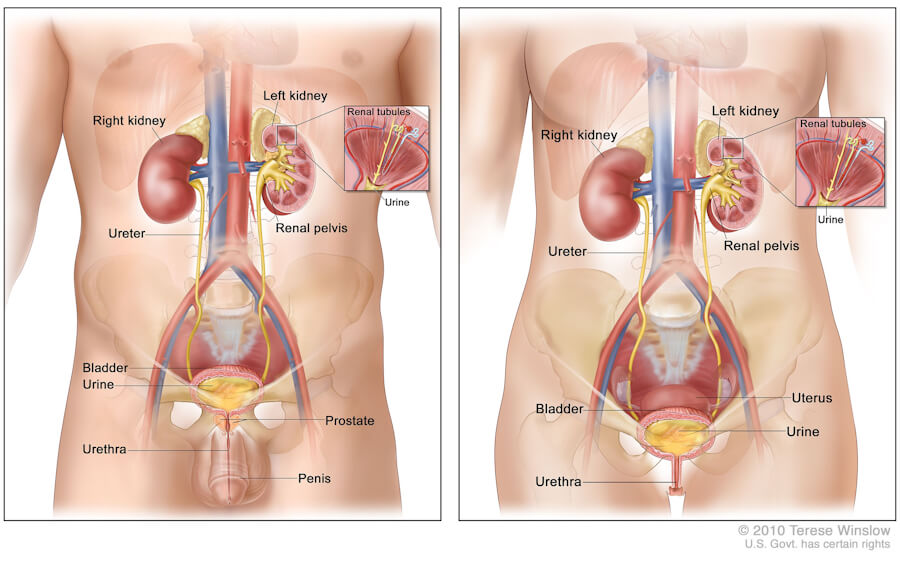
Bladder cancer is a malignancy arising from the tissues of the urinary bladder, most commonly from the urothelial lining. It is the tenth most common cancer worldwide, with an estimated 635,624 new cases and 227,626 deaths in 2024. In the United States alone, approximately 83,190 new cases and 16,840 deaths were estimated for 2024. The disease exhibits a striking male predominance, with a male-to-female incidence ratio of approximately 3:1, and its incidence increases substantially with age, with the average age at onset exceeding 70 years. Despite its frequency, bladder cancer is highly treatable when detected early, and a substantial proportion of cases are linked to modifiable environmental exposures—most notably tobacco smoking—making it a significant target for prevention. This comprehensive article examines the epidemiology, etiology, prevention, classification, clinical presentation, diagnostic pathways, treatment modalities, staging, metastatic patterns, survival outcomes, and palliative care considerations for bladder cancer, providing an evidence-based resource for clinicians, patients, and public health professionals.
📋 ICD-10 Classification and Coding
🏷️ ICD-10 Codes for Bladder Cancer
The International Classification of Diseases, Tenth Revision (ICD-10), classifies malignant neoplasms of the bladder under the code range C67. Specific subcategories allow for precise anatomical documentation:
-
C67.0 – Malignant neoplasm of trigone of bladder
-
C67.1 – Malignant neoplasm of dome of bladder
-
C67.2 – Malignant neoplasm of lateral wall of bladder
-
C67.3 – Malignant neoplasm of anterior wall of bladder
-
C67.4 – Malignant neoplasm of posterior wall of bladder
-
C67.5 – Malignant neoplasm of bladder neck
-
C67.6 – Malignant neoplasm of ureteric orifice
-
C67.7 – Malignant neoplasm of urachus
-
C67.8 – Malignant neoplasm of overlapping sites of bladder
-
C67.9 – Malignant neoplasm of bladder, unspecified
These codes facilitate standardized documentation, epidemiological surveillance, and reimbursement across healthcare systems globally.
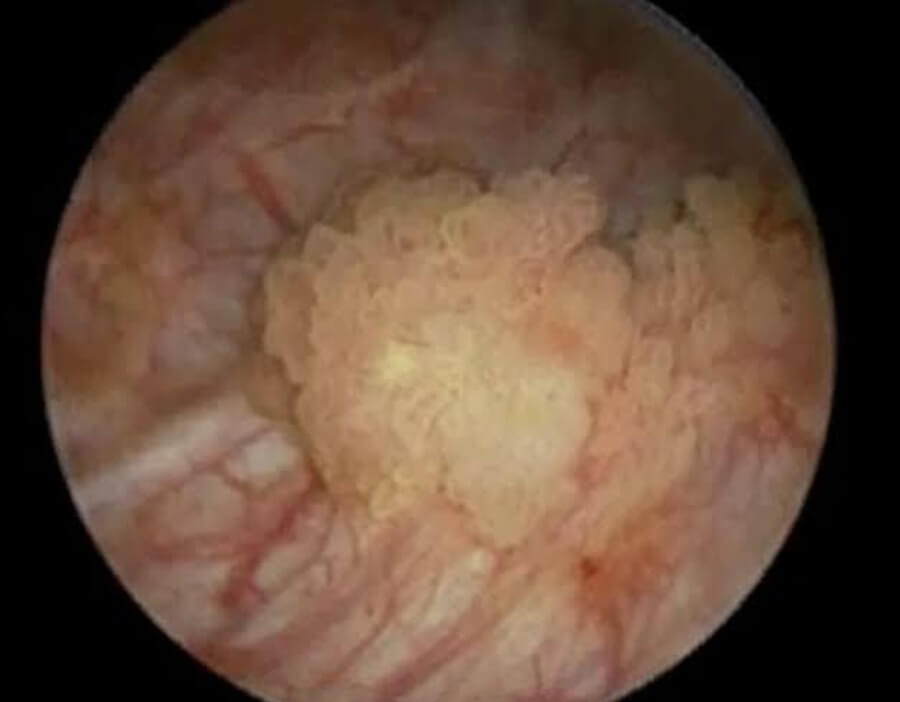
🌍 Epidemiology and Global Burden
📊 Incidence and Mortality
Bladder cancer ranks as the tenth most common malignancy worldwide. GLOBOCAN 2024 estimates indicate 635,624 new cases and 227,626 deaths globally. In Germany alone, approximately 32,000 individuals are newly diagnosed with urothelial carcinoma of the bladder each year, with three-quarters of cases occurring in men, making it the fourth most common tumor in men and the ninth most common in women. In the United States, bladder cancer is the fourth most common cancer among men, with a male-to-female incidence ratio of approximately 3:1.
The absolute 5-year survival rate for patients with malignant neoplasms of the urinary bladder (ICD-10 C67) is 45% in men and 37% in women, with fewer than 30% of patients alive 10 years after diagnosis.
📈 Temporal and Geographic Trends
Bladder cancer incidence varies considerably by geography, largely reflecting differences in tobacco consumption, occupational exposures, and the prevalence of schistosomiasis (in parts of Africa and the Middle East). In regions where schistosomiasis is endemic, squamous cell carcinoma is more common, whereas urothelial carcinoma predominates in industrialized nations.
🔬 Etiology, Causes, and Risk Factors
🚬 Tobacco Smoking: The Dominant Risk Factor
Cigarette smoking is unequivocally the most important risk factor for bladder cancer. Smokers are at least three times as likely to develop bladder cancer as nonsmokers, and smoking is responsible for approximately half of all bladder cancers in both men and women. Up to half of all bladder cancer deaths may be attributable to smoking. The risk applies to all forms of tobacco, including cigars and pipes, and passive smoking has also been implicated.
⚠️ Occupational and Environmental Exposures
Certain industrial chemicals, particularly aromatic amines such as benzidine and beta-naphthylamine, are potent bladder carcinogens. Workers in the rubber, leather, textile, paint, and printing industries face elevated risks, as do painters, machinists, printers, hairdressers (due to hair dyes), and truck drivers (due to diesel fumes). Occupational exposures account for approximately 5% of cases in the UK, and when combined with smoking, the risk is synergistic.
Additional environmental risk factors include:
-
Arsenic in drinking water – Linked to higher bladder cancer risk in certain regions.
-
Chronic bladder irritation – Such as from long-term catheterization, bladder stones, or recurrent urinary tract infections.
-
Schistosomiasis – A parasitic infection endemic in parts of Africa and the Middle East, associated with squamous cell carcinoma.
💊 Medications and Other Exposures
-
Pioglitazone (Actos) – Use for more than one year may be linked to an increased risk of bladder cancer, though this remains an area of active research.
-
Aristolochic acid – Found in certain herbal supplements, linked to urothelial cancers.
-
Cyclophosphamide – Long-term use is associated with an increased risk.
🧬 Non-Modifiable Risk Factors
-
Age – Risk increases substantially with age, with the average age at onset exceeding 70 years.
-
Sex – Men are approximately three times more likely to develop bladder cancer than women.
-
Race and ethnicity – Whites are about twice as likely to develop bladder cancer as African Americans and Hispanics, while Asian Americans and American Indians have slightly lower rates.
-
Family history – Approximately 4.3% of bladder cancer patients have a first-degree relative with the disease.
🛡️ Prevention Strategies
Bladder cancer is not entirely preventable, but risk can be substantially reduced through:
-
Smoking cessation – The single most effective preventive measure; risk declines after quitting, though former smokers should remain vigilant.
-
Occupational safety – Proper protective equipment and adherence to workplace safety regulations in high-risk industries.
-
Adequate hydration – People who drink more fluids, especially water, tend to have lower rates of bladder cancer, possibly because more frequent urination limits the time carcinogens remain in contact with the bladder lining.
-
Dietary measures – Increased consumption of cruciferous vegetables (cabbage, broccoli, mustard greens) may reduce incidence, while reducing dietary fat intake may also be beneficial.
-
Limiting exposure to known carcinogens – Including arsenic-contaminated water and unnecessary medications such as pioglitazone.
🧬 Histological Types
🔬 Urothelial Carcinoma (Transitional Cell Carcinoma)
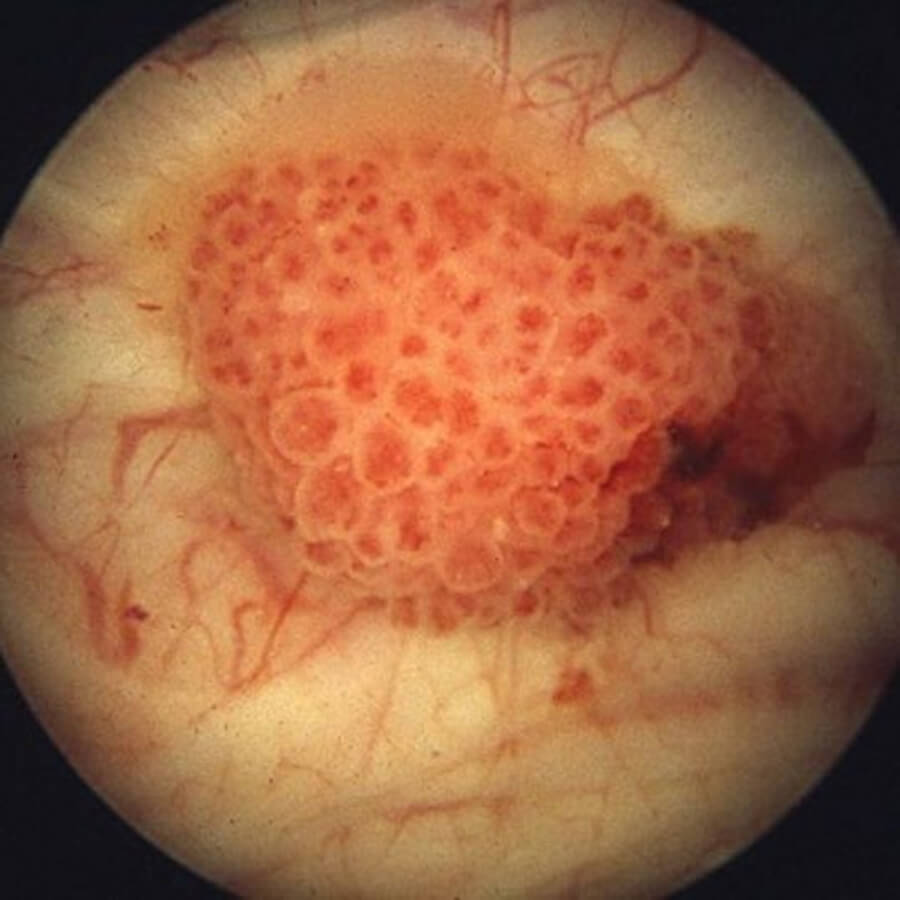
Urothelial carcinoma is by far the most common histological type, accounting for more than 90% of bladder cancers in industrialized nations. Most urothelial carcinomas are papillary tumors that tend to be superficial, well-differentiated, and grow outward into the bladder lumen. In contrast, sessile tumors are more insidious, tending to invade early and metastasize.
🔬 Squamous Cell Carcinoma
Squamous cell carcinoma is less common in Western countries but occurs more frequently in regions with high rates of schistosomiasis and in patients with chronic mucosal irritation (e.g., from long-term catheterization or bladder stones).
🔬 Adenocarcinoma
Adenocarcinoma may arise as a primary tumor from glandular cells in the bladder lining or, rarely, reflect metastasis from an intestinal primary.
🔬 Rare Variants
Rare histological subtypes and divergent differentiation patterns include small cell urothelial carcinoma, plasmacytoid, sarcomatoid, and micropapillary tumors, which may demonstrate variable responses to systemic therapies used for conventional urothelial carcinoma.
🩺 Symptoms and Early Signs
🚩 Hematuria: The Cardinal Manifestation
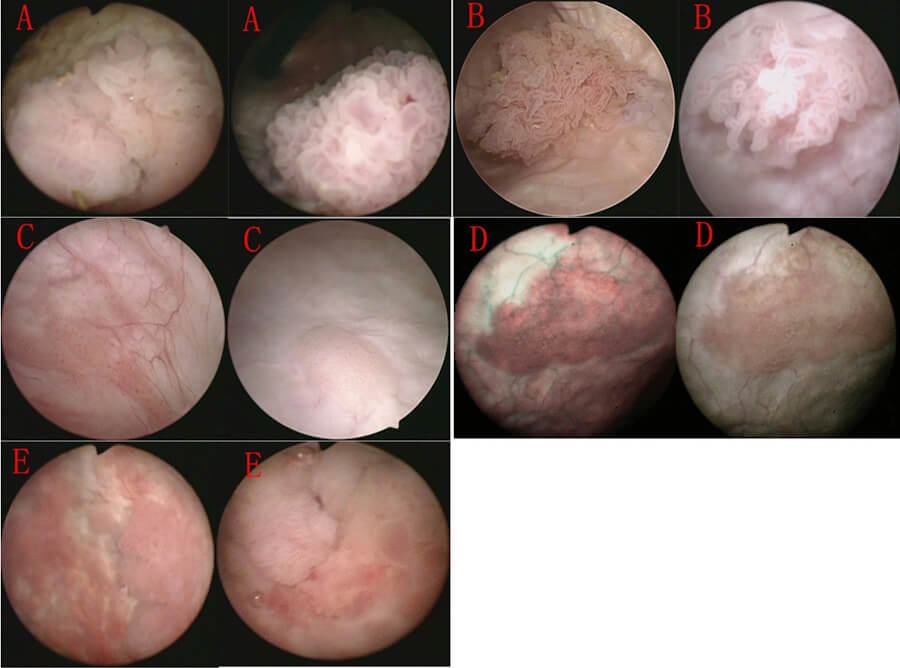
Blood in the urine (hematuria) is the most common and often the first sign of bladder cancer. The blood may be visible (gross hematuria), turning the urine orange, pink, or dark red, or it may be microscopic (microscopic hematuria), detectable only on urinalysis. Importantly, hematuria may be intermittent—appearing and then resolving—which can falsely reassure patients and delay diagnosis.
Early-stage bladder cancer (small and confined to the bladder) typically causes bleeding with little or no pain or other symptoms. However, hematuria is far more often caused by benign conditions such as urinary tract infection, bladder stones, or benign kidney disease; nonetheless, it warrants prompt evaluation.
🚽 Urinary and Irritative Symptoms
Bladder cancer can cause changes in urination, including:
-
Frequency – Having to go more often than usual
-
Urgency – A sudden, compelling need to urinate
-
Dysuria – Pain or burning during urination
-
Nocturia – Having to get up multiple times during the night
-
Weak stream or difficulty initiating urination
These symptoms overlap substantially with benign conditions such as urinary tract infection, bladder stones, overactive bladder, and prostatic enlargement, but persistent symptoms warrant investigation.
⚠️ Symptoms of Advanced Disease
Locally advanced or metastatic bladder cancer can cause:
-
Urinary retention – Inability to urinate
-
Flank or lower back pain – Often unilateral, due to ureteral obstruction
-
Loss of appetite and weight loss
-
Fatigue and weakness
-
Lower extremity edema – Swelling in the feet
-
Bone pain – From skeletal metastases
🔍 Diagnosis and Diagnostic Imaging
🩻 Initial Evaluation
The diagnostic pathway for suspected bladder cancer typically begins with a thorough history, physical examination, urinalysis, urine cytology, and imaging of the upper urinary tract. Bladder ultrasonography may be used as an initial screening tool, but it has limited sensitivity for small or flat lesions.
🔬 Cystoscopy and Biopsy: The Gold Standard
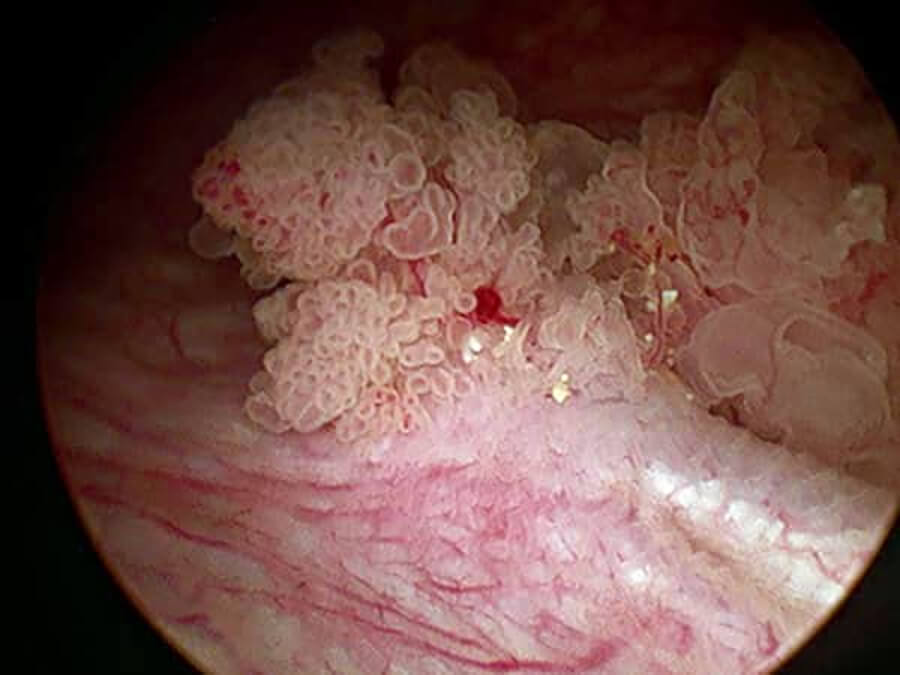
Cystoscopy is the cornerstone of diagnosis. It allows direct visualization of the bladder mucosa and enables transurethral resection of a bladder tumor (TURBT) for complete resection and tissue acquisition. A negative cystoscopy cannot definitively exclude carcinoma in situ (CIS), and urine cytology should accompany cystoscopy in patients with suspected CIS or high-risk non-muscle-invasive disease.
🖥️ Imaging Modalities
-
CT Urography – Visualizes the entire urinary tract in detail, helping to detect tumors in the kidneys, ureters, and surrounding tissues, and is essential for staging.
-
MRI – Has higher accuracy than CT for staging bladder cancer and evaluating bladder-wall invasion.
-
Ultrasound – Useful for initial evaluation but limited for small or flat tumors.
-
Chest Imaging – Recommended for staging in patients with confirmed invasive disease.
🧪 Urine Cytology and Tumor Markers
Urine cytology examines shed cells for malignant changes and is highly specific for high-grade tumors, making it a valuable adjunct to cystoscopy. Various urine-based tumor markers are under investigation but have not replaced cytology or cystoscopy in routine practice.
🏥 Staging
📐 TNM Staging System
Bladder cancer is staged according to the American Joint Committee on Cancer (AJCC) TNM system, which incorporates tumor invasion (T), nodal involvement (N), and distant metastasis (M).
T Categories:
-
Ta – Non-invasive papillary carcinoma
-
Tis – Carcinoma in situ (flat, high-grade, non-invasive)
-
T1 – Tumor invades subepithelial connective tissue
-
T2 – Tumor invades muscularis propria (muscle-invasive)
-
T3 – Tumor invades perivesical tissue
-
T4 – Tumor invades adjacent organs (prostate, uterus, vagina, pelvic wall, abdominal wall)
N Categories:
-
N0 – No regional lymph node metastasis
-
N1–N3 – Increasing degrees of regional lymph node involvement
M Categories:
-
M0 – No distant metastasis
-
M1 – Distant metastasis
📊 Stage Grouping
-
Stage 0 – Ta, Tis, N0, M0 (non-muscle-invasive)
-
Stage I – T1, N0, M0 (non-muscle-invasive)
-
Stage II – T2, N0, M0 (muscle-invasive)
-
Stage III – T3–T4, N0, M0 (locally advanced)
-
Stage IV – Any T, N1–N3, M0, or any T, any N, M1 (regionally advanced or metastatic)
🔬 Tumor Grading
Bladder cancer is also graded histologically as low-grade or high-grade. High-grade tumors are more aggressive, more likely to recur, and more likely to progress to muscle-invasive disease. Carcinoma in situ (CIS) is always high-grade.
💊 Treatment Modalities
⚡ Non-Muscle-Invasive Bladder Cancer (NMIBC)
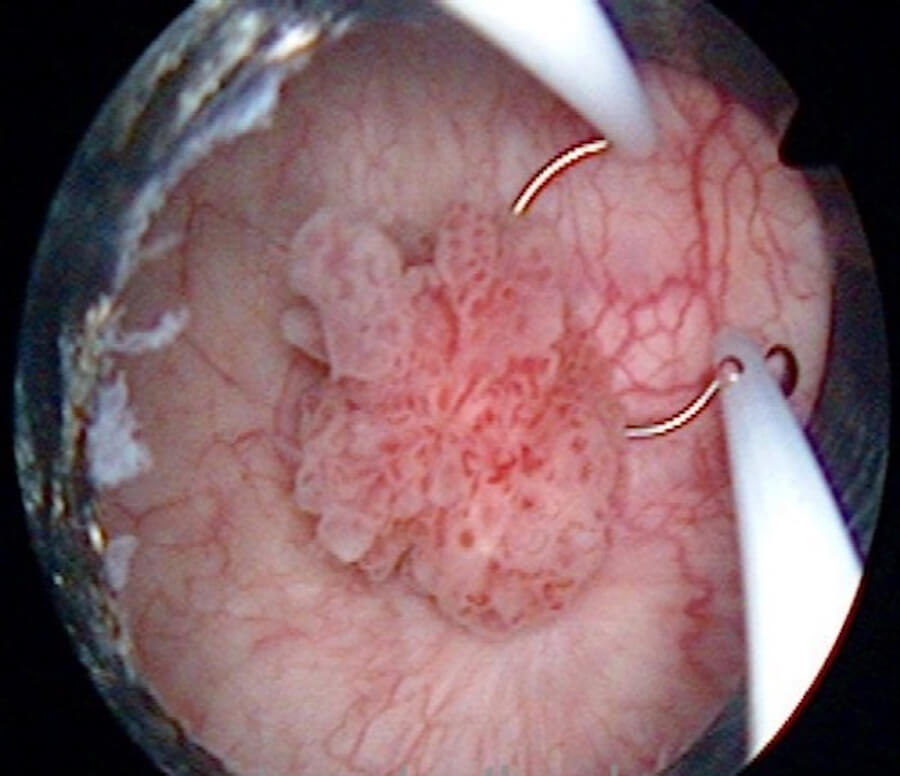
For tumors confined to the mucosa (Ta, Tis) or submucosa (T1), TURBT is the initial therapeutic procedure. Following TURBT, risk-stratified adjuvant therapy is recommended:
-
Low-risk NMIBC – Surveillance cystoscopy at 3–6 month intervals may suffice.
-
Intermediate-risk NMIBC – Intravesical bacillus Calmette-Guérin (BCG) or mitomycin C induction (weekly for 6 weeks), followed by surveillance.
-
High-risk NMIBC (including CIS) – Intravesical BCG induction and maintenance therapy (at 3, 6, 12, 18, 24, 30, and 36 months), with consideration of early cystectomy in selected patients.
A single immediate postoperative instillation of intravesical chemotherapy (e.g., mitomycin C or epirubicin) within 24 hours of TURBT is recommended unless perforation is suspected.
🔪 Muscle-Invasive Bladder Cancer (MIBC)
For tumors invading the muscularis propria (T2–T4), radical cystectomy with pelvic lymph node dissection is the historical standard. Contemporary management emphasizes multimodal therapy:
-
Neoadjuvant chemoimmunotherapy followed by radical cystectomy and adjuvant immunotherapy has demonstrated superiority over neoadjuvant cisplatin-based chemotherapy and has become a standard of care.
-
Neoadjuvant combination chemotherapy followed by radical cystectomy is an established alternative.
-
Trimodal therapy – Maximal TURBT followed by concurrent chemoradiation – is an organ-preserving option for selected patients.
-
Adjuvant chemotherapy or immunotherapy may be administered after cystectomy based on pathological risk features.
🧬 Systemic Therapy for Metastatic Disease
For metastatic bladder cancer, the treatment landscape has evolved substantially:
-
First-line standard: Enfortumab vedotin plus pembrolizumab – a combination of an antibody-drug conjugate targeting Nectin-4 and a PD-1 inhibitor – is now a preferred first-line option for advanced disease.
-
Chemotherapy plus immunotherapy and chemotherapy alone remain alternatives.
-
Immunotherapy (checkpoint inhibitors) is used in platinum-refractory and maintenance settings.
-
Palliative local therapies – Including urinary diversion or cystectomy for symptom control, and external-beam radiation for bleeding or pain.
🎯 Emerging and Targeted Therapies
Ongoing research is exploring novel agents, including N-803 (Anktiva), an immunotherapy-boosting drug approved in combination with BCG for BCG-unresponsive non-muscle-invasive bladder cancer. Clinical trials continue to evaluate new targeted therapies, antibody-drug conjugates, and immunotherapeutic combinations for advanced disease.
🌐 Metastasis
📍 Patterns of Spread
Bladder cancer metastasizes primarily through lymphatic and hematogenous routes. An autopsy study of 367 patients with muscle-invasive bladder cancer found the following distribution of metastases:
-
Regional lymph nodes – 90%
-
Liver – 47%
-
Lung – 45%
-
Bone – 32%
-
Peritoneum – 19%
-
Pleura – 16%
-
Kidney – 14%
-
Adrenal gland – 14%
-
Intestine – 13%
Approximately 5% of patients are diagnosed with metastatic disease at presentation, and about half of those who undergo cystectomy relapse.
📊 Prognosis, Cure Rates, and Survival
📈 Overall Survival Statistics
The prognosis of bladder cancer is highly stage-dependent. According to the American Cancer Society and National Cancer Institute data, the overall 5-year relative survival rate for all stages is approximately 77–78%. Stage-specific 5-year relative survival rates are approximately:
-
Stage 0 (Ta, Tis) – 98%
-
Stage I – 85–96%
-
Stage II – 45–72%
-
Stage III – 38–61%
-
Stage IV (metastatic) – 9–22%
More recent population-level data for muscle-invasive bladder cancer after radical cystectomy indicate a 5-year overall survival of 53.0% overall, varying by stage: 61.3% for T2N0M0, 42.6% for T3–T4N0M0, and 33.6% for T1–T4N1M0.
⏳ Life Expectancy With and Without Treatment
For patients with muscle-invasive bladder cancer who are unable to receive any anti-cancer treatment, median overall survival is approximately 12 months (range 8–12 months), with 5-year overall survival of only 5% compared with 48% in treated patients. For metastatic disease, median survival without treatment is typically 3–5 months, whereas with systemic chemotherapy, median survival can reach 12–15 months.
With contemporary multimodal treatment, including neoadjuvant chemoimmunotherapy and radical cystectomy, long-term survival is achievable in a substantial proportion of patients with localized disease, and survival in metastatic disease is steadily improving with the introduction of antibody-drug conjugates and immunotherapy.
🕊️ Palliative Care
🩹 Symptom Management in Advanced Disease
Palliative care is integral to the management of advanced bladder cancer, focusing on relieving symptoms and improving quality of life. Key components include:
-
Pain management – Multimodal analgesia for bone pain and pelvic pain.
-
Hematuria control – Palliative hypofractionated radiotherapy can shrink a bleeding tumor and bring bleeding under control without major surgery.
-
Urinary obstruction management – Urinary catheters or nephrostomy tubes can restore urine flow when a tumor causes obstruction.
-
Urinary and bowel symptom control – Palliative care can help manage urinary frequency, urgency, dysuria, and bowel symptoms associated with advanced disease.
-
Fatigue and constitutional symptoms – Holistic management of fatigue, anorexia, and weight loss.
Palliative care can be provided alongside active treatment at any stage and is distinct from hospice care, which focuses on end-of-life comfort.
❓ Questions and Answers
Basics, Types, & Biology
1. What is bladder cancer?
Bladder cancer is a malignant tumor that arises from the tissues of the urinary bladder, most commonly from the urothelial cells lining the bladder.
2. Where is the urinary bladder located in the body?
The bladder is a hollow, muscular organ located in the lower abdomen (pelvis) that stores urine until urination.
3. What is the normal function of the bladder?
The bladder stores urine produced by the kidneys and contracts to expel urine during urination.
4. What is the inner lining of the bladder called (urothelium / transitional epithelium)?
The inner lining is called the urothelium or transitional epithelium.
5. How common is bladder cancer?
Bladder cancer is the sixth most common cancer in the United States and the tenth most common worldwide.
6. Is bladder cancer more common in men or women?
It is approximately three to four times more common in men than in women.
7. What is the average age of diagnosis for bladder cancer?
The average age at diagnosis is approximately 73 years, with most cases occurring in people over 55.
8. What is Urothelial Carcinoma (Transitional Cell Carcinoma / TCC)?
Urothelial carcinoma is cancer arising from the urothelial cells lining the bladder and urinary tract; it is the most common form of bladder cancer.
9. What percentage of bladder cancers are urothelial carcinomas (~90%)?
Urothelial carcinoma accounts for approximately 90% of all bladder cancers.
10. What is Squamous Cell Carcinoma of the bladder?
Squamous cell carcinoma arises from squamous cells in the bladder lining, often after chronic irritation or infection.
11. How is bladder squamous cell carcinoma linked to schistosomiasis (bilharzia)?
Chronic infection with the parasite Schistosoma haematobium causes chronic bladder inflammation, leading to squamous cell carcinoma, particularly in parts of Africa and the Middle East.
12. What is Adenocarcinoma of the bladder?
Adenocarcinoma arises from glandular (secretory) cells in the bladder lining and is rare.
13. What is urachal adenocarcinoma?
A rare adenocarcinoma arising from the urachus, a remnant of the fetal connection between the bladder and the umbilicus.
14. What is Small Cell Carcinoma (neuroendocrine) of the bladder?
A rare, aggressive cancer arising from neuroendocrine cells in the bladder.
15. What is Sarcoma of the bladder?
A rare malignant tumor arising from the connective tissue (muscle, fat, or blood vessels) of the bladder.
16. What is Primary Bladder Lymphoma?
A rare lymphoma that arises primarily in the bladder.
17. What is Non-Muscle-Invasive Bladder Cancer (NMIBC)?
NMIBC is cancer confined to the inner lining of the bladder (Ta, Tis, T1) that has not invaded the muscularis propria.
18. What is Muscle-Invasive Bladder Cancer (MIBC)?
MIBC is cancer that has invaded the muscularis propria (T2) or deeper (T3–T4).
19. What is the difference between NMIBC and MIBC?
NMIBC is confined to the superficial lining and is typically managed with TURBT and intravesical therapy, while MIBC invades the muscle wall and generally requires radical cystectomy or trimodality therapy.
20. Why is muscle invasion the key turning point in bladder cancer treatment?
Because once cancer invades the muscle, it has a much higher potential to metastasize, requiring more aggressive local and systemic treatment.
21. What is Carcinoma In Situ (CIS / Tis) of the bladder?
CIS is a flat, high-grade, non-invasive cancer confined to the urothelium that has a high risk of progressing to invasive cancer.
22. Is bladder CIS considered high-grade cancer?
Yes, CIS is always high-grade.
23. What is Ta papillary bladder tumor?
Ta is a non-invasive papillary tumor that grows outward from the bladder lining without invading the underlying tissue.
24. What is T1 bladder cancer?
T1 cancer invades the subepithelial connective tissue (lamina propria) but not the muscle layer.
25. What is T2 bladder cancer?
T2 cancer invades the muscularis propria (detrusor muscle).
26. What is T3 bladder cancer?
T3 cancer invades the perivesical fat surrounding the bladder.
27. What is T4 bladder cancer?
T4 cancer invades adjacent organs (prostate, uterus, vagina) or the pelvic/abdominal wall.
28. What is Low-Grade vs High-Grade bladder cancer?
Low-grade tumors are well-differentiated and less aggressive; high-grade tumors are poorly differentiated and more likely to recur and progress.
29. Why is high-grade bladder cancer much more likely to recur and progress?
Because high-grade tumors have more genetic abnormalities and a greater tendency to invade and metastasize.
30. What is a PunLMP (Papillary Urothelial Neoplasm of Low Malignant Potential)?
A very low-grade papillary tumor with a low risk of progression but a tendency to recur.
31. What is flat vs papillary bladder cancer?
Papillary tumors grow outward in finger-like projections; flat tumors (like CIS) grow along the surface and are often more aggressive.
32. What is the lamina propria of the bladder wall?
The layer of connective tissue just beneath the urothelium.
33. What is the detrusor muscle?
The thick muscular layer of the bladder wall that contracts during urination.
34. What is perivesical fat?
The fat layer surrounding the outside of the bladder.
35. How fast does bladder cancer grow?
Growth rates vary; low-grade tumors grow slowly, while high-grade and muscle-invasive tumors can grow more rapidly.
36. Is bladder cancer considered a slow-growing or fast-growing cancer?
It is often slow-growing, but high-grade subtypes can be aggressive.
37. Is bladder cancer curable?
Yes, especially when detected at an early stage.
38. Can early-stage non-muscle invasive bladder cancer be cured?
Yes, NMIBC is highly treatable, though it has a high recurrence rate requiring long-term surveillance.
39. Can muscle-invasive bladder cancer be cured?
Yes, with radical cystectomy or trimodality therapy, often combined with systemic therapy.
40. Why does bladder cancer have one of the highest recurrence rates of any cancer?
Because the entire urothelium is exposed to carcinogens, leading to a “field defect” that predisposes to multiple tumors over time.
41. What is the “field defect” theory in urothelial cancer?
The concept that carcinogen exposure damages the entire urothelial lining, making it prone to multiple independent tumors.
42. Why can urothelial cancer form anywhere along the urinary tract (kidney, ureter, bladder, urethra)?
Because the entire urinary tract is lined by urothelium, which is susceptible to the same carcinogenic insults.
43. What is Upper Tract Urothelial Carcinoma (UTUC)?
Cancer arising in the urothelium of the renal pelvis or ureter.
44. How does UTUC differ from bladder cancer?
UTUC is less common and often managed with nephroureterectomy rather than bladder-preserving therapy.
45. Can bladder cancer spread to the kidneys or ureters?
Yes, it can spread locally to the ureters or via reflux, but primary UTUC is a distinct entity.
46. Can young adults or children get bladder cancer?
Yes, though it is rare; most cases occur in older adults.
47. Is bladder cancer hereditary?
There is a modest familial component, but most cases are sporadic and driven by environmental exposures.
48. What genetic syndromes increase bladder cancer risk (Lynch Syndrome, Costello Syndrome)?
Lynch syndrome (mismatch repair mutations) and Costello syndrome (HRAS mutations) are associated with increased risk.
49. What cell mutations are common in bladder cancer (FGFR3, TP53, RB1, PIK3CA)?
FGFR3 mutations are common in low-grade NMIBC, while TP53 and RB1 mutations are associated with high-grade, muscle-invasive disease.
50. What is an FGFR3 gene mutation in urothelial cancer?
An activating mutation in the fibroblast growth factor receptor 3 gene that promotes tumor growth and is a target for FGFR inhibitors like erdafitinib.
51. What is ERBB2 (HER2) amplification in bladder cancer?
Overexpression of the HER2 protein, which can be targeted by HER2-directed therapies.
52. What is Tumor Mutational Burden (TMB) in bladder cancer?
The number of mutations per megabase of DNA; high TMB may predict response to immunotherapy.
53. Is bladder cancer considered an immunogenic tumor?
Yes, bladder cancer is relatively immunogenic, which is why intravesical BCG and immune checkpoint inhibitors are effective.
54. Why does bladder cancer respond well to immunotherapy?
Because the tumor expresses antigens that can be recognized by the immune system, and the bladder is accessible for local immunotherapy.
55. How does bladder cancer spread through the body?
Through local invasion, lymphatic spread to regional nodes, and hematogenous spread to distant organs.
56. What regional lymph nodes are involved in bladder cancer spread (pelvic/iliac nodes)?
The obturator, internal iliac, external iliac, and common iliac lymph nodes.
57. Where does metastatic bladder cancer spread first?
Most commonly to regional lymph nodes, followed by the liver, lungs, bones, and peritoneum.
58. Can bladder cancer spread to the bones?
Yes.
59. Can bladder cancer spread to the lungs?
Yes.
60. Can bladder cancer spread to the liver?
Yes.
61. Can bladder cancer spread to the brain?
Rarely, but it can occur.
62. What is primary vs secondary bladder cancer?
Primary bladder cancer originates in the bladder; secondary bladder cancer is metastatic spread from another primary site.
63. What is oligometastatic bladder cancer?
A limited number of metastases (typically ≤5), potentially amenable to local therapy.
64. What is localized vs regional vs distant bladder cancer?
Localized: confined to the bladder; regional: spread to nearby lymph nodes; distant: spread to other organs.
65. What is the difference between bladder cancer and a urinary tract infection (UTI)?
UTIs are infections causing inflammation, while bladder cancer is a malignant tumor; symptoms can overlap, so persistent symptoms require evaluation.
66. Why is bladder cancer in women often misdiagnosed as a recurrent UTI?
Because symptoms like frequency, urgency, and dysuria overlap with UTI, leading to delayed diagnosis.
67. Can benign bladder polyps or papillomas turn into cancer?
Some benign lesions, such as inverted papillomas, have a low risk of malignant transformation.
68. What is inverted papilloma of the bladder?
A benign, inward-growing polypoid lesion.
69. Is inverted papilloma cancerous?
It is generally benign but can be associated with urothelial carcinoma in some cases.
70. What is cystitis glandularis, and does it raise bladder cancer risk?
A chronic inflammatory condition of the bladder lining that may be associated with a slightly increased risk of adenocarcinoma.
71. What is leukoplakia of the bladder?
A white patch on the bladder lining, often associated with chronic irritation.
72. Is bladder leukoplakia considered pre-cancerous?
It may be associated with an increased risk of squamous cell carcinoma.
73. What is malakoplakia of the bladder?
A rare chronic inflammatory condition characterized by soft, yellow plaques.
74. What is interstitial cystitis (painful bladder syndrome), and can it cause cancer?
A chronic pain condition of the bladder; it does not cause cancer.
75. Can bladder stones cause bladder cancer?
Chronic irritation from bladder stones may increase the risk of squamous cell carcinoma.
76. Does chronic catheter use increase the risk of bladder cancer?
Yes, long-term catheterization is associated with an increased risk of squamous cell carcinoma.
77. Why do long-term spinal cord injury patients have a higher risk of squamous bladder cancer?
Due to chronic bladder inflammation and recurrent infections from long-term catheterization.
78. What is multifocal bladder cancer?
The presence of multiple tumors in the bladder at the same time.
79. Can you have multiple tumors inside the bladder at the same time?
Yes, multifocality is common in bladder cancer.
80. What is the bladder neck, and how does tumor location affect symptoms?
The bladder neck is the outlet of the bladder; tumors here can cause obstructive symptoms.
81. What are the ureteral orifices (trigone region of the bladder)?
The openings where the ureters enter the bladder.
82. What happens if a bladder tumor blocks the ureter (hydronephrosis)?
Urine backs up into the kidney, causing hydronephrosis and potentially kidney damage.
83. What is hydronephrosis, and why is it a sign of advanced bladder cancer?
Swelling of the kidney due to obstructed urine flow, often indicating a tumor blocking the ureter.
84. Does bladder size affect cancer prognosis?
No, bladder size itself does not affect prognosis.
85. What is the dome vs base vs lateral wall of the bladder?
Anatomical regions of the bladder; tumor location can influence symptoms and surgical approach.
86. Why are tumors on the dome of the bladder sometimes linked to urachal remnants?
Because the dome is where the urachus (a fetal remnant) attaches; urachal carcinomas arise here.
87. Can bladder cancer develop during pregnancy?
Yes, though it is rare and requires specialized multidisciplinary care.
88. What is the cell of origin in bladder carcinoma?
Urothelial cells lining the bladder.
89. How does smoking tobacco damage the urothelium?
Carcinogens in tobacco smoke are excreted in urine, where they damage the DNA of urothelial cells.
90. How long do carcinogenic chemicals stay in contact with bladder tissue in urine?
Until urination; frequent urination reduces contact time.
91. What is the incidence of bladder cancer worldwide?
An estimated 635,624 new cases and 227,626 deaths in 2024.
92. Why are bladder cancer rates higher in developed nations?
Due to higher smoking rates, occupational exposures, and aging populations.
93. Is bladder cancer more aggressive in women than men?
Women often present at later stages, leading to worse outcomes.
94. Why do women with bladder cancer often present at later stages?
Because symptoms are often misattributed to UTIs, delaying diagnosis.
95. What is the difference between bladder cancer incidence and mortality?
Incidence is the number of new cases; mortality is the number of deaths.
96. What specialty treats bladder cancer (Urology, Urologic Oncology, Medical Oncology)?
Urologists and urologic oncologists lead surgical care; medical and radiation oncologists manage systemic and radiation therapy.
97. What is a Multidisciplinary Genitourinary (GU) Tumor Board?
A team of specialists who review cases to develop coordinated treatment plans.
98. What medical guidelines dictate bladder cancer care (NCCN, EAU, AUA)?
NCCN, EAU, and AUA guidelines provide evidence-based recommendations.
99. What is the overall medical definition of bladder carcinoma?
Bladder carcinoma is a malignant epithelial tumor arising from the urothelium or other cell types in the bladder.
100. Where can patients find certified educational resources about bladder cancer?
From organizations such as the Bladder Cancer Advocacy Network (BCAN), American Cancer Society (ACS), and National Cancer Institute (NCI).
Signs, Symptoms, & Physical Changes
101. What are the early warning signs of bladder cancer?
Blood in the urine (hematuria) is the most common early sign.
102. What is the most common symptom of bladder cancer (painless hematuria)?
Painless visible blood in the urine is the classic presentation.
103. What color is blood in urine caused by bladder cancer (pink, red, or cola-colored)?
It can range from pink to bright red to dark cola-colored.
104. Is blood in urine always visible (gross vs microscopic hematuria)?
No, it can be microscopic (only detectable on urinalysis) or gross (visible).
105. Can blood in urine come and go in bladder cancer?
Yes, hematuria can be intermittent, which can falsely reassure patients.
106. Why is painless hematuria often dangerous (because patients delay seeing a doctor)?
Because the absence of pain leads patients to attribute it to benign causes, delaying diagnosis.
107. Can bladder cancer cause blood clots in urine?
Yes, large tumors can cause clots that obstruct urine flow.
108. Does blood in urine automatically mean you have bladder cancer?
No, many benign conditions cause hematuria, but it always warrants evaluation.
109. What non-cancerous conditions cause blood in urine (UTI, kidney stones, exercise)?
UTIs, kidney stones, prostate enlargement, and strenuous exercise can cause hematuria.
110. Can bladder cancer cause frequent urination (frequency)?
Yes.
111. Can bladder cancer cause an urgent need to urinate (urgency)?
Yes.
112. Can bladder cancer cause pain or burning during urination (dysuria)?
Yes.
113. Can bladder cancer cause trouble peeing or weak urine stream?
Yes, especially with tumors near the bladder neck.
114. Can bladder cancer cause a feeling that the bladder isn’t completely empty?
Yes.
115. Can bladder cancer cause urinary incontinence or leakage?
Yes, especially in advanced disease.
116. Why does Carcinoma In Situ (CIS) often cause severe urinary urgency and burning without a mass?
Because CIS is a diffuse, flat lesion that irritates the entire bladder lining.
117. Can bladder cancer cause pelvic pain?
Yes, especially with locally advanced tumors.
118. Can bladder cancer cause lower back pain or flank pain?
Yes, if a tumor blocks the ureter, causing hydronephrosis.
119. Why does flank pain occur when a bladder tumor blocks urine flow from the kidney?
Due to backpressure and swelling of the kidney.
120. Can bladder cancer cause kidney failure or elevated creatinine?
Yes, bilateral obstruction can lead to kidney failure.
121. What are the symptoms of advanced or metastatic bladder cancer?
Bone pain, weight loss, fatigue, and symptoms related to metastatic sites.
122. Can bladder cancer cause unexplained weight loss?
Yes.
123. Can bladder cancer cause loss of appetite (anorexia)?
Yes.
124. Can bladder cancer cause extreme fatigue or weakness?
Yes.
125. Can bladder cancer cause bone pain?
Yes, from bone metastases.
126. Can bladder cancer cause swelling in the legs or feet (lymphedema)?
Yes, due to lymphatic obstruction.
127. Why does leg swelling happen in advanced bladder cancer (blocked pelvic lymph nodes)?
Lymph node involvement can obstruct lymphatic drainage from the legs.
128. Can bladder cancer cause anemia due to chronic blood loss?
Yes.
129. What does severe anemia feel like (shortness of breath, dizziness, pale skin)?
Fatigue, dizziness, and pallor.
130. Can bladder cancer cause shortness of breath if it spreads to the lungs?
Yes.
131. Can bladder cancer cause abdominal pain or a feeling of fullness?
Yes, with large tumors or ascites.
132. Can bladder cancer cause a palpable abdominal mass?
Rarely, in advanced disease.
133. How do bladder cancer symptoms in women differ from a UTI?
Symptoms overlap, but bladder cancer symptoms are persistent and often associated with hematuria that does not resolve with antibiotics.
134. Why should a woman with “UTI symptoms” and blood in urine get checked if antibiotics don’t work?
Because persistent symptoms may indicate an underlying malignancy.
135. How do bladder cancer symptoms in men differ from enlarged prostate (BPH)?
BPH causes obstructive symptoms, but bladder cancer can also cause hematuria and irritative symptoms.
136. Can bladder cancer cause acute urinary retention (inability to pass urine)?
Yes, especially with blood clots or a tumor at the bladder neck.
137. Is acute urinary retention caused by blood clots a medical emergency?
Yes.
138. Can bladder cancer cause pain in the perineum or rectum?
Yes, with locally advanced tumors.
139. Can bladder cancer cause pain during sexual intercourse?
Yes.
140. What skin or physical changes happen in end-stage bladder cancer?
Cachexia, pallor, and edema.
141. Can bladder cancer cause night sweats or fever?
Rarely, in advanced disease.
142. Does bladder cancer cause bad odor in urine?
Yes, due to infection or tumor necrosis.
143. Can bladder cancer cause cloudy or dark urine?
Yes.
144. Can bladder cancer symptoms appear suddenly?
They can, especially if a tumor bleeds or obstructs urine flow.
145. How fast do urinary symptoms progress in bladder cancer?
Variable; some patients have symptoms for months before diagnosis.
146. Can a single episode of visible blood in urine be a sign of bladder cancer?
Yes, even a single episode warrants evaluation.
147. Why should you see a doctor immediately after seeing blood in your urine once?
Because it may be the first sign of bladder cancer.
148. What physical exam tests does a doctor perform for bladder symptoms (bimanual pelvic/rectal exam)?
A bimanual exam to feel for masses in the bladder and pelvis.
149. What is a bimanual examination under anesthesia (EUA)?
An exam performed under anesthesia to accurately assess tumor mobility and local extent.
150. What non-cancerous conditions mimic bladder cancer symptoms?
UTIs, kidney stones, interstitial cystitis, and BPH.
151. How does interstitial cystitis feel compared to bladder cancer?
Interstitial cystitis causes chronic pelvic pain and urinary frequency without hematuria or a mass.
152. Can a bladder stone cause the exact same symptoms as bladder cancer?
Yes, both can cause hematuria and irritative symptoms.
153. How do kidney stone symptoms differ from bladder cancer?
Kidney stones typically cause severe flank pain radiating to the groin, while bladder cancer often causes painless hematuria.
154. What symptoms indicate bladder cancer has spread to the liver?
Jaundice, right upper quadrant pain, and hepatomegaly.
155. Can advanced bladder cancer cause jaundice or right upper belly pain?
Yes.
156. What symptoms indicate bladder cancer has spread to the brain?
Headaches, seizures, and neurological deficits.
157. Can headaches, confusion, or seizures signal brain metastasis?
Yes, though brain metastases are rare.
158. What symptoms indicate bladder cancer has spread to distant lymph nodes?
Swollen lymph nodes, especially in the groin or supraclavicular region.
159. What does a swollen lymph node in the groin or collarbone mean?
It may indicate metastatic spread.
160. Can bladder cancer cause a fistula (vesicovaginal or vesicointestinal fistula)?
Yes, locally advanced tumors can invade adjacent organs.
161. What are the symptoms of a vesicovaginal fistula (urine leaking from the vagina)?
Continuous urine leakage from the vagina.
162. What are the symptoms of a enterovesical fistula (air or stool in urine / pneumaturia)?
Passing gas or stool particles in the urine.
163. What is pneumaturia (passing gas through the urethra)?
The presence of gas in the urine, often due to a fistula.
164. What is fecaluria (stool particles in urine)?
The presence of stool in the urine.
165. Can bladder cancer cause leg weakness or numbness if nerve plexuses are involved?
Yes, due to nerve compression or invasion.
166. What is obturator nerve involvement in pelvic bladder tumors?
Invasion of the obturator nerve can cause pain and weakness in the inner thigh.
167. Can bladder cancer cause hip or groin pain?
Yes.
168. How do symptoms change as cancer progresses from NMIBC to MIBC?
Symptoms may worsen, and systemic symptoms may appear.
169. Why do early Ta papillary tumors often cause zero pain?
Because they are superficial and do not invade pain-sensitive structures.
170. What percentage of bladder cancer patients have microscopic blood in urine with no symptoms (~20%)?
A significant proportion are asymptomatic and detected incidentally.
171. Can strenuous exercise cause false hematuria?
Yes, exercise-induced hematuria can occur.
172. Can certain foods or medications turn urine red (beets, rifampin, phenazopyridine)?
Yes, these can cause pseudo-hematuria.
173. What is “pseudo-hematuria”?
Reddish urine not caused by red blood cells.
174. How do doctors prove red urine is actually red blood cells (urinalysis)?
Microscopic examination of the urine sediment.
175. What red flag symptoms require an emergency room visit?
Acute urinary retention, severe bleeding with clots, or severe pain.
176. What questions will a urologist ask about your urinary symptoms?
Duration, associated symptoms, risk factors, and prior episodes.
177. Can a bladder self-exam or visual inspection detect anything (no, bladder is internal)?
No, the bladder cannot be visualized externally.
178. Why is a professional workup required for any unexplained urinary blood?
Because hematuria can be the first sign of bladder cancer.
179. How long do symptoms typically persist before patients seek help?
Often several months.
180. How does diagnostic delay affect bladder cancer stage at presentation?
Delay can lead to more advanced stage and worse outcomes.
181. Can stress make urinary urgency worse without cancer?
Yes.
182. Does cold weather increase urinary frequency?
Yes.
183. Can bladder cancer cause swelling around the ankles?
Yes, due to lymphedema.
184. What causes hypercalcemia in advanced bladder cancer?
Bone metastases can cause calcium release.
185. What are the symptoms of high blood calcium (confusion, thirst, constipation, nausea)?
Confusion, polyuria, constipation, and nausea.
186. Can bladder cancer cause blood clots in the legs (Deep Vein Thrombosis / DVT)?
Yes, due to hypercoagulability.
187. What are the symptoms of a DVT (leg swelling, warmth, pain)?
Unilateral leg swelling, warmth, and pain.
188. Can bladder cancer cause a pulmonary embolism (PE)?
Yes.
189. What symptoms signal a pulmonary embolism (sudden chest pain, shortness of breath)?
Sudden dyspnea, chest pain, and tachycardia.
190. Why is cancer associated with a higher risk of blood clots (hypercoagulability)?
Tumor cells release procoagulant substances.
191. Can a bladder tumor block both ureters at once (bilateral ureteral obstruction)?
Yes.
192. What happens during acute bilateral ureteral obstruction (anuria / no urine production)?
Acute kidney injury and anuria, a medical emergency.
193. Is anuria a life-threatening medical emergency?
Yes.
194. What physical signs show that treatment for bladder cancer is working?
Resolution of hematuria and shrinkage of the tumor on imaging.
195. What physical signs indicate local cancer recurrence?
New hematuria, pain, or a mass on imaging.
196. Why is regular long-term symptom monitoring critical for survivors?
Because bladder cancer has a high recurrence rate.
197. How do symptoms differ between men and women with bladder cancer?
Women may have symptoms attributed to UTIs, while men may have symptoms attributed to BPH.
198. Can bladder cancer cause painful ejaculation in men?
Yes.
199. What is the single most critical warning sign of bladder cancer?
Blood in the urine.
200. What should you do today if you notice blood in your urine?
See a doctor promptly for evaluation.
Causes, Genetics, & Risk Factors
201. What causes bladder cancer?
A combination of genetic and environmental factors, most notably tobacco smoking and occupational carcinogen exposure.
202. What is the single biggest risk factor for bladder cancer (cigarette smoking)?
Cigarette smoking is the most important risk factor, responsible for approximately half of all cases.
203. What percentage of bladder cancer cases are directly caused by smoking (~50%)?
About 50%.
204. How many times higher is bladder cancer risk in smokers compared to non-smokers (3 to 4 times)?
Smokers are at least three times more likely to develop bladder cancer.
205. How do carcinogenic chemicals in tobacco smoke get into the bladder?
They are absorbed into the bloodstream, filtered by the kidneys, and concentrated in urine, where they contact the bladder lining.
206. What specific carcinogens in cigarette smoke cause bladder cancer (aromatic amines, polycyclic aromatic hydrocarbons)?
Aromatic amines and polycyclic aromatic hydrocarbons are known bladder carcinogens.
207. Does pipe, cigar, or secondhand smoke increase bladder cancer risk?
Yes, all forms of tobacco smoke increase risk.
208. Does vaping or e-cigarette use cause bladder cancer?
The long-term risks are not yet fully known, but some studies suggest potential harm.
209. What chemicals in e-cigarette vapor are excreted in urine?
Various volatile organic compounds and metals.
210. How many years after quitting smoking does bladder cancer risk begin to drop?
Risk begins to decline after quitting, though former smokers remain at elevated risk for years.
211. Does occupational exposure to industrial chemicals cause bladder cancer?
Yes, occupational exposure to certain chemicals is a significant risk factor.
212. What industries carry a higher risk of bladder cancer (dye, rubber, leather, textiles, paint, hairdressing)?
The rubber, leather, textile, paint, and printing industries, as well as hairdressing.
213. What specific chemicals are linked to occupational bladder cancer (beta-naphthylamine, benzidine, aromatic amines)?
Beta-naphthylamine, benzidine, and other aromatic amines.
214. Are painters, truck drivers, and machinists at higher statistical risk for bladder cancer?
Yes, due to exposure to paints, diesel fumes, and industrial chemicals.
215. Does age increase the risk of bladder cancer?
Yes, risk increases substantially with age.
216. Why are 90% of bladder cancer diagnoses made in people over age 55?
Because cumulative carcinogen exposure and age-related genetic changes increase risk.
217. Is gender a risk factor for bladder cancer (men are 3 to 4 times more likely to get it)?
Yes.
218. Does race or ethnicity impact bladder cancer risk (Caucasian men have highest incidence)?
Yes, white men have the highest incidence.
219. Why do Black individuals with bladder cancer often have lower survival rates (diagnosed at later stages)?
Due to delayed diagnosis and access-to-care disparities.
220. Does a personal history of prior chemotherapy cause bladder cancer?
Certain chemotherapies, such as cyclophosphamide, increase risk.
221. How does Cyclophosphamide (Cytoxan) chemotherapy increase bladder cancer risk?
Its metabolite, acrolein, irritates the bladder lining, increasing cancer risk.
222. What is acrolein, and how does it damage the bladder lining during cyclophosphamide therapy?
Acrolein is a toxic metabolite that causes chemical cystitis and DNA damage.
223. How does Mesna medication protect the bladder during cyclophosphamide treatment?
Mesna binds acrolein in the urine, neutralizing its toxic effects.
224. Does prior pelvic radiation therapy cause secondary bladder cancer?
Yes, radiation to the pelvis increases the risk of secondary bladder cancer.
225. What radiation treatments raise bladder cancer risk (radiation for prostate, cervical, or uterine cancer)?
Pelvic radiation for any of these cancers increases risk.
226. How many years after pelvic radiation can secondary bladder cancer develop (10 to 20+ years)?
Typically 10–20 years or more after radiation.
227. Does chronic bladder inflammation increase the risk of bladder cancer?
Yes, chronic inflammation is a risk factor, particularly for squamous cell carcinoma.
228. How do long-term Indwelling Urinary Catheters cause chronic bladder inflammation and cancer?
Mechanical irritation and recurrent infections lead to chronic inflammation and squamous metaplasia.
229. Does Schistosomiasis (Bilharzia) infection cause bladder cancer?
Yes, chronic Schistosoma haematobium infection causes squamous cell carcinoma.
230. Where in the world is Schistosomiasis-induced squamous bladder cancer common (Africa, Middle East)?
In parts of Africa and the Middle East where the parasite is endemic.
231. How does the Schistosoma haematobium parasite cause bladder wall damage and cancer?
The parasite eggs lodged in the bladder wall cause chronic inflammation and fibrosis.
232. Does drinking water contaminated with Arsenic cause bladder cancer?
Yes, arsenic contamination in drinking water is a known risk factor.
233. Where is arsenic contamination in well water a major cause of bladder cancer?
In regions such as Bangladesh, Taiwan, and parts of South America.
234. Does low fluid intake / dehydration increase bladder cancer risk?
Yes, low fluid intake may increase risk by allowing carcinogens to remain in contact with the bladder lining longer.
235. Why does drinking plenty of water daily lower bladder cancer risk (flushes carcinogens out faster)?
Frequent urination reduces the time carcinogens spend in contact with the urothelium.
236. Does Chlorinated drinking water / disinfection byproducts (trihalomethanes) cause bladder cancer?
Some studies suggest a possible link, but evidence is not definitive.
237. Does Pioglitazone (Actos) diabetes medication increase bladder cancer risk?
Prolonged use has been associated with a modest increase in risk.
238. Does Aristolochic acid (found in certain herbal supplements) cause urothelial cancer?
Yes, aristolochic acid is a known urothelial carcinogen.
239. Is there a genetic or family link to bladder cancer?
Yes, a family history of bladder cancer increases risk.
240. What percentage of bladder cancers have an inherited genetic component (~10%)?
A small proportion, approximately 10%.
241. Having a first-degree relative with bladder cancer: how much does it increase your risk?
It approximately doubles the risk.
242. How does Lynch Syndrome (HNPCC) raise the risk of upper tract urothelial cancer and bladder cancer?
Mismatch repair gene mutations increase the risk of urothelial cancers.
243. What mismatch repair genes (MSH2, MLH1, MSH6, PMS2) are mutated in Lynch Syndrome?
These are the genes associated with Lynch syndrome.
244. What is Retinoblastoma (RB1) gene mutation link to bladder cancer?
RB1 mutations are associated with high-grade bladder cancer.
245. What is Cowden Syndrome (PTEN mutation) link to bladder cancer?
PTEN mutations may increase the risk of urothelial cancer.
246. What somatic gene mutations occur frequently inside bladder tumors (FGFR3, TP53, KDM6A, ARID1A)?
FGFR3, TP53, KDM6A, and ARID1A are commonly mutated.
247. What is an FGFR3 (Fibroblast Growth Factor Receptor 3) mutation?
An activating mutation that promotes tumor growth in low-grade NMIBC.
248. Why are FGFR3 mutations common in low-grade non-muscle invasive bladder cancer?
They are associated with the papillary, non-invasive pathway of bladder cancer development.
249. What is a TP53 tumor suppressor gene mutation in bladder cancer?
TP53 mutations are associated with high-grade, muscle-invasive bladder cancer.
250. Why are TP53 mutations linked to high-grade muscle-invasive bladder cancer?
TP53 loss impairs DNA repair and apoptosis, promoting aggressive tumor behavior.
251. Does diet play a role in causing or preventing bladder cancer?
Diet may influence risk, but evidence is not definitive.
252. Does high consumption of processed meats or red meat increase bladder cancer risk?
Some studies suggest a modest increase.
253. Does eating fresh fruits and vegetables lower bladder cancer risk?
Some studies suggest a protective effect.
254. Does Vitamin C or Vitamin E supplementation protect against bladder cancer?
No, studies have not found a protective effect.
255. Does alcohol consumption raise bladder cancer risk?
Evidence is limited, but heavy alcohol use may increase risk.
256. Does coffee or tea consumption cause bladder cancer?
No consistent evidence.
257. Does obesity increase the risk of developing bladder cancer?
Obesity may be associated with a modest increase in risk.
258. Does physical inactivity raise bladder cancer risk?
Possibly, through its effects on overall health.
259. Does artificial sweetener use (saccharin, aspartame) cause bladder cancer?
No, the old rodent studies linking saccharin to bladder cancer in humans have been debunked.
260. Why was the old rodent study linking saccharin to bladder cancer debunked for humans?
Because the mechanism in rats does not apply to humans.
261. Does hair dye use (personal or professional) cause bladder cancer?
Occupational exposure to hair dyes may increase risk, but personal use has not been consistently linked.
262. Are modern commercial hair dyes safe regarding bladder cancer risk?
Most studies have not found a significant increase in risk for personal use.
263. Does spinal cord injury increase the risk of aggressive squamous bladder cancer?
Yes, due to chronic catheterization and inflammation.
264. Does chronic bladder stone formation raise cancer risk?
Yes, chronic irritation can lead to squamous cell carcinoma.
265. Does HPV (Human Papillomavirus) infection cause bladder cancer?
No consistent evidence.
266. Can chronic kidney disease or dialysis increase bladder cancer risk?
Yes, possibly due to chronic inflammation and immune suppression.
267. Does kidney transplantation or immunosuppressive drugs raise bladder cancer risk?
Yes, immunosuppression increases the risk of certain cancers, including bladder cancer.
268. Does air pollution (diesel exhaust, particulate matter) increase bladder cancer risk?
Some studies suggest a link, particularly with diesel exhaust.
269. What environmental or industrial toxins are linked to urothelial damage?
Aromatic amines, arsenic, and chlorinated hydrocarbons.
270. Can physical trauma or bladder injury cause bladder cancer?
No.
271. Does night shift work or circadian rhythm disruption raise risk?
Some studies suggest a possible link, but evidence is limited.
272. Does gut or urinary microbiome diversity impact bladder cancer risk?
Emerging research suggests the microbiome may influence bladder cancer risk.
273. How do urinary bacteria interact with chemical carcinogens in the bladder?
Some bacteria can metabolize carcinogens, potentially increasing or decreasing risk.
274. What is a Polygenic Risk Score (PRS) for bladder cancer?
A score combining multiple genetic variants to estimate risk.
275. Can genetic testing help identify people at high risk for bladder cancer?
Yes, in families with hereditary cancer syndromes.
276. Who should undergo genetic counseling for bladder/urothelial cancer?
Individuals with a strong family history or early-onset disease.
277. How can lifestyle changes reduce bladder cancer risk?
Smoking cessation, hydration, and a healthy diet.
278. What is the single best action you can take to prevent bladder cancer (stop smoking)?
Quitting smoking.
279. How does workplace safety gear (respirators, ventilation) protect chemical workers?
It reduces exposure to carcinogenic chemicals.
280. Can drinking 8+ glasses of water daily significantly lower your risk?
Some research suggests that high fluid intake may lower risk.
281. Does taking aspirin or NSAIDs lower bladder cancer risk or recurrence?
Some studies suggest a modest protective effect, but evidence is not definitive.
282. What are non-modifiable vs modifiable risk factors for bladder cancer?
Non-modifiable: age, sex, genetics. Modifiable: smoking, occupational exposures, hydration.
283. Does a history of prostate cancer treatment increase bladder cancer risk?
Yes, prior pelvic radiation for prostate cancer increases the risk of secondary bladder cancer.
284. Does a history of cervical cancer treatment increase bladder cancer risk?
Yes, due to pelvic radiation.
285. Does high blood pressure or metabolic syndrome raise risk?
Possibly, through shared risk factors like obesity.
286. Does Type 2 Diabetes increase bladder cancer risk independent of medication?
Diabetes may be associated with a modest increase in risk.
287. How does chronic oxidative stress contribute to bladder cell mutations?
Oxidative stress damages DNA, leading to mutations.
288. Can bladder cancer be completely prevented?
No, but risk can be substantially reduced.
289. What public health policies aim to reduce occupational bladder cancer exposure?
Workplace safety regulations and exposure limits.
290. What screening policies exist for high-risk chemical workers?
Some countries recommend periodic urinalysis for high-risk workers.
291. Why is routine bladder cancer screening NOT recommended for the general population?
Because of low prevalence and lack of evidence for benefit.
292. When should high-risk individuals (e.g., Lynch syndrome) be screened for urothelial cancer?
Periodic urinalysis and imaging may be recommended.
293. What screening tests are used for high-risk chemical workers (urinalysis, urine cytology)?
Urinalysis and urine cytology.
294. Can bladder cancer risk be passed down to children?
A small proportion of cases have a hereditary component.
295. How does smoking cessation benefit patients already diagnosed with bladder cancer?
It improves treatment outcomes and reduces recurrence risk.
296. Does continuing to smoke during treatment increase recurrence and mortality rates?
Yes.
297. What smoking cessation programs and drugs (Varenicline, NRT) help patients quit?
Nicotine replacement therapy, varenicline, and behavioral counseling.
298. What is the impact of heavy binge drinking on bladder outcomes?
Heavy alcohol use may worsen outcomes.
299. What is the scientific consensus on bladder cancer causes?
Smoking and occupational exposures are the main established causes.
300. What key risk factor questions should you ask your doctor?
About smoking history, occupational exposures, and family history.
Screening, Diagnosis, & Biopsy
301. How is bladder cancer diagnosed?
Diagnosis requires cystoscopy with biopsy (TURBT), supported by imaging and urine tests.
302. What initial blood and urine tests are performed for suspected bladder cancer?
Urinalysis, urine cytology, and blood tests including renal function.
303. What is a Urinalysis (dipstick and microscopic analysis)?
A urine test that detects blood, infection, and other abnormalities.
304. What is Microscopic Hematuria (detecting red blood cells under a microscope)?
The presence of red blood cells in the urine that are not visible to the naked eye.
305. How many red blood cells per high-power field (RBC/HPF) defines microscopic hematuria (≥3 RBC/HPF)?
≥3 RBC/HPF.
306. What is Urine Cytology?
Microscopic examination of urine cells for malignant changes.
307. How does a urine cytology test check for cancer cells?
A pathologist examines shed cells for abnormalities.
308. How accurate is urine cytology for detecting high-grade bladder cancer vs low-grade cancer?
It is highly sensitive for high-grade tumors but less sensitive for low-grade tumors.
309. Why is urine cytology great at finding high-grade tumors but poor at finding low-grade tumors?
High-grade cells have more distinct malignant features.
310. What urine biomarker tests are approved for bladder cancer (NMP22, BTA, UroVysion FISH, Cxbladder)?
Several tests are available, but none have replaced cystoscopy.
311. What is the UroVysion FISH test (Fluorescence In Situ Hybridization)?
A test that detects chromosomal abnormalities in urine cells.
312. How does UroVysion FISH detect chromosomal abnormalities in bladder cells?
It uses fluorescent probes to identify specific chromosomal changes.
313. What is the NMP22 (Nuclear Matrix Protein 22) urine test?
A test that detects a protein elevated in bladder cancer.
314. What is the Cxbladder urine genomic test?
A genomic test that measures gene expression to assess bladder cancer risk.
315. What is the Xpert Bladder Cancer urine test?
A rapid molecular test for bladder cancer detection.
316. Can urine biomarker tests replace cystoscopy?
No, cystoscopy remains the gold standard.
317. What is a Cystoscopy?
A procedure using a thin, flexible tube with a camera to visualize the inside of the bladder.
318. Why is cystoscopy the gold standard test for diagnosing bladder cancer?
It allows direct visualization and biopsy of suspicious lesions.
319. How is a cystoscopy performed in a clinic?
A flexible cystoscope is inserted through the urethra into the bladder.
320. What is the difference between a Flexible Cystoscopy and a Rigid Cystoscopy?
Flexible cystoscopy is performed in the office with local anesthesia; rigid cystoscopy is performed under anesthesia in the operating room.
321. Is an office flexible cystoscopy painful? What numbing gel is used?
It is generally well-tolerated with lidocaine gel.
322. How long does an office flexible cystoscopy take (typically 2 to 5 minutes)?
A few minutes.
323. What does bladder cancer look like through a cystoscope?
Papillary tumors appear as fern-like or sea-anemone growths; CIS appears as a red, velvety patch.
324. What does a papillary tumor look like (sea-anemone / fern-like growth)?
Finger-like projections.
325. What does Carcinoma In Situ (CIS) look like (velvety, red, inflamed patch)?
A flat, red, velvety lesion.
326. What is White Light Cystoscopy (standard cystoscopy)?
Cystoscopy using standard white light.
327. What is Blue Light Cystoscopy (Cysview / Hexvix fluorescence cystoscopy)?
A technique using a photosensitizing agent that makes cancer cells fluoresce pink under blue light.
328. How does Blue Light Cystoscopy highlight hidden cancer cells using optical imaging?
Cancer cells preferentially accumulate the photosensitizer, making them glow.
329. Why does Cysview make cancer cells glow bright pink under blue light?
Due to the accumulation of protoporphyrin IX.
330. What is Narrow Band Imaging (NBI) cystoscopy?
A technique that enhances the visualization of blood vessels.
331. How does NBI enhance visualization of blood vessels in bladder tumors?
It uses specific wavelengths of light that are absorbed by hemoglobin.
332. What is a TURBT (Transurethral Resection of Bladder Tumor)?
A surgical procedure to remove bladder tumors through the urethra.
333. Is a TURBT both a diagnostic biopsy procedure and an initial surgical treatment?
Yes, it is both diagnostic and therapeutic.
334. How is a TURBT performed under anesthesia in an operating room?
A resectoscope is inserted through the urethra to cut away the tumor.
335. What surgical instrument (resectoscope) is used during a TURBT to cut away the tumor?
A resectoscope with a wire loop.
336. Why must a TURBT sample deep enough to include the underlying detrusor muscle layer?
To accurately stage the tumor and determine if it is muscle-invasive.
337. What happens if no muscle tissue is present in a TURBT biopsy specimen?
A repeat TURBT is often required.
338. Why is a repeat TURBT (re-TURBT) required within 2 to 6 weeks if muscle tissue is missing?
To ensure accurate staging and complete resection.
339. When is a re-TURBT mandatory (high-grade T1 tumors, incomplete initial resection)?
For high-grade T1 tumors and when the initial resection is incomplete.
340. What are the risks and side effects of a TURBT procedure?
Bleeding, infection, and bladder perforation.
341. What is bladder perforation during TURBT, and how is it managed?
A hole in the bladder wall; managed with catheter drainage or surgery.
342. How long will you have blood in your urine after a TURBT?
Usually a few days to weeks.
343. What is a urinary catheter, and why is it left in place for 1–3 days after TURBT?
To drain urine and allow the bladder to heal.
344. What imaging scans are ordered after a bladder cancer diagnosis?
CT urogram, MRI, and chest imaging.
345. What is a CT Urogram (CTIVP)?
A CT scan with intravenous contrast that visualizes the entire urinary tract.
346. Why is a CT Urogram the best imaging test to evaluate the entire urinary tract (kidneys, ureters, bladder)?
It provides detailed images of the entire urothelium.
347. How does intravenous contrast dye highlight urothelial tumors on a CT scan?
Tumors enhance differently from normal tissue.
348. What imaging is used if a patient is allergic to contrast dye or has kidney failure (MR Urogram, Renal Ultrasound)?
MRI or ultrasound can be used.
349. What is an MRI of the pelvis used for in bladder cancer?
To assess local tumor invasion and lymph node involvement.
350. What is VI-RADS (Vesical Imaging-Reporting and Data System) on multiparametric MRI?
A standardized system for reporting MRI findings in bladder cancer.
351. How does VI-RADS predict whether a bladder tumor has invaded the muscle wall before surgery?
It scores the likelihood of muscle invasion.
352. What does VI-RADS Score 1 or 2 mean (unlikely muscle-invasive)?
Low likelihood of muscle invasion.
353. What does VI-RADS Score 4 or 5 mean (highly likely muscle-invasive)?
High likelihood of muscle invasion.
354. What is a PET-CT scan, and when is it used for bladder cancer?
Used for staging and detecting distant metastases.
355. What is a chest CT scan used for in bladder cancer staging?
To detect lung metastases.
356. What is a Technetium-99m bone scan, and when is it ordered?
Used to detect bone metastases when symptoms or lab abnormalities suggest spread.
357. What blood tests are checked during a bladder cancer diagnostic workup?
CBC, renal function, and liver function tests.
358. Why are renal function tests (BUN, Creatinine, eGFR) critical before CT scans or chemotherapy?
To assess kidney function and guide safe drug dosing.
359. What is a Complete Blood Count (CBC) checking for (anemia, baseline WBC)?
Anemia and baseline blood counts.
360. What liver function tests (LFTs) are ordered to check for metastatic spread?
ALP, AST, ALT, and bilirubin.
361. Are there specific blood tumor markers for bladder cancer (no routine ones, but ctDNA is emerging)?
No routine blood markers; ctDNA is investigational.
362. What is liquid biopsy / circulating tumor DNA (ctDNA) in bladder cancer (e.g., Signatera)?
A blood test that detects tumor DNA for monitoring recurrence.
363. How is ctDNA used to detect minimal residual disease (MRD) after surgery or chemo?
It can detect microscopic disease before imaging.
364. How long does it take to get pathology results back from a TURBT biopsy?
Several days to a week.
365. What key information is included on a bladder cancer pathology report?
Tumor type, grade, stage, and margin status.
366. How do pathologists determine tumor Grade (Low-Grade vs High-Grade)?
By assessing cellular differentiation.
367. How do pathologists determine tumor Stage (Ta, T1, T2, CIS)?
By assessing the depth of invasion.
368. What does “muscularis propria present and uninvolved” mean on a path report?
The muscle layer was sampled and is free of tumor.
369. What does “muscularis propria invaded” mean on a path report?
The tumor has invaded the muscle layer (T2 disease).
370. What is lymphovascular invasion (LVI) on a bladder pathology report?
Tumor cells within lymphatic or blood vessels, a poor prognostic sign.
371. What is perineural invasion on a path report?
Tumor cells invading nerves.
372. What are histological variants of urothelial carcinoma (nested, micropapillary, plasmacytoid, squamous differentiation)?
Rare subtypes with different biological behavior.
373. Why are variant histologies (like plasmacytoid or micropapillary) considered more aggressive?
They are associated with a higher risk of recurrence and progression.
374. Why is getting a second opinion on pathology slides recommended?
To confirm the diagnosis and grade.
375. Can a benign UTI cause false positives on urine biomarker or cytology tests?
Yes, inflammation can cause atypical cells.
376. Can kidney stones cause false suspicious urine cytology results?
Yes, reactive changes can mimic malignancy.
377. How do doctors evaluate a suspicious area on the ureter or kidney renal pelvis (ureteroscopy)?
Ureteroscopy with biopsy.
378. What is a Retrograde Pyelogram?
An imaging study using contrast to visualize the ureters and renal pelvis.
379. How is a Retrograde Pyelogram performed during cystoscopy?
Contrast is injected into the ureteral orifice.
380. What diagnostic steps are taken if a pregnant woman presents with hematuria?
Ultrasound and flexible cystoscopy are safe.
381. Is flexible cystoscopy safe during pregnancy?
Yes.
382. Is ultrasound safe for evaluating kidneys and bladder during pregnancy?
Yes.
383. How do doctors diagnose bladder cancer in elderly or frail patients?
With minimally invasive techniques and careful risk assessment.
384. What is the role of office-based fulguration / laser ablation for small recurrent low-grade tumors?
It can be used to treat small, low-grade recurrences.
385. Can blood thinners (aspirin, warfarin, Eliquis) cause visible blood in urine without cancer?
Yes, but hematuria on blood thinners still requires evaluation.
386. Why must patients on blood thinners still undergo a full hematuria workup (cystoscopy + CT urogram)?
To rule out malignancy.
387. How often does microscopic hematuria workup find actual bladder cancer (~2 to 5%)?
In a small percentage of cases.
388. How often does gross (visible) hematuria workup find actual bladder cancer (~15 to 20%)?
In a higher percentage of cases.
389. What questions should you ask your urologist before undergoing a TURBT?
About the procedure, risks, and expected recovery.
390. What questions should you ask about your cystoscopy findings?
About the appearance, location, and size of any lesions.
391. How do you prepare for an office cystoscopy?
No special preparation is usually needed.
392. How do you prepare for a CT urogram (fasting, IV placement)?
Fasting may be required; an IV line is placed for contrast.
393. How do you care for yourself after a TURBT procedure at home?
Drink fluids, avoid heavy lifting, and monitor for infection.
394. What signs of infection after TURBT require emergency room care (fever, chills, inability to pee)?
Fever, chills, or inability to urinate.
395. What is the role of a nurse navigator during the diagnostic phase?
To coordinate appointments and provide support.
396. How quickly after diagnosis should treatment planning begin?
Within a few weeks.
397. Why is a second opinion at an NCI-designated comprehensive cancer center recommended for high-grade/invasive cancer?
To ensure expert review and access to clinical trials.
398. What essential questions should every patient ask about their pathology report?
About tumor type, grade, stage, and margins.
399. What clinical criteria define a complete diagnostic workup for bladder cancer?
Cystoscopy with biopsy, imaging, and urine cytology.
400. What is the ultimate goal of accurate staging and grading in bladder cancer?
To guide treatment and predict prognosis.
Stages, Grading, & Risk Stratification
401. What are the stages of bladder cancer?
Stages 0–IV based on the TNM system.
402. What staging system is used for bladder cancer (AJCC TNM system)?
The AJCC TNM system, 8th edition.
403. What does ‘T’ stand for in TNM staging (Primary Tumor depth)?
Tumor depth of invasion.
404. What is Stage Ta bladder cancer (non-invasive papillary carcinoma)?
Non-invasive papillary tumor.
405. What is Stage Tis bladder cancer (Carcinoma In Situ / flat non-invasive high-grade tumor)?
Flat, high-grade, non-invasive tumor.
406. What is Stage T1 bladder cancer (tumor invades subepithelial connective tissue / lamina propria)?
Tumor invades the lamina propria.
407. What is Stage T2 bladder cancer (tumor invades detrusor muscle)?
Tumor invades the muscularis propria.
408. What is Stage T2a bladder cancer (invades inner half of detrusor muscle)?
Invasion of the inner half of the muscle.
409. What is Stage T2b bladder cancer (invades outer half of detrusor muscle)?
Invasion of the outer half of the muscle.
410. What is Stage T3 bladder cancer (tumor invades perivesical fat tissue outside bladder)?
Tumor invades perivesical fat.
411. What is Stage T3a (microscopic invasion of perivesical fat) vs T3b (macroscopic mass in fat)?
Microscopic vs macroscopic invasion.
412. What is Stage T4 bladder cancer (tumor invades adjacent organs or pelvic wall)?
Tumor invades adjacent organs or pelvic wall.
413. What is Stage T4a (invades prostate, uterus, or vagina) vs T4b (invades pelvic or abdominal wall)?
Invasion of adjacent organs vs pelvic/abdominal wall.
414. What does ‘N’ stand for in TNM staging (Regional Lymph Nodes)?
Regional lymph node involvement.
415. What is N0 status (no regional lymph node metastasis)?
No nodal metastasis.
416. What is N1 status (metastasis in a single lymph node in the true pelvis)?
Single pelvic node.
417. What is N2 status (metastasis in multiple lymph nodes in the true pelvis)?
Multiple pelvic nodes.
418. What is N3 status (metastasis in common iliac lymph nodes)?
Common iliac nodes.
419. What does ‘M’ stand for in TNM staging (Distant Metastasis)?
Distant metastasis.
420. What is M0 status (no distant metastasis)?
No distant spread.
421. What is M1a status (distant metastasis limited to non-regional lymph nodes, e.g., retroperitoneal)?
Non-regional nodes.
422. What is M1b status (distant metastasis to distant organs: lungs, liver, bones, brain)?
Distant organs.
423. What is Stage 0a bladder cancer (Ta, N0, M0)?
Non-invasive papillary carcinoma.
424. What is Stage 0is bladder cancer (Tis, N0, M0)?
Carcinoma in situ.
425. What is Stage I bladder cancer (T1, N0, M0)?
Tumor invades lamina propria.
426. What is Stage II bladder cancer (T2a or T2b, N0, M0)?
Tumor invades muscle.
427. What is Stage IIIA bladder cancer (T3a, T3b, or T4a with N0; or any T with N1)?
Locally advanced disease.
428. What is Stage IIIB bladder cancer (Any T with N2 or N3 nodes)?
Extensive nodal involvement.
429. What is Stage IVA bladder cancer (T4b, Any N, M0; or Any T, Any N, M1a)?
Locally advanced or regional metastasis.
430. What is Stage IVB bladder cancer (Any T, Any N, M1b)?
Distant metastasis.
431. What is the difference between Non-Muscle-Invasive (NMIBC) and Muscle-Invasive (MIBC) stages?
NMIBC is Stage 0–I; MIBC is Stage II–IV.
432. Which stages are classified as NMIBC (Stage 0a, Stage 0is, Stage I)?
Ta, Tis, T1.
433. Which stages are classified as MIBC (Stage II, Stage III, Stage IV)?
T2 and beyond.
434. What is Histological Grading in bladder cancer?
Low-grade vs high-grade based on differentiation.
435. How does the WHO / ISUP grading system classify bladder cancer (Low-Grade vs High-Grade)?
Low-grade and high-grade.
436. What is Low-Grade Urothelial Carcinoma?
Well-differentiated tumor with a lower risk of progression.
437. What is High-Grade Urothelial Carcinoma?
Poorly differentiated tumor with a higher risk of progression.
438. Why is Grade so important in NMIBC management?
Grade predicts the risk of recurrence and progression.
439. Can a Ta tumor be High-Grade?
Yes, and it is associated with a higher risk of progression.
440. Is a T1 tumor almost always High-Grade?
Yes, T1 tumors are typically high-grade.
441. Is Carcinoma In Situ (CIS / Tis) always High-Grade?
Yes.
442. What are the EAU (European Association of Urology) Risk Categories for NMIBC?
Low, intermediate, high, and very high risk.
443. What defines Low-Risk NMIBC (solitary, primary, Ta, low-grade, <3 cm, no CIS)?
These features.
444. What defines Intermediate-Risk NMIBC?
Tumors that do not fit low- or high-risk criteria.
445. What defines High-Risk NMIBC (T1, or high-grade, or CIS, or multiple/large recurrent tumors)?
These features.
446. What defines Very High-Risk NMIBC (T1 high-grade with CIS, or variant histology, or LVI)?
These features.
447. Why do risk categories dictate whether a patient needs intravesical BCG or radical surgery?
Because higher-risk disease requires more aggressive treatment.
448. What is the risk of recurrence for Low-Risk NMIBC (~30 to 40% over 5 years)?
Moderate.
449. What is the risk of progression to muscle-invasive cancer for Low-Risk NMIBC (<1 to 5%)?
Low.
450. What is the risk of progression to muscle-invasive cancer for High-Risk NMIBC (~20 to 50% without BCG)?
High.
451. What is Clinical Staging (cTNM) vs Pathological Staging (pTNM)?
Clinical staging is based on imaging and exam; pathological staging is based on surgical specimens.
452. How is clinical stage determined before radical cystectomy (TURBT biopsy + CT/MRI imaging)?
By combining TURBT pathology with imaging.
453. How is pathological stage determined (microscopic analysis of the removed bladder and pelvic lymph nodes)?
By examining the surgical specimen.
454. How often is bladder cancer understaged or overstaged after TURBT (~30 to 40% understaged)?
Understaging is common.
455. What is surgical clinical-pathological stage discrepancy?
A difference between clinical and pathological stage.
456. What does “pathologic complete response” (pT0) mean after neoadjuvant chemotherapy and cystectomy?
No residual cancer in the bladder.
457. Why is achieving pT0 associated with excellent long-term survival rates (>85% 5-year survival)?
It indicates a good response to treatment.
458. What is the 5-year relative survival rate for In Situ bladder cancer (~96%)?
High.
459. What is the 5-year relative survival rate for Localized (NMIBC/Stage I/II) bladder cancer (~70-75%)?
Moderate to high.
460. What is the 5-year relative survival rate for Regional (Stage III/lymph node positive) bladder cancer (~38-40%)?
Lower.
461. What is the 5-year relative survival rate for Distant (Stage IV metastatic) bladder cancer (~8-10%)?
Low.
462. Why are 5-year survival rates for metastatic bladder cancer improving with modern immunotherapies and ADCs?
New treatments are more effective.
463. How does age at diagnosis impact stage-specific prognosis?
Older age may be associated with worse outcomes due to comorbidities.
464. How does biological sex impact prognosis (women often have worse outcomes due to thinner bladder walls and diagnostic delays)?
Women often present at later stages.
465. How does performance status (ECOG 0-4) influence prognosis and treatment eligibility?
Poor performance status limits treatment options.
466. What is cisplatin-ineligible status in advanced/metastatic bladder cancer?
Patients who cannot receive cisplatin due to kidney, heart, or nerve issues.
467. What clinical criteria define a patient as “cisplatin-ineligible” (eGFR <60, neuropathy, hearing loss, heart failure, ECOG ≥2)?
These criteria.
468. How does variant histology (e.g., plasmacytoid, micropapillary, neuroendocrine) alter risk reclassification?
They are considered more aggressive.
469. Why is immediate radical cystectomy often recommended for high-grade T1 tumors with variant histology?
Because of the high risk of progression.
470. What is lymphovascular invasion (LVI), and how does it upgrade risk?
LVI indicates a higher risk of metastasis.
471. What is genomic risk stratification in bladder cancer?
Using molecular features to predict prognosis and guide treatment.
472. How do molecular subtypes (Luminal, Basal-Squamous, Neuroendocrine-like) affect chemotherapy and immunotherapy response?
Different subtypes respond differently to treatment.
473. What is the Luminal subtype of urothelial carcinoma (often responds well to FGFR inhibitors)?
A subtype that may benefit from targeted therapy.
474. What is the Basal-Squamous subtype of urothelial carcinoma (often responds well to neoadjuvant chemo and immunotherapy)?
A subtype that may respond well to chemotherapy and immunotherapy.
475. How does a high ctDNA level post-surgery correlate with recurrence risk?
High ctDNA indicates a higher risk of recurrence.
476. What is the significance of surgical margin status after radical cystectomy (positive vs negative margins)?
Positive margins indicate incomplete resection and a higher risk of recurrence.
477. What does a positive surgical margin (+PSM) mean after bladder removal?
Cancer cells at the surgical margin.
478. How does lymph node yield (number of nodes removed during pelvic lymphadenectomy) affect staging accuracy?
More nodes examined improves staging accuracy.
479. Why is removing at least 10 to 15+ pelvic lymph nodes recommended during cystectomy?
To accurately stage the disease.
480. What is lymph node density (ratio of positive nodes to total nodes removed)?
A prognostic factor.
481. How does lymph node density predict survival in Stage III disease?
Higher density is associated with worse survival.
482. What is oligometastatic vs polymetastatic bladder cancer staging?
Oligometastatic has fewer metastases.
483. Can Stage IV bladder cancer be downstaged with systemic therapy?
Rarely, but it can be controlled.
484. How does tumor size (>3 cm) affect recurrence risk in NMIBC?
Larger tumors have a higher recurrence risk.
485. How does tumor multifocality affect risk stratification?
Multifocal tumors have a higher risk of recurrence.
486. What is the significance of CIS co-existing alongside a T1 tumor?
It significantly increases the risk of progression.
487. Why is T1 + CIS considered extremely high risk for progression?
Because both are aggressive features.
488. What is upper tract involvement (UTUC co-existing with bladder cancer)?
Cancer in the upper urinary tract, which requires separate management.
489. How does staging guide the decision between bladder-sparing therapy vs radical surgery?
Stage determines the extent of disease and treatment options.
490. What questions should you ask your urologist about your Gleason or WHO grade and stage?
About the grade, stage, and risk category.
491. What online prognostic tools exist for NMIBC (EORTC risk tables, CUETO scoring)?
Tools that estimate recurrence and progression risk.
492. How does the EORTC calculator estimate 1-year and 5-year recurrence and progression risk?
Using clinical and pathological variables.
493. Why should patients re-evaluate their stage after every re-TURBT or major procedure?
Because staging can change.
494. How does pathology review by an expert urologic pathologist lower misstaging risk?
By ensuring accurate interpretation.
495. What is the AJCC 8th Edition staging manual update for bladder cancer?
It provides the current staging criteria.
496. How do comorbidities affect overall risk-benefit calculations for aggressive treatment?
Comorbidities may limit treatment options.
497. What is the prognosis comparison between low-grade Ta and high-grade T1 disease?
High-grade T1 has a much higher risk of progression.
498. Can a patient with Stage III bladder cancer be fully cured?
Yes, with aggressive multimodality therapy.
499. What does “No Evidence of Disease” (NED) mean after treatment?
No detectable cancer.
500. What is the ultimate goal of risk stratification in bladder cancer?
To tailor treatment to the individual patient’s risk.
Intravesical Therapies for NMIBC
501. What is Intravesical Therapy for bladder cancer?
Delivery of liquid medications directly into the bladder via a catheter.
502. How does intravesical therapy work (delivering liquid medications directly into the bladder via catheter)?
It bathes the bladder lining in medication to treat or prevent recurrence.
503. Why is intravesical therapy used for Non-Muscle-Invasive Bladder Cancer (NMIBC)?
To reduce recurrence and progression after TURBT.
504. What are the two main types of intravesical therapy (Immunotherapy and Chemotherapy)?
Immunotherapy (BCG) and chemotherapy (mitomycin C, gemcitabine).
505. What is Single Immediate Post-Operative Intravesical Chemotherapy?
A single dose of chemotherapy given immediately after TURBT.
506. Why is a single dose of intravesical chemo (Gemcitabine or Mitomycin) given within 24 hours after TURBT?
To prevent floating cancer cells from re-attaching to the bladder wall.
507. How does immediate post-op chemo prevent floating cancer cells from re-attaching to the bladder wall?
It destroys cells that may have been released during surgery.
508. What is Bacillus Calmette-Guérin (BCG) intravesical therapy?
An immunotherapy using a weakened strain of Mycobacterium bovis.
509. What is BCG (a weakened strain of the live bovine tuberculosis bacterium Mycobacterium bovis)?
A live attenuated vaccine.
510. How does BCG immunotherapy destroy bladder cancer cells?
It triggers a local immune response that attacks cancer cells.
511. Why is BCG the gold standard treatment for High-Risk NMIBC and Carcinoma In Situ (CIS)?
Because it is highly effective in reducing recurrence and progression.
512. What is the standard schedule for BCG induction therapy (once weekly for 6 weeks)?
Weekly for 6 weeks.
513. What is BCG Maintenance Therapy (SWOG 8507 protocol: 3 weekly instillations at 3, 6, 12, 18, 24, 30, and 36 months)?
A maintenance schedule to sustain the immune response.
514. Why is BCG maintenance therapy critical for preventing long-term recurrence and progression?
It significantly improves long-term outcomes.
515. How long should BCG maintenance therapy last (1 year for intermediate risk; 3 years for high risk)?
1–3 years.
516. How is BCG instilled into the bladder (via a small urethral catheter)?
Through a catheter.
517. How long must a patient hold BCG liquid in their bladder before peeing (dwell time of 2 hours)?
2 hours.
518. What instructions should patients follow during the 2-hour BCG hold (rotating positions, no drinking liquids beforehand)?
Rotate positions every 15–30 minutes.
519. What safety precautions must be taken after urinating out BCG liquid (adding bleach to the toilet bowl, sitting to pee, washing hands)?
Add bleach to the toilet and wash hands thoroughly.
520. Why is bleach added to the toilet after peeing BCG (to kill live tuberculosis bacteria)?
To disinfect the urine.
521. What are the common side effects of BCG intravesical therapy?
Irritative urinary symptoms and flu-like symptoms.
522. What is BCG cystitis (urinary urgency, frequency, burning, flu-like symptoms, low-grade fever)?
Inflammation of the bladder caused by BCG.
523. How long do flu-like symptoms typically last after a BCG instillation (24 to 48 hours)?
24–48 hours.
524. What medications help relieve BCG urinary side effects (Azo/Pyridium, anticholinergics, NSAIDs)?
Symptomatic relief.
525. What is severe BCG infection / BCGosis (high fever, chills, confusion, liver inflammation, septic shock)?
A rare but serious systemic infection.
526. Is BCGosis a life-threatening medical emergency?
Yes.
527. How is severe BCG sepsis treated (antitubercular drugs like isoniazid, rifampin, ethambutol)?
With anti-tuberculosis medications.
528. Why should BCG instillations NEVER be given if traumatic catheterization or heavy bleeding occurs?
Because it increases the risk of systemic absorption and sepsis.
529. What is the global BCG shortage?
A supply shortage of BCG that has occurred in recent years.
530. Why has there been a worldwide shortage of TICE BCG in recent years?
Due to manufacturing issues.
531. How do urologists manage BCG shortages (dose reduction to 1/2 or 1/3 dose, prioritizing high-risk/CIS patients)?
By reducing doses and prioritizing high-risk patients.
532. What alternative intravesical therapies are used when BCG is unavailable or fails?
Gemcitabine, mitomycin C, and combination regimens.
533. What is Intravesical Gemcitabine?
A chemotherapy drug instilled into the bladder.
534. What is Intravesical Mitomycin-C (MMC)?
A chemotherapy drug instilled into the bladder.
535. What is Sequential Intravesical Gemcitabine and Docetaxel (Gem/Doce)?
A combination regimen for BCG-unresponsive NMIBC.
536. How effective is Gemcitabine + Docetaxel combination therapy for BCG-naive or BCG-unresponsive NMIBC (~70-80% initial response)?
Highly effective.
537. How is sequential Gem/Doce administered (Gemcitabine held for 90 mins, drained, then Docetaxel held for 90 mins)?
Sequential instillation.
538. What is Intravesical Valrubicin (Valstar)?
A chemotherapy drug for BCG-unresponsive CIS.
539. What is Intravesical Epirubicin?
A chemotherapy drug.
540. What is Device-Assisted Intravesical Therapy?
Techniques that enhance drug delivery.
541. What is Chemohyperthermia (HIVEC / Heated Intravesical Chemotherapy)?
Heating chemotherapy to improve penetration.
542. How does heating intravesical chemotherapy (to 42°C/107°F) improve drug penetration into bladder tissue?
Heat increases tissue permeability.
543. What is Electromotive Drug Administration (EMDA) with Mitomycin-C?
Using electrical current to enhance drug delivery.
544. What is BCG-Unresponsive NMIBC definition (FDA guidelines)?
Disease that persists after adequate BCG therapy.
545. What defines BCG-Refractory vs BCG-Relapsing disease?
Refractory: no response; relapsing: recurrence after initial response.
546. What novel therapies are FDA-approved for BCG-unresponsive NMIBC?
Pembrolizumab, nadofaragene firadenovec, and nogapendekin alfa.
547. What is Pembrolizumab (Keytruda) for BCG-unresponsive CIS NMIBC?
An immune checkpoint inhibitor.
548. How is systemic IV Keytruda used to treat non-muscle invasive bladder cancer?
It is given intravenously.
549. What is Nadofaragene Firadenovec (Adstiladrin)?
A gene therapy.
550. How does Adstiladrin work (gene therapy using an adenovirus vector to deliver the human Interferon alfa-2b gene into bladder cells)?
It delivers a gene that stimulates an immune response.
551. How often is Adstiladrin instilled into the bladder (once every 3 months)?
Every 3 months.
552. What is Anktiva (Nogapendekin alfa inbakicept-pmln / N-803)?
An IL-15 superagonist.
553. How does Anktiva work (IL-15 superagonist complex that boosts NK cells and T cells when combined with BCG)?
It enhances the immune response.
554. What landmark approval occurred for Anktiva + BCG in BCG-unresponsive CIS NMIBC?
It was approved for BCG-unresponsive CIS.
555. What is the TAR-200 intravesical drug delivery system (Infigratinib / Gemcitabine pretzel device)?
A device that releases chemotherapy slowly.
556. How does TAR-200 release chemotherapy continuously inside the bladder over several weeks?
It is a pretzel-shaped device.
557. What is TAR-210 (targeting FGFR-altered NMIBC)?
A targeted therapy delivery system.
558. What happens if intravesical therapies fail to control high-risk NMIBC?
Radical cystectomy is recommended.
559. Why is Radical Cystectomy (bladder removal) recommended for BCG-unresponsive high-risk NMIBC?
To prevent progression to muscle-invasive disease.
560. What is the risk of delaying cystectomy when BCG fails (risk of progression to incurable muscle-invasive or metastatic disease)?
High.
561. How do urologists determine when it is time to stop intravesical therapy and advise surgery?
Based on recurrence and progression.
562. Can low-risk Ta tumors be managed without intravesical therapy after TURBT?
Yes, with surveillance.
563. What is the surveillance schedule during intravesical treatment (cystoscopy + urine cytology every 3 months)?
Every 3 months.
564. How does intravesical chemo side-effect profile differ from systemic IV chemo (no hair loss, less systemic toxicity)?
It has fewer systemic side effects.
565. Can intravesical therapy cause bladder shrinkage or chemical cystitis long-term?
Yes, chronic inflammation can cause bladder shrinkage.
566. What is the treatment protocol for BCG-induced granulomatous prostatitis or epididymitis?
Anti-tuberculosis medications.
567. Is BCG safe for immunocompromised patients (HIV, organ transplants, steroids)?
It is generally avoided in severely immunocompromised patients.
568. Why is live BCG generally avoided in severely immunocompromised individuals?
Because of the risk of disseminated infection.
569. What post-instillation lifestyle tips help reduce bladder spasms (avoiding caffeine, alcohol, acidic foods)?
Avoid irritants.
570. What is the role of anticholinergic or beta-3 agonist pills (e.g., Myrbetriq) during intravesical therapy?
To reduce bladder spasms.
571. How do nurses safely handle and dispose of intravesical chemotherapy and BCG agents?
With personal protective equipment and biohazard protocols.
572. What clinical trials are investigating new intravesical drug combinations?
Ongoing trials.
573. How does intravesical therapy impact quality of life compared to radical cystectomy?
It preserves the bladder but requires frequent instillations.
574. Is intravesical therapy covered by Medicare and private health insurance?
Yes.
575. What financial assistance programs exist for expensive new drugs like Adstiladrin or Anktiva?
Manufacturer assistance programs.
576. How do patients manage anxiety before routine 3-month surveillance cystoscopies (“cysto-anxiety”)?
With relaxation techniques and support.
577. What should you do if you develop a fever over 101.3°F (38.5°C) after a BCG session?
Seek immediate medical attention.
578. What questions should you ask your urologist before starting BCG or Gem/Doce?
About the schedule, side effects, and expected outcomes.
579. How does patient compliance with the full 3-year maintenance schedule improve cure rates?
It significantly improves outcomes.
580. What is the future outlook for intravesical gene and targeted therapies?
Promising.
581. Can intravesical therapy be combined with systemic checkpoint inhibitors in clinical trials?
Yes.
582. How do doctors evaluate if a red patch after BCG is radiation/inflammation vs persistent CIS (biopsy)?
With biopsy.
583. What is the role of urinary biomarkers in predicting BCG response?
They are being investigated.
584. Can a patient switch from BCG to Gem/Doce if side effects become intolerable?
Yes.
585. How many total BCG instillations does a patient receive over 3 years of maintenance (up to 27 instillations)?
Up to 27.
586. What precautions are needed if a patient lives with pregnant women or young infants during BCG therapy?
Avoid direct contact with urine.
587. How does drinking extra fluids 2 hours AFTER BCG help flush out the bladder?
It helps expel the medication.
588. What non-invasive tests track response during BCG treatment?
Urine cytology and cystoscopy.
589. What support groups connect NMIBC patients undergoing intravesical therapy (e.g., BCAN)?
BCAN.
590. How does a patient advocate help navigate intravesical drug access during shortages?
By providing information and support.
591. What is the success rate of BCG in achieving complete response in CIS (~70-80%)?
High.
592. What percentage of CIS patients remain disease-free at 5 years with BCG maintenance (~50-60%)?
Moderate.
593. Why is Gem/Doce becoming a preferred first-line alternative during BCG shortages?
Because of its efficacy and availability.
594. What is the cost comparison between BCG, Gem/Doce, and novel gene therapies?
Costs vary widely.
595. How does a urologist handle a positive urine cytology test when the cystoscopy looks completely normal after BCG?
Further evaluation with biopsy.
596. What is “mapping biopsy” of the bladder and prostatic urethra?
A biopsy of multiple areas.
597. How is prostatic urethral involvement treated in men with NMIBC?
Often with TURBT and intravesical therapy.
598. What key questions should you bring to your next intravesical treatment appointment?
About response and next steps.
599. What resources provide downloadable BCG patient instruction guides?
BCAN and other organizations.
600. What is the single most important advice for NMIBC patients on intravesical therapy (never miss surveillance appointments)?
Adherence to surveillance is critical.
Surgery & Urinary Diversions
601. What is a Radical Cystectomy?
Surgical removal of the entire bladder.
602. When is Radical Cystectomy required (Muscle-Invasive Bladder Cancer T2–T4, or BCG-unresponsive High-Risk NMIBC)?
For MIBC and high-risk NMIBC that fails BCG.
603. What anatomical organs are removed during a Radical Cystectomy in men?
Bladder, prostate, seminal vesicles, and pelvic lymph nodes.
604. Why are the bladder, prostate, seminal vesicles, and regional pelvic lymph nodes removed in men?
To achieve complete cancer removal.
605. What anatomical organs are removed during a Radical Cystectomy in women (Anterior Pelvic Exenteration)?
Bladder, uterus, ovaries, fallopian tubes, anterior vaginal wall, and pelvic lymph nodes.
606. Why are the bladder, uterus, ovaries, fallopian tubes, anterior vaginal wall, and pelvic lymph nodes removed in women?
To ensure complete removal of cancer.
607. What is a Sexual Function-Sparing / Organ-Sparing Radical Cystectomy?
A modified surgery that preserves sexual function when oncologically safe.
608. Who is eligible for nerve-sparing or prostate-sparing cystectomy in men?
Selected patients with early-stage disease.
609. Who is eligible for uterus-sparing or vagina-sparing cystectomy in women?
Selected patients.
610. What is a Partial (Segmental) Cystectomy?
Removal of only part of the bladder.
611. Who is a candidate for Partial Cystectomy (solitary tumor in the bladder dome, no CIS, wide clear margins possible)?
Selected patients with solitary tumors.
612. What percentage of bladder cancer patients qualify for partial cystectomy (<5%)?
A small percentage.
613. What is Robotic-Assisted Laparoscopic Radical Cystectomy (RARC)?
A minimally invasive approach using robotic assistance.
614. What is Open Radical Cystectomy?
Traditional open surgery.
615. How does robotic cystectomy compare to open surgery (less blood loss, shorter hospital stay, similar oncologic outcomes)?
Similar outcomes with less morbidity.
616. What is a Pelvic Lymph Node Dissection (PLND) performed during cystectomy?
Removal of pelvic lymph nodes for staging.
617. What is a Standard vs Extended Pelvic Lymph Node Dissection (ePLND)?
Extended removes more nodes.
618. What is a Urinary Diversion?
A surgical procedure to reroute urine after bladder removal.
619. Why is a urinary diversion necessary after the bladder is removed?
Because the bladder is gone.
620. What are the three main types of urinary diversion (Ileal Conduit, Neobladder, Indiana Pouch)?
Ileal conduit, neobladder, and Indiana pouch.
621. What is an Ileal Conduit (Incontinent Urinary Diversion)?
A diversion using a segment of intestine to create a stoma.
622. How is an Ileal Conduit constructed (using a short segment of small intestine to connect ureters to an abdominal stoma)?
The ureters are connected to a piece of ileum that opens on the abdomen.
623. How does an Ileal Conduit work (urine flows continuously into an external pouch worn on the belly)?
Urine drains into a pouch.
624. What are the advantages of an Ileal Conduit (simplest surgery, shortest operating time, lowest complication rate)?
Simplicity and reliability.
625. What are the disadvantages of an Ileal Conduit (requires wearing a permanent external urostomy bag)?
The need for an external bag.
626. What is an Orthotopic Neobladder (Continent Urinary Diversion)?
A new bladder constructed from intestine.
627. How is a Neobladder constructed (using a longer segment of small intestine re-shaped into a sphere and reattached to the native urethra)?
It is connected to the urethra.
628. How does a Neobladder work (allows peeing through the normal urethra using pelvic floor and abdominal muscles)?
Patients void by relaxing the sphincter and increasing abdominal pressure.
629. Who is a good candidate for a Neobladder (adequate kidney/liver function, negative urethral margin, physically able to self-catheterize if needed)?
Selected patients.
630. Who should NOT get a Neobladder (cancer in the urethra, severe kidney failure, severe physical or cognitive limitations)?
Patients with contraindications.
631. What are the advantages of a Neobladder (no external bag, maintains normal body image)?
Improved body image.
632. What are the disadvantages of a Neobladder (longer surgery, risk of nighttime incontinence, risk of needing self-catheterization)?
Longer surgery and potential need for catheterization.
633. What is hypercontinence / urinary retention in neobladder patients (inability to empty, requiring Clean Intermittent Catheterization / CIC)?
Difficulty emptying the neobladder.
634. Why do up to 20% of women with neobladder require lifelong self-catheterization?
Due to anatomic differences.
635. What is a Continent Cutaneous Urinary Diversion (Indiana Pouch)?
An internal reservoir with a continent stoma.
636. How is an Indiana Pouch constructed (using the right colon and terminal ileum to form an internal reservoir with a one-way stoma valve)?
It creates a continent reservoir.
637. How does an Indiana Pouch work (stoma is hidden near the navel; patient inserts a small catheter 4–6 times daily to drain urine)?
Patients catheterize themselves.
638. What are the advantages of an Indiana Pouch (no external bag, continent stoma)?
No external bag.
639. What are the disadvantages of an Indiana Pouch (complex surgery, requires regular self-catheterization on a schedule)?
Complexity and need for catheterization.
640. How do surgeons choose the best urinary diversion for an individual patient?
Based on patient factors and preferences.
641. How long does a Radical Cystectomy operation take (typically 4 to 8 hours)?
4–8 hours.
642. How long is the hospital stay after radical cystectomy (typically 4 to 9 days)?
4–9 days.
643. What is Enhanced Recovery After Surgery (ERAS) protocol for cystectomy?
A multimodal perioperative care pathway.
644. How does ERAS optimize recovery (early walking, chewing gum, avoiding nasogastric tubes, multimodal pain control)?
It accelerates recovery.
645. What are the major surgical risks and complications of radical cystectomy?
Bleeding, infection, and bowel complications.
646. Why is radical cystectomy considered one of the most complex abdominal operations in urology?
Due to the complexity of urinary diversion.
647. What is the 30-day and 90-day complication rate after radical cystectomy (~30-50% minor or major complications)?
High.
648. What is a Postoperative Ileus (temporary paralysis of bowel function)?
A common complication.
649. How do doctors prevent and treat postoperative ileus (early walking, Alvimopan / Entereg medication)?
With early mobilization and medication.
650. What is Alvimopan (Entereg), and how does it speed up bowel recovery after cystectomy?
A medication that accelerates bowel function.
651. What is an Anastomotic Leak or Ureteral Stricture?
Complications of urinary diversion.
652. What is a Ureteroenteric Stricture (narrowing where ureters join the intestine), and how is it treated?
Treated with dilation or stents.
653. What is a Wound Infection or Dehiscence after cystectomy?
A surgical site infection.
654. What is a Parastomal Hernia, and how is it managed?
A hernia around the stoma; may require surgery.
655. What is Vitamin B12 deficiency after urinary diversion surgery?
A risk due to resection of the terminal ileum.
656. Why do patients with neobladders or Indiana pouches need lifelong B12 monitoring (because terminal ileum absorbs B12)?
Because B12 absorption is impaired.
657. What is Metabolic Acidosis after urinary diversion?
A complication due to electrolyte reabsorption.
658. Why can intestinal segments reabsorb ammonium and chloride from urine, causing hyperchloremic metabolic acidosis?
Because they retain their absorptive function.
659. How is metabolic acidosis treated (oral sodium bicarbonate or sodium citrate tablets)?
With alkali therapy.
660. What is Mucus in urine after urinary diversion?
A normal phenomenon.
661. Why do neobladders and ileal conduits produce mucus (because intestine naturally secretes mucus)?
Because the intestinal segment continues to produce mucus.
662. How do patients manage urine mucus (drinking high fluids, occasional pouch or neobladder irrigation)?
With hydration and irrigation.
663. What is a Stoma / Urostomy?
A surgically created opening on the abdomen for urine drainage.
664. What does a healthy urostomy stoma look like (shiny red, moist, non-painful)?
Red and moist.
665. How do you care for a urostomy stoma and change appliance wafers (every 3–5 days)?
With proper hygiene.
666. Who is a Wound, Ostomy, and Continence Nurse (WOCN)?
A specialist in ostomy care.
667. Why is pre-operative stoma marking by a WOCN critical for ileal conduit success?
To ensure proper placement.
668. How does radical cystectomy impact male sexual function (erectile dysfunction, lack of ejaculation)?
It can cause ED and dry orgasm.
669. Can nerve-sparing cystectomy preserve erections in men?
Yes, in selected patients.
670. How does radical cystectomy impact female sexual function (vaginal shortening, numbness, dyspareunia)?
It can cause vaginal changes.
671. What vaginal reconstruction options exist if the anterior vaginal wall is removed?
Reconstruction with flaps.
672. What physical restrictions apply after cystectomy (no lifting >10 lbs for 6–8 weeks)?
Avoid heavy lifting.
673. How long does total physical recovery take after radical cystectomy (8 to 12+ weeks)?
8–12 weeks.
674. When can a patient return to work or drive after bladder removal?
After several weeks.
675. How does pelvic physical therapy help neobladder training and continence?
It strengthens pelvic floor muscles.
676. What is daytime vs nighttime continence in neobladder patients?
Daytime continence is usually better than nighttime.
677. Why is nighttime incontinence common in neobladder patients (loss of nocturnal sphincter reflexes)?
Due to loss of normal reflexes.
678. What strategies help manage nighttime neobladder leakage (setting alarm clocks to pee, wearing pads, limiting night fluids)?
With scheduled voiding.
679. What ureteral stents are left in place during cystectomy surgery, and when are they removed (1–3 weeks post-op)?
Temporary stents.
680. What is a Jackson-Pratt (JP) pelvic drain, and when is it removed?
A drain removed after a few days.
681. What is the role of deep vein thrombosis (DVT) prophylaxis (blood thinner injections for 28 days post-op)?
To prevent blood clots.
682. Why is extended blood thinner prophylaxis mandatory after cystectomy (high risk of PE/DVT)?
Due to high risk.
683. What path results are checked after cystectomy (pT stage, pN stage, margin status)?
Pathological staging.
684. What happens if cancer is found in removed lymph nodes (pN+)?
Adjuvant therapy may be recommended.
685. When is Adjuvant Chemotherapy or Immunotherapy recommended after cystectomy?
For high-risk disease.
686. What is Nivolumab (Opdivo) adjuvant immunotherapy post-cystectomy (CheckMate 274 trial)?
An immunotherapy option.
687. Who is eligible for adjuvant Nivolumab (high-risk pT3/T4 or pN+ patients who had or couldn’t have neoadjuvant chemo)?
High-risk patients.
688. How does surgeon and hospital volume affect radical cystectomy survival rates?
High volume is associated with better outcomes.
689. Why should radical cystectomy be performed at high-volume comprehensive cancer centers?
For better outcomes.
690. What questions should you ask your urologic surgeon before radical cystectomy?
About the procedure, risks, and recovery.
691. What questions should you ask about urinary diversion selection?
About the options and their pros and cons.
692. How do ostomy support groups (UOAA, BCAN) help patients adapt to life with a urostomy or neobladder?
They provide support and education.
693. Can a person live a full, active, normal life with a urostomy bag?
Yes.
694. Can you swim, exercise, and travel with a urostomy or neobladder?
Yes.
695. How does body image adapt over time after urinary diversion?
With support and time.
696. What is the 5-year survival rate after radical cystectomy for organ-confined muscle-invasive cancer (~60-70%)?
Moderate to high.
697. What is Salvage Cystectomy (performed after radiation or chemo failure)?
Surgery after other treatments fail.
698. What are the higher surgical risks of Salvage Cystectomy on previously radiated tissue?
Higher complication rates.
699. What future surgical innovations are emerging in robotic cystectomy?
Improved robotic techniques.
700. Where can patients find trusted guides and video tutorials on urostomy and neobladder care?
From UOAA and BCAN.
Chemotherapy, Targeted Therapy, & Immunotherapy
701. What is Systemic Therapy for bladder cancer?
Treatment that travels through the bloodstream.
702. What is Chemotherapy, and how does it kill bladder cancer cells?
Drugs that kill rapidly dividing cells.
703. What is Neoadjuvant Chemotherapy (NAC) given BEFORE radical cystectomy?
Chemotherapy given before surgery.
704. Why is Neoadjuvant Chemotherapy standard of care for Muscle-Invasive Bladder Cancer (MIBC)?
It improves survival.
705. How much does Neoadjuvant Chemotherapy improve 5-year overall survival (~5 to 10% absolute survival benefit)?
A modest but significant benefit.
706. What is the primary goal of NAC (downstaging the tumor, eradicating micrometastatic disease)?
To improve outcomes.
707. What platinum-based chemotherapy regimens are used for bladder cancer?
Gemcitabine-cisplatin and dose-dense MVAC.
708. What is the DD-MVAC regimen (Dose-Dense Methotrexate, Vinblastine, Doxorubicin, Cisplatin)?
A dose-dense regimen.
709. What is the GemCis regimen (Gemcitabine + Cisplatin)?
A standard regimen.
710. How does GemCis compare to DD-MVAC in efficacy and toxicity?
Similar efficacy with different toxicity profiles.
711. Why is Cisplatin the most effective chemotherapy drug for urothelial cancer?
It is highly active against urothelial carcinoma.
712. What defines a patient as “Cisplatin-Ineligible” (~40–50% of advanced bladder cancer patients)?
Patients who cannot tolerate cisplatin.
713. What substitutes are used for Cisplatin-ineligible patients (Carboplatin + Gemcitabine)?
Carboplatin-based regimens.
714. What is Adjuvant Chemotherapy given AFTER radical cystectomy?
Chemotherapy after surgery.
715. When is Adjuvant Chemotherapy recommended (if NAC was not given and surgical pathology shows pT3/T4 or pN+ disease)?
For high-risk disease.
716. What chemotherapy regimens are used for Stage IV metastatic bladder cancer?
Platinum-based chemotherapy.
717. What are the common side effects of platinum chemotherapy (nausea, fatigue, hair loss, kidney damage, neuropathy, low blood counts)?
These are common.
718. How do doctors protect kidney function during Cisplatin therapy (heavy IV hydration, mannitol)?
With hydration.
719. What is chemotherapy-induced peripheral neuropathy (numbness/tingling in hands and feet)?
A side effect of some chemotherapies.
720. What is chemotherapy-induced ototoxicity (hearing loss, tinnitus caused by Cisplatin)?
A side effect of cisplatin.
721. How is low blood cell count (neutropenia, anemia) managed during chemotherapy (G-CSF / Neulasta injections, blood transfusions)?
With growth factors and transfusions.
722. What is Immunotherapy for bladder cancer?
Treatment that stimulates the immune system.
723. How do Immune Checkpoint Inhibitors (PD-1 / PD-L1 inhibitors) work against urothelial cancer?
They block proteins that prevent immune cells from attacking cancer.
724. What PD-1 / PD-L1 inhibitor drugs are approved for bladder cancer?
Pembrolizumab, nivolumab, atezolizumab, and avelumab.
725. What is Pembrolizumab (Keytruda)?
A PD-1 inhibitor.
726. What is Nivolumab (Opdivo)?
A PD-1 inhibitor.
727. What is Atezolizumab (Tecentriq)?
A PD-L1 inhibitor.
728. What is Avelumab (Bavencio)?
A PD-L1 inhibitor.
729. What is Maintenance Immunotherapy with Avelumab (Bavencio)?
Immunotherapy given after initial chemotherapy to maintain response.
730. What landmark trial established Avelumab Maintenance (JAVELIN Bladder 100 trial)?
A key trial.
731. Who is eligible for Avelumab Maintenance (patients with advanced/metastatic bladder cancer whose disease did not progress on 1st-line platinum chemo)?
Eligible patients.
732. How much does Avelumab Maintenance improve overall survival in metastatic bladder cancer?
It significantly improves survival.
733. When is Pembrolizumab (Keytruda) used in advanced or metastatic bladder cancer?
As first-line therapy for cisplatin-ineligible patients or later-line treatment.
734. What are the common immune-related adverse events (irAEs) of immunotherapy (colitis, pneumonitis, hepatitis, thyroiditis, rash)?
These are common.
735. How are severe irAEs managed (stopping immunotherapy, giving high-dose IV corticosteroids like prednisone)?
With corticosteroids.
736. What are Antibody-Drug Conjugates (ADCs)?
Targeted therapies that deliver chemotherapy directly to cancer cells.
737. How do Antibody-Drug Conjugates work as “guided missiles” (combining a targeted monoclonal antibody with a toxic chemo payload)?
They target specific antigens on cancer cells.
738. What is Enfortumab Vedotin (Padcev)?
An ADC targeting Nectin-4.
739. How does Enfortumab Vedotin target Nectin-4 protein on urothelial cancer cells?
It binds to Nectin-4 and delivers a cytotoxic payload.
740. What is the EV-302 / KEYNOTE-A39 clinical trial?
A landmark trial.
741. Why did the EV-302 trial revolutionize 1st-line treatment for metastatic bladder cancer?
It showed unprecedented survival benefits.
742. How did Padcev + Keytruda combination therapy double overall survival compared to traditional chemo in metastatic bladder cancer?
It significantly improved survival.
743. What is the new 1st-line standard of care for advanced/metastatic urothelial cancer (Enfortumab Vedotin + Pembrolizumab)?
This combination.
744. What are the unique side effects of Enfortumab Vedotin (Padcev)?
Skin rash, peripheral neuropathy, and hyperglycemia.
745. What is Padcev-induced severe skin rash / Stevens-Johnson Syndrome (SJS) risk?
A serious risk.
746. What is Padcev-induced peripheral neuropathy and hyperglycemia (high blood sugar)?
Side effects.
747. What is Sacituzumab Govitecan (Trodelvy)?
An ADC targeting Trop-2.
748. How does Sacituzumab Govitecan target Trop-2 protein on bladder cancer cells?
It binds to Trop-2.
749. When is Trodelvy used in refractory metastatic urothelial cancer?
In later-line treatment.
750. What are the side effects of Trodelvy (severe diarrhea, neutropenia)?
Diarrhea and neutropenia.
751. What is Targeted Therapy for bladder cancer?
Drugs that target specific molecular abnormalities.
752. What is Erdafitinib (Balversa)?
An FGFR inhibitor.
753. How does Erdafitinib target FGFR2 / FGFR3 gene alterations in bladder cancer?
It inhibits FGFR signaling.
754. Who is eligible for Erdafitinib (patients with susceptible FGFR3 genetic mutations whose advanced cancer progressed after chemo)?
Patients with FGFR3 alterations.
755. What biomarker testing is required before prescribing Erdafitinib (tumor tissue NGS for FGFR alterations)?
FGFR testing.
756. What are the unique side effects of Erdafitinib (hyperphosphatemia / high blood phosphate, dry mouth, nail detachment, central serous retinopathy / eye problems)?
These side effects.
757. How do doctors monitor eye toxicity during Erdafitinib treatment (routine ophthalmology exams)?
With eye exams.
758. What is HER2-targeted therapy in bladder cancer (e.g., Disitamab Vedotin / RC48 ADC, Enhertu in clinical trials)?
Emerging therapies.
759. How is treatment response monitored in metastatic bladder cancer (CT/MRI imaging every 8 to 12 weeks using RECIST criteria)?
With imaging.
760. What is ctDNA-guided treatment decision making?
Using ctDNA to guide therapy.
761. What happens if a patient’s metastatic tumor stops responding to 1st-line therapy (switching to 2nd-line or 3rd-line agents)?
Switch to alternative therapies.
762. What is Clinical Trial participation, and why is it vital for advanced bladder cancer?
It provides access to new treatments.
763. What novel drug combinations are currently being tested in Phase 2 and 3 bladder cancer trials?
Many combinations.
764. What is a chemo port (Port-a-Cath), and how is it placed for systemic infusions?
A device for easy venous access.
765. How are side effects managed to prevent treatment delays or dose reductions?
With supportive care.
766. Can systemic chemotherapy cause permanent kidney damage?
Yes, especially cisplatin.
767. How do oncologists adjust drug doses for patients with renal impairment?
By dose reduction.
768. What is the role of palliative systemic therapy in advanced non-curative bladder cancer?
To control symptoms and prolong survival.
769. How does pre-treatment fitness and performance status predict chemotherapy tolerance?
Better fitness predicts better tolerance.
770. What is geriatric assessment in older patients undergoing bladder cancer chemo?
A comprehensive assessment.
771. How do anti-nausea drugs (NK-1 inhibitors, 5-HT3 antagonists, dexamethasone) manage chemo nausea?
They prevent and treat nausea.
772. Does systemic chemotherapy cause hair loss (depends on regimen: MVAC/Padcev cause alopecia; GemCis causes thinning)?
It varies by regimen.
773. How long after stopping chemotherapy does hair regrow?
Usually within a few weeks to months.
774. How does immunotherapy differ from traditional chemo in duration of response (some patients achieve long-term durable remissions)?
Immunotherapy can produce durable responses.
775. What is hyperprogression on immunotherapy (rare rapid tumor acceleration)?
A rare phenomenon.
776. What is pseudoprogression on immunotherapy (temporary swelling of tumor on scans due to immune cell infiltration)?
A temporary increase in tumor size.
777. What blood tests monitor bone marrow and kidney safety during weekly systemic therapy?
CBC and renal function tests.
778. What is the role of prophylactic growth factor (Neulasta) in preventing neutropenic fever?
It stimulates white blood cell production.
779. How do financial navigation teams help patients afford expensive ADCs and immunotherapies?
With assistance programs.
780. What patient assistance programs exist for drug co-pays (e.g., Merck Access Program, Astellas Pharma Support)?
Manufacturer programs.
781. Can you receive systemic chemotherapy or immunotherapy while living with a urostomy or neobladder?
Yes.
782. How does systemic treatment affect sexual health and fertility?
It can affect both.
783. Is fertility preservation (sperm banking, egg freezing) possible before starting systemic therapy?
Yes, before treatment.
784. What precautions should immunocompromised patients take during systemic chemotherapy?
Avoid infections.
785. Are vaccines (flu, COVID, pneumonia) safe and recommended during chemotherapy or immunotherapy?
Inactivated vaccines are generally safe.
786. Why are live vaccines contraindicated during immunosuppressive chemotherapy?
Because of the risk of infection.
787. How does integrative oncology support symptom management during systemic therapy?
With complementary therapies.
788. Are herbal supplements safe to take during chemotherapy or immunotherapy?
Consult the oncology team.
789. Why can certain herbs (e.g., St. John’s Wort) interfere with chemotherapy liver metabolism?
They can alter drug metabolism.
790. What questions should you ask your medical oncologist before starting a new systemic regimen?
About goals, side effects, and alternatives.
791. What questions should you ask about genetic tumor profiling?
About the purpose and results.
792. How does treatment sequencing (1st-line → 2nd-line → 3rd-line) extend median survival in advanced disease?
By using effective therapies in sequence.
793. What is the historical survival baseline vs modern survival outcomes in Stage IV bladder cancer?
Modern outcomes are better.
794. How is symptom burden (pain, fatigue) managed alongside active cancer therapy?
With palliative care.
795. What role do bisphosphonates or Denosumab play if bladder cancer spreads to bones?
They reduce skeletal-related events.
796. What is the role of brain MRI screening if neurological symptoms occur?
To detect brain metastases.
797. How are clinical trial matching tools (e.g., BCAN Clinical Trial Finder) used?
To find appropriate trials.
798. What expanded access / compassionate use programs exist for experimental bladder drugs?
Programs for investigational drugs.
799. Where can patients read verified updates on FDA drug approvals for urothelial cancer?
From the FDA and oncology news sources.
800. What is the overall message of hope regarding modern advanced bladder cancer systemic therapies?
Survival is improving with new treatments.
Radiation & Bladder-Sparing Protocols
801. Can bladder cancer be treated with Radiation Therapy?
Yes, as part of trimodality therapy or for palliation.
802. What is Bladder-Preserving / Bladder-Sparing Therapy?
Treatment that avoids radical cystectomy.
803. What is Trimodality Therapy (TMT)?
A bladder-preserving approach combining TURBT, radiation, and chemotherapy.
804. Why is Trimodality Therapy the gold standard bladder-preserving treatment for Muscle-Invasive Bladder Cancer (MIBC)?
It offers survival comparable to cystectomy in selected patients.
805. What are the three components of Trimodality Therapy (TMT)?
Maximal TURBT, radiation, and concurrent chemotherapy.
806. Step 1 of TMT: Maximum TURBT (surgically removing as much visible tumor as safely possible).
Yes.
807. Step 2 of TMT: Radiation Therapy delivered to the bladder and pelvic lymph nodes.
Yes.
808. Step 3 of TMT: Concurrent Sensitizing Chemotherapy given during radiation.
Yes.
809. Why is concurrent chemotherapy given alongside radiation in TMT (chemo acts as a radiosensitizer to make cancer cells more sensitive to radiation)?
To enhance the effect of radiation.
810. What radiosensitizing chemotherapy regimens are used during TMT (Cisplatin alone; 5-FU + Mitomycin-C; or Low-dose Gemcitabine)?
These regimens.
811. Who is an ideal candidate for Trimodality Bladder-Sparing Therapy?
Patients with solitary T2 tumors, no CIS, and good bladder function.
812. What clinical criteria define a good candidate for TMT (solitary T2 tumor, <5 cm, no CIS, no hydronephrosis, good baseline bladder function, complete initial TURBT possible)?
These criteria.
813. Who is NOT a good candidate for TMT (multifocal tumors, extensive CIS, severe baseline urinary dysfunction, hydronephrosis)?
Patients with these features.
814. How do survival rates of Trimodality Therapy compare to Radical Cystectomy in well-selected patients (similar 5-year overall survival ~60-70%)?
Similar outcomes.
815. What are the main benefits of Trimodality Therapy (keeping your natural bladder, avoiding major cystectomy surgery and urinary diversion)?
Bladder preservation.
816. What are the main risks of Trimodality Therapy (risk of cancer recurring in the bladder requiring salvage cystectomy, radiation cystitis/proctitis)?
Risk of recurrence and radiation side effects.
817. What percentage of TMT patients eventually require a Salvage Radical Cystectomy due to local failure (~15 to 25%)?
A significant minority.
818. What radiation techniques are used for bladder cancer (IMRT, VMAT, Image-Guided Radiation / IGRT)?
Modern techniques.
819. What is Intensity-Modulated Radiation Therapy (IMRT)?
A precise radiation technique.
820. How does IMRT shape radiation beams to target the bladder while sparing rectum and small bowel?
By modulating beam intensity.
821. What total dose of radiation is delivered during TMT (usually 55 to 64 Gray over 4 to 6 weeks)?
55–64 Gy.
822. What is a Split-Course vs Continuous-Course TMT radiation protocol?
Different schedules.
823. What is an interim evaluation cystoscopy during split-course TMT (checking bladder response at 4 weeks before completing full dose)?
An assessment of response.
824. What happens if the interim cystoscopy at 4 weeks shows persistent tumor (patient is referred for immediate radical cystectomy)?
Cystectomy is recommended.
825. How many daily radiation sessions are required for TMT (typically 20 to 30 sessions over 4 to 6 weeks)?
20–30 sessions.
826. What is Hypofractionated Radiation Therapy for bladder cancer (giving larger daily doses over 3 to 4 weeks)?
A shorter course.
827. When is Radiation Therapy used ALONE for bladder cancer (palliative radiation in patients unfit for surgery or chemotherapy)?
For palliation.
828. What are the acute side effects of pelvic radiation therapy for bladder cancer?
Cystitis, proctitis, and fatigue.
829. What is acute radiation cystitis (urinary frequency, urgency, burning, pelvic pain, blood in urine)?
Bladder inflammation.
830. What is acute radiation proctitis/enteritis (diarrhea, abdominal cramping, rectal urgency)?
Bowel inflammation.
831. Does pelvic radiation cause fatigue during treatment?
Yes.
832. How do doctors manage acute radiation cystitis (pyridium, anticholinergics, hydration, NSAIDs)?
With symptomatic treatment.
833. How do doctors manage acute radiation diarrhea (Imodium, Lomotil, low-residue diet)?
With antidiarrheals.
834. What are the long-term side effects of bladder radiation therapy?
Chronic cystitis, proctitis, and sexual dysfunction.
835. What is chronic radiation cystitis (bladder fibrosis, reduced bladder capacity, chronic hematuria)?
A late effect.
836. What is hyperbaric oxygen therapy (HBOT) for severe chronic radiation cystitis?
A treatment for radiation tissue damage.
837. How does hyperbaric oxygen therapy heal radiated bladder tissue and stop chronic bleeding?
By promoting angiogenesis.
838. What is chronic radiation proctitis or bowel stricture?
Late bowel effects.
839. How does radiation affect sexual function in men (erectile dysfunction) and women (vaginal dryness/stenosis)?
It can cause sexual dysfunction.
840. What is radiation-induced pelvic fracture risk?
A rare late effect.
841. What surveillance schedule is required after completing Trimodality Therapy?
Regular cystoscopy and imaging.
842. How often are surveillance cystoscopies and urine cytologies performed after TMT (every 3 months for the first 2 years)?
Every 3 months initially.
843. How often are CT/MRI imaging scans performed after TMT to check pelvic nodes and distant organs?
Periodically.
844. Why is strict lifelong bladder surveillance mandatory after TMT (because a new or recurrent tumor can form in the preserved bladder)?
Because the bladder is preserved and at risk.
845. How are recurrent non-muscle-invasive tumors managed after TMT (intravesical BCG or TURBT)?
With TURBT and intravesical therapy.
846. How are recurrent muscle-invasive tumors managed after TMT (salvage radical cystectomy)?
With salvage cystectomy.
847. What is the feasibility of Salvage Radical Cystectomy after TMT failure?
It is feasible but more complex.
848. What are the higher surgical complexity and complication rates of Salvage Cystectomy on previously radiated tissue?
Higher complication rates.
849. Is radiation therapy used for palliative control of bleeding or pain in advanced Stage IV bladder cancer?
Yes.
850. How does short-course palliative radiation (e.g., 30 Gy in 10 fractions) stop severe bladder bleeding?
It shrinks the tumor and coagulates blood vessels.
851. What is the role of Radiation Therapy for metastatic bone lesions in bladder cancer?
Palliative pain relief.
852. What is Stereotactic Body Radiation Therapy (SBRT) for isolated oligometastatic lesions?
Targeted radiation.
853. What dietary modifications help during pelvic radiation (low-gas, low-fiber diet to keep bowel positioning consistent)?
Dietary changes.
854. Why is a consistently empty or filled bladder required during daily radiation simulation and treatment?
To ensure reproducible positioning.
855. What is Image-Guided Radiation Therapy (IGRT) using daily onboard CT scans (Cone-Beam CT) to track bladder volume shifts?
A technique for precision.
856. How do radiation oncologists account for bladder filling variations during daily treatments (adaptive radiation therapy)?
With adaptive planning.
857. What is Partial Bladder Radiation Therapy vs Whole Bladder Radiation Therapy?
Partial treats only part of the bladder.
858. What is the role of immune checkpoint inhibitors combined with radiation in clinical trials (chemoradio-immunotherapy)?
Under investigation.
859. Can elderly or frail patients unfit for cystectomy undergo successful Trimodality Therapy?
Yes, TMT is an option.
860. How does quality of life compare between patients who undergo TMT vs Radical Cystectomy?
TMT preserves the bladder but has radiation side effects.
861. What percentage of TMT survivors retain a well-functioning natural bladder with good continent control (~75-80%)?
Most.
862. What skin care precautions apply to the lower abdominal/pelvic area during radiation?
Gentle skin care.
863. Can you drive or work while undergoing daily radiation therapy?
Yes, with fatigue management.
864. How do doctors distinguish radiation-induced inflammation from cancer recurrence on restaging scans?
With biopsy and imaging.
865. What is the role of urine cytology and biomarker tests during post-TMT surveillance?
To detect recurrence.
866. What questions should you ask your radiation oncologist before choosing Trimodality Therapy?
About the protocol, side effects, and outcomes.
867. What questions should you ask both your urologist and radiation oncologist to compare Cystectomy vs TMT?
About survival and quality of life.
868. Why is a joint consultation with a Urologist, Radiation Oncologist, and Medical Oncologist essential for MIBC?
To make a multidisciplinary decision.
869. What is the role of multidisciplinary tumor boards in selecting TMT candidates?
They review cases.
870. What clinical trials are comparing Radical Cystectomy directly against Trimodality Therapy?
Ongoing trials.
871. Is Trimodality Therapy covered by Medicare and private health insurance?
Yes.
872. How do travel logistics affect daily radiation treatment choices (5 days a week for 6 weeks)?
It can be challenging.
873. What transportation or lodging assistance programs help patients undergoing daily radiation?
American Cancer Society programs.
874. What is the risk of secondary radiation-induced cancers decades later?
A small risk.
875. How does smoking cessation improve radiation therapy efficacy and reduce side effects?
It improves tissue oxygenation.
876. What pelvic floor exercises help manage post-radiation urinary urgency?
Kegel exercises.
877. How does a patient handle anxiety before surveillance cystoscopies after TMT?
With support.
878. What is the success rate of TMT in achieving complete clinical response (cCR) (~70-80%)?
High.
879. What happens if a patient cannot tolerate concurrent chemotherapy during radiation (radiation alone or split-dose)?
Radiation alone may be used.
880. What novel radiosensitizers are currently being evaluated in clinical trials?
New drugs.
881. What is the role of proton beam therapy in bladder-sparing protocols?
Under investigation.
882. How do national comprehensive guidelines (NCCN, EAU) position TMT alongside Radical Cystectomy?
As an alternative standard.
883. What online support communities exist for patients undergoing bladder-preserving therapy?
BCAN.
884. Where can patients read verified survivor stories from TMT patients?
From advocacy organizations.
885. How does bladder capacity recover after acute radiation cystitis resolves?
It may be reduced.
886. What non-invasive tests track kidney health after pelvic radiation?
Renal function tests.
887. What is the impact of baseline hydronephrosis on TMT success rates (hydronephrosis lowers cure rate)?
It worsens outcomes.
888. Why is relieving kidney blockage with a nephrostomy tube or stent required before TMT?
To preserve kidney function.
889. What key questions should family caregivers ask about radiation side effect care?
About managing symptoms.
890. What is the ultimate goal of Trimodality Therapy in Muscle-Invasive Bladder Cancer?
To cure cancer while preserving the bladder.
891. How does patient preference play a major role in choosing TMT vs Cystectomy?
It is a key factor.
892. What percentage of MIBC patients in the US receive TMT vs Cystectomy (~15-20% receive TMT)?
A minority receive TMT.
893. Why is TMT underutilized in some community medical centers?
Lack of expertise.
894. How can seeking a second opinion at a major academic cancer center increase access to TMT?
By accessing specialized care.
895. What digital health apps help track daily radiation symptoms and hydration?
Various apps.
896. How does post-TMT survivorship care differ from post-cystectomy care?
TMT requires bladder surveillance.
897. What routine blood tests check kidney and liver safety post-radiation?
Renal and liver function tests.
898. What is the future outlook for genomic-guided selection of TMT vs Cystectomy?
Promising.
899. How will molecular biomarkers predict which tumors are hypersensitive to radiation?
Through research.
900. What is the single most crucial message regarding bladder-preserving therapy?
It is a viable option for selected patients.
Survivorship, Lifestyle, Myths, & Resources
901. What is life like after surviving bladder cancer?
It involves regular surveillance and lifestyle adjustments.
902. How often do you need follow-up cystoscopies after surviving NMIBC?
Every 3 months initially, then less frequently.
903. What is the long-term surveillance schedule for low-risk vs high-risk bladder cancer?
Low-risk: less frequent; high-risk: more frequent.
904. Why must bladder cancer survivors maintain strict surveillance for at least 5 to 10+ years?
Because of the high recurrence rate.
905. What is “Cysto-Anxiety” and how do survivors cope with routine check-ups?
Anxiety before cystoscopy; coping with relaxation techniques.
906. How do you handle fear of cancer recurrence (FCR)?
With counseling and support.
907. What psychological therapies help manage cancer trauma and health anxiety (CBT, EMDR)?
Cognitive-behavioral therapy and EMDR.
908. What diet is recommended for bladder cancer survivors?
A healthy, balanced diet.
909. Does eating a Mediterranean diet lower bladder cancer recurrence risk?
Some studies suggest a benefit.
910. How much water should a bladder cancer survivor drink daily (2 to 3+ liters)?
Adequate hydration.
911. Why is high daily water intake critical for preventing bladder cancer recurrence?
It flushes carcinogens from the bladder.
912. What foods or beverages irritate the bladder lining (caffeine, alcohol, acidic foods, artificial sweeteners)?
These can irritate the bladder.
913. Should bladder cancer survivors avoid processed meats and high-nitrate foods?
Some studies suggest limiting them.
914. Are green tea, broccoli, or cruciferous vegetable extracts helpful for preventing recurrence?
Some studies suggest a protective effect.
915. What dietary supplements are recommended or should be avoided during survivorship?
Consult the oncology team.
916. Is it safe to exercise after recovering from TURBT or radical cystectomy?
Yes, after recovery.
917. How does regular physical activity lower cancer mortality and recurrence rates?
Through various mechanisms.
918. What exercises are safe for people with a urostomy, neobladder, or Indiana pouch?
Most exercises are safe with modifications.
919. How do you safely rebuild core abdominal strength without causing a parastomal hernia?
With gradual strengthening.
920. What is a parastomal hernia belt, and when should it be worn during exercise?
A support belt.
921. Can you swim with a urostomy bag?
Yes.
922. What waterproof tape or pouch covers allow swimming and water sports with a stoma?
Waterproof covers.
923. Can you travel domestically and internationally with a urinary diversion or stoma?
Yes.
924. What travel precautions should ostomy patients take (packing double supplies, carrying doctor notes, TSA rules)?
Pack extra supplies.
925. How do you handle TSA airport security screening with a urostomy bag or hidden catheter?
Inform security.
926. What is the TSA Disability and Medical Conditions notification card?
A card to inform security.
927. How does bladder cancer treatment affect intimacy and sexual health long-term?
It can cause sexual dysfunction.
928. How do men manage erectile dysfunction after radical cystectomy (PDE5 inhibitors, penile injections, vacuum devices, penile implants)?
With various treatments.
929. How do women manage vaginal dryness, shortening, or stenosis after cystectomy or radiation?
With lubricants and dilators.
930. What non-hormonal vaginal lubricants and dilators assist with post-treatment intimacy?
Water-based lubricants.
931. How do couples talk openly about body image changes, stomas, and scar tissue?
With open communication.
932. What specialized intimacy wraps, ostomy belts, or lingerie exist for stoma support?
Various products.
933. How does bladder cancer treatment affect fertility, and can survivors have children?
It can affect fertility; fertility preservation is an option.
934. How do you cope with body image adjustments after losing your natural bladder?
With support and time.
935. What support groups exist specifically for bladder cancer patients and ostomates?
BCAN and UOAA.
936. What is the Bladder Cancer Advocacy Network (BCAN / bcan.org)?
A support and advocacy organization.
937. How does BCAN provide peer support, educational webinars, and patient handbooks?
Through various programs.
938. What is the United Ostomy Associations of America (UOAA / ostomy.org)?
An organization for ostomates.
939. How do UOAA local chapters help new ostomates adjust to stoma care?
Through support and education.
940. What online patient forums connect bladder cancer survivors (BCAN Support Community on Inspire)?
Online communities.
941. Can you work and maintain a career after bladder cancer treatment?
Yes, with accommodations.
942. What workplace accommodations are protected under the Americans with Disabilities Act (ADA)?
Reasonable accommodations.
943. How do you request restroom access or break accommodations at work?
With a doctor’s note.
944. How do you apply for Family and Medical Leave Act (FMLA) or Social Security Disability (SSDI)?
Through the appropriate agencies.
945. What financial navigation resources help manage medical bills and high insurance deductibles?
Financial assistance programs.
946. What non-profit organizations offer financial assistance grants to bladder cancer patients (e.g., Patient Advocate Foundation, CancerCare)?
These organizations.
947. Myth: Does eating cranberry juice or cranberry pills cure bladder cancer?
No.
948. Fact: Cranberry supplements may help prevent UTIs but have no effect on cancer.
949. Myth: Does baking soda / alkaline water cure bladder cancer?
No.
950. Fact: Changing urine pH does not kill cancer cells.
951. Myth: Is blood in urine always caused by cancer?
No.
952. Fact: Most hematuria is benign, but it must be evaluated.
953. Myth: Is bladder cancer strictly an “old man’s disease”?
No.
954. Fact: Women and younger adults can also develop bladder cancer.
955. Myth: If you undergo bladder removal, do you have to wear a bag for the rest of your life?
No.
956. Fact: Neobladder surgery allows many patients to void naturally.
957. Myth: Can natural herbal detoxes or juice cleanses eliminate bladder tumors?
No.
958. Fact: Delaying proven medical care allows cancer to progress.
959. What are the medical dangers of delaying standard urologic care for unproven alternative cures?
Progression and reduced curability.
960. What is Integrative Oncology vs Unproven Alternative Medicine?
Integrative oncology combines evidence-based complementary therapies with standard care.
961. Myth: Does sugar feed bladder cancer and make it spread faster?
No.
962. Fact: All cells use glucose; cutting out sugar does not shrink tumors.
963. Myth: Is bladder cancer contagious through sex or urine contact?
No.
964. Fact: Bladder cancer is not contagious.
965. Myth: Does drinking out of plastic water bottles cause bladder cancer?
No.
966. Fact: There is no confirmed evidence.
967. Myth: Once a bladder tumor is removed with TURBT, are you 100% cured forever?
No.
968. Fact: NMIBC has a high recurrence rate requiring lifelong surveillance.
969. How do you find a specialized Urologic Oncologist or NCI-designated comprehensive cancer center?
Through referrals and online resources.
970. How do you prepare and transfer medical records, pathology slides, and imaging discs for a second opinion?
Request copies.
971. What is a Multidisciplinary Genitourinary Tumor Board review?
A team review of the case.
972. How do patient navigators and oncology social workers help coordinate complex care?
They provide support and resources.
973. What advance directives, Living Wills, and Medical Power of Attorney documents should be completed?
Legal documents for end-of-life care.
974. What is a POLST (Physician Orders for Life-Sustaining Treatment) form?
A medical order for end-of-life care.
975. What is Palliative Care, and how does it benefit bladder cancer patients at ANY stage?
It improves quality of life.
976. How does Palliative Care differ from end-of-life Hospice Care?
Palliative care can be at any stage; hospice is end-of-life.
977. What end-of-life care services does hospice provide at home or in inpatient facilities?
Nursing and symptom management.
978. How do death doulas and grief counselors support families facing terminal bladder cancer?
They provide emotional support.
979. What legal resources assist patients with estate planning and disability rights?
Legal aid.
980. What key questions should every survivor ask at their annual check-up?
About recurrence and late effects.
981. How does smoking cessation post-diagnosis significantly lower recurrence and mortality rates?
It improves outcomes.
982. How do primary care physicians collaborate with urologists during long-term survivorship?
Through shared care.
983. What digital health apps or journals help track cystoscopy dates, pathology reports, and symptoms?
Various apps.
984. What is a written Survivorship Care Plan, and what details does it contain?
A plan for follow-up care.
985. How do patient advocates influence bladder cancer research funding and legislative awareness?
Through advocacy.
986. What annual awareness events focus on bladder cancer (e.g., Bladder Cancer Awareness Month in May)?
May is Bladder Cancer Awareness Month.
987. What trusted web portals offer evidence-based bladder cancer medical literature (BCAN, NCI, EAU, AUA, ACS)?
These organizations.
988. How does staying informed and proactive empower patients to navigate their care effectively?
It enables informed decisions.
989. What legacy projects or memory books help patients share their journey with loved ones?
Legacy projects.
990. How do peer mentorship programs (e.g., BCAN Survivor to Survivor) help newly diagnosed patients?
Through shared experiences.
991. What is the historical progress in bladder cancer care over the past decade (introduction of immunotherapies, ADCs, gene therapies)?
Significant progress.
992. Why is bladder cancer research receiving unprecedented funding and technological breakthroughs today?
Due to advances in immunotherapy and targeted therapy.
993. How will AI-driven imaging and biomarker algorithms improve future bladder cancer care?
They may improve diagnosis and treatment selection.
994. What is the ultimate takeaway message for newly diagnosed bladder cancer patients?
Bladder cancer is highly treatable.
995. Remember that bladder cancer is highly treatable and manageable across all stages with modern care.
996. Always seek care from an experienced urologist or urologic oncologist.
997. Never ignore visible or microscopic blood in your urine.
998. Stay compliant with every scheduled surveillance cystoscopy.
999. Recognize that a vast, supportive community of survivors and advocates stands ready to help you.
1000. Where can you find immediate professional help and patient support resources today?
From BCAN, UOAA, and your healthcare team.
📌 Key Facts
-
Bladder cancer is the tenth most common cancer worldwide, with an estimated 635,624 new cases and 227,626 deaths in 2024.
-
Bladder cancer is a common malignancy with a strong male predominance and a well-established link to tobacco smoking and occupational carcinogen exposure.
-
Hematuria is the cardinal symptom and must always be evaluated, even if it resolves spontaneously.
-
Cystoscopy with TURBT is the diagnostic gold standard, with CT urogram and MRI used for staging.
-
Non-muscle-invasive disease is managed with TURBT and risk-adapted intravesical therapy (BCG or chemotherapy), while muscle-invasive disease requires radical cystectomy or trimodality therapy, often with perioperative systemic therapy.
-
Metastatic bladder cancer is increasingly treatable with antibody-drug conjugates (enfortumab vedotin) and immunotherapy (pembrolizumab), which have revolutionized first-line treatment.
-
Survival is highly stage-dependent, ranging from over 95% for carcinoma in situ to approximately 9% for metastatic disease.
-
Smoking cessation and hydration are the most effective preventive measures.
-
Survivorship requires lifelong surveillance due to the high recurrence rate of bladder cancer.
- Smoking causes approximately half of all bladder cancers, and smokers are at least three times more likely to develop the disease than nonsmokers.
-
Occupational exposures to aromatic amines and other industrial chemicals are the second most important risk factor, accounting for approximately 5% of cases in industrialized nations.
-
Urothelial carcinoma accounts for more than 90% of bladder cancers in Western countries.
-
Hematuria is the cardinal symptom, present in the vast majority of patients, but it is often intermittent and may be attributed to benign conditions, delaying diagnosis.
-
Cystoscopy with biopsy is the diagnostic gold standard, with CT urography and MRI used for staging.
-
Non-muscle-invasive disease is managed with TURBT and risk-adapted intravesical therapy (BCG or mitomycin C), while muscle-invasive disease requires radical cystectomy or trimodal therapy, often with perioperative systemic therapy.
-
Overall 5-year relative survival is approximately 77–78%, but ranges from 98% for stage 0 to 9–22% for stage IV disease.
-
Without treatment, muscle-invasive bladder cancer has a median survival of approximately 8–12 months, underscoring the importance of timely intervention.
🔑 Key Takeaways
-
Bladder cancer is a smoking-related malignancy with a strong environmental component; smoking cessation is the single most effective preventive measure.
-
Hematuria is the cardinal warning sign and should never be attributed to benign causes without appropriate evaluation, especially in individuals with risk factors.
-
Cystoscopy with TURBT is both diagnostic and therapeutic for non-muscle-invasive disease, and risk-stratified intravesical therapy reduces recurrence and progression.
-
Muscle-invasive bladder cancer requires multimodal treatment, with neoadjuvant chemoimmunotherapy followed by radical cystectomy representing a contemporary standard of care.
-
Metastatic bladder cancer is increasingly treatable with antibody-drug conjugates and immunotherapy, though it remains generally incurable.
-
Survival is highly stage-dependent, reinforcing the critical importance of early detection and prompt treatment.
-
Palliative care should be integrated early in advanced disease to optimize symptom control, including hematuria, urinary obstruction, and pain.
🎯 Conclusions
Bladder cancer represents a significant global health burden with a well-defined and largely preventable etiology dominated by tobacco smoking and occupational carcinogen exposure. The disease spans a wide clinical spectrum, from indolent non-muscle-invasive tumors that can be managed with bladder-preserving therapies to aggressive muscle-invasive and metastatic cancers that require multimodal systemic and surgical intervention. Early recognition of hematuria and prompt urological evaluation remain the cornerstones of timely diagnosis and curative treatment. Advances in intravesical immunotherapy, perioperative chemoimmunotherapy, antibody-drug conjugates, and checkpoint inhibition have substantially improved outcomes across the disease continuum, particularly for patients with muscle-invasive and metastatic disease. Palliative care plays an essential role in maintaining quality of life for those with advanced illness. Continued public health efforts to reduce smoking prevalence, optimize occupational safety, and improve access to early diagnostic services will be critical to reducing the global burden of this malignancy. This comprehensive overview, grounded in current evidence and clinical guidelines, aims to serve as a reliable resource for clinicians, patients, caregivers, and public health professionals navigating the complexities of bladder cancer.
📚 References
-
Onkopedia Guidelines. Urothelial Carcinoma (Bladder Cancer) – ICD-10 C67. https://www.onkopedia-guidelines.info/en/onkopedia/guidelines/urothelial-carcinoma-bladder-cancer/@@guideline/html/index.html
-
FHIRsmith. ICD-10 ValueSet for Bladder Cancer (C67). https://tx.fhir.org
-
Cancer Research UK. Risks and causes of bladder cancer. https://www.cancerresearchuk.org
-
American Cancer Society. Bladder Cancer Causes, Risk Factors, and Prevention. https://www.cancer.org/content/dam/CRC/PDF/Public/8558.00.pdf
-
MSD Manual Professional Edition. Bladder Cancer. https://www.msdmanuals.com/professional/oncology/genitourinary-cancers/bladder-cancer
-
American Cancer Society. Bladder Cancer Signs and Symptoms. https://www.cancer.org/cancer/types/bladder-cancer/detection-diagnosis-staging/signs-and-symptoms.html
-
CHI Guidelines. Bladder Cancer Diagnosis and Management. https://www.chi.gov.sa
-
National Cancer Institute. Bladder Cancer Treatment (PDQ®). https://www.cancer.gov/node/3394/syndication
-
UroToday. Treatment Patterns, Disease Recurrence, and Overall Survival in Muscle-Invasive Bladder Cancer After Radical Cystectomy. https://www.urotoday.com/recent-abstracts/urologic-oncology/bladder-cancer/165479-treatment-patterns-disease-recurrence-and-overall-survival-in-patients-with-muscle-invasive-bladder-cancer-after-radical-cystectomy-a-population-level-claims-based-analysis.html
-
PubMed. Patterns of metastasis in muscle-invasive bladder cancer (pT2-4): An autopsy study on 367 patients. https://pubmed.ncbi.nlm.nih.gov
-
Everyday Health. Palliative Care for Metastatic Bladder Cancer. https://www.everydayhealth.com
-
Dr. Amar Rewari. Managing Advanced Bladder Cancer Symptoms. https://www.amarrewari.com
-
Springer. The burden of bladder cancer in Africa: a 2024 GLOBOCAN-based study with projections to 2050. https://rd.springer.com
-
GLOBOCAN 2024. Bladder Cancer Fact Sheet. https://gco.iarc.who.int
-
SEER Cancer Statistics Review. Nonpapillary Transitional Cell Carcinoma of the Urinary Bladder: Survival by Stage. https://seer.cancer.gov/archive/publications/survival/seer_survival_mono_lowres.pdf
-
Roswell Park Comprehensive Cancer Center. Quality and Outcomes: Bladder Cancer Survival. https://www.roswellpark.org/sites/default/files/roswell_park_quality_book_2017.pdf
-
Liv Hospital. Survival Rate for Bladder Cancer by Stage. https://int.livhospital.com
-
Liv Hospital. Untreated Bladder Cancer Life Expectancy. https://int.livhospital.com
-
ScienceDirect. Prognosis of patients with muscle invasive bladder cancer who are intolerable to receive any anti-cancer treatment. https://www.sciencedirect.com
-
Journal of Urology. The Natural History of Untreated Muscle Invasive Bladder Cancer. https://www.auajournals.org
-
Cancer Care. Bladder Cancer Treatment Updates. https://www.cancercare.org
-
Nature Reviews Clinical Oncology. Advances in the management of localized bladder cancers. https://link.springer.com
-
Grand Rounds in Urology. Bladder Cancer Current Treatment Landscape. https://grandroundsinurology.com
-
WebMD. Palliative Care for Invasive and Metastatic Bladder Cancer. https://www.webmd.com
-
G-BA. Palliative Radiotherapy for Advanced Bladder Cancer. https://www.g-ba.de
-
NCBI Bookshelf. Management of locally advanced or metastatic bladder cancer. https://www.ncbi.nlm.nih.gov
-
Penn Medicine. Bladder Cancer Risks and Prevention. https://www.pennmedicine.org
-
Ohio State University. Bladder Cancer: How to Recognize Symptoms and Reduce Risks. https://cancer.osu.edu
-
Merck. Know Your Risk for Bladder Cancer. https://www.merck.com
-
UpToDate. Chemoprevention of Bladder Cancer. https://sso.uptodate.com
-
National Cancer Center Japan. Bladder Cancer Prevention and Screening. https://ganjoho.jp
-
Clinic Barcelona. World Bladder Cancer Day: Prevention and Early Detection. https://www.clinicbarcelona.org
-
Norwegian Directorate of Health. Fastlegens arbeid og ansvar ved blære- og urotelkreft. https://www.helsedirektoratet.no
-
Cancer Australia. Types of Bladder Cancer. https://www.canceraustralia.gov.au
-
ScienceDirect. Histological Subtypes and Divergent Differentiation of Urothelial Carcinoma. https://www.sciencedirect.com
-
Royal Marsden NHS. Bladder Cancer Stages and Treatment Options. https://www.royalmarsden.nhs.uk
-
European PMC. A California Cancer Registry Analysis of Urothelial and Non-urothelial Bladder Cancer Subtypes. https://europepmc.org
-
UCLA Health. Bladder Cancer Much More Common in Men. https://www.uclahealth.org
-
UC Davis Health. Bladder Cancer. https://health.ucdavis.edu
-
Cancer.net. Bladder Cancer: Symptoms and Signs. https://www.cancer.net
-
Acibadem Health Point. The Bladder Cancer Diagnosis Guide. https://www.acibademhealthpoint.com
-
PMC. Guidelines for Bladder Cancer Diagnosis and Management. https://pmc.ncbi.nlm.nih.gov
-
PubMed. Clinical Pitfalls in Diagnosis of Nonmuscle-Invasive Bladder Cancer. https://pubmed.ncbi.nlm.nih.gov
-
BMJ Best Practice. Bladder Cancer. https://bestpractice.bmj.com
-
UroToday. BCANTT 2025: Tracking and Tackling an Increasing Trend in Young-Onset Bladder/Urothelial Cancer. https://www.urotoday.com
-
Norwegian Institute of Public Health. Norwegian Bladder and Urothelial Cancer Registry. https://www.fhi.no
-
Urology Times. Urologic Cancer Facts and Updates for World Cancer Day 2025. https://www.urologytimes.com
-
OncoDaily. Bladder Cancer Cure Rate: What Patients Need to Know in 2025. https://oncodaily.com
-
Healthtree. Bladder Cancer Survival Rates & Life Expectancy. https://healthtree.org
-
Outcomes4Me. Muscle-Invasive Bladder Cancer Survival Rates. https://outcomes4me.com
Was it helpfull? Rate this article:

 (12 votes, average: 4.58 out of 5)
 Loading...