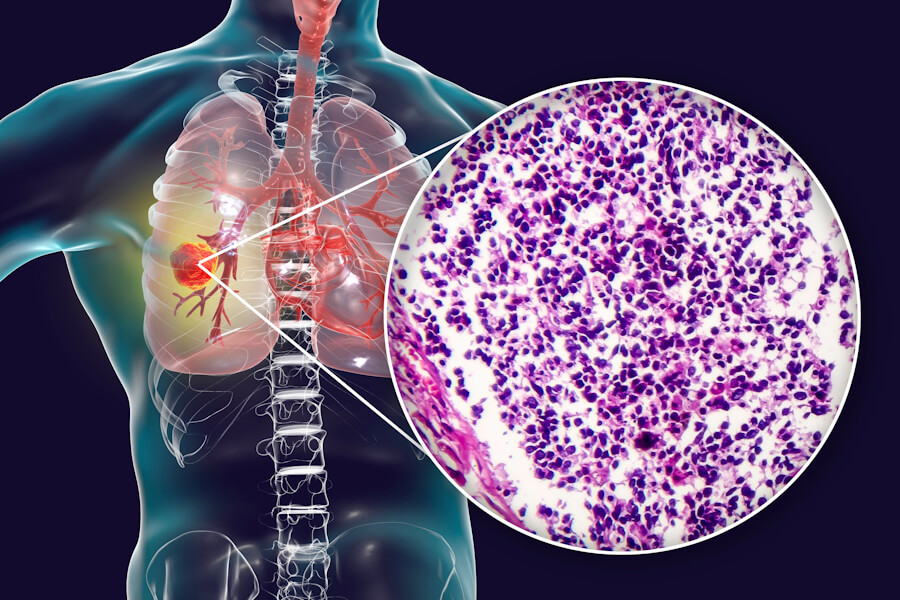
Small Cell Lung Cancer (SCLC) — A Comprehensive Clinical and Public Health Review
Small cell lung cancer (SCLC) is a high‑grade neuroendocrine carcinoma of the lung characterised by rapid proliferation, early widespread dissemination, and a sobering prognosis. Although it accounts for only 10–15 % of all lung cancers, SCLC is responsible for a disproportionate share of lung‑cancer mortality because the majority of patients present with metastatic disease at diagnosis. Over the past decade, the therapeutic landscape has shifted modestly with the integration of immunotherapy into first‑line regimens and the emergence of novel agents such as lurbinectedin and tarlatamab. This long‑read, Wikipedia‑style synthesis provides an evidence‑based overview of the epidemiology, biology, prevention, diagnosis, staging, treatment, and survivorship of SCLC, with reference to current international guidelines.
🏷️ ICD‑10 Classification
SCLC is classified under the ICD‑10 block C34 — Malignant neoplasm of bronchus and lung. The relevant subcodes mirror those used for all bronchogenic carcinomas:
-
C34.0 — Main bronchus (including carina and hilus)
-
C34.1 — Upper lobe, bronchus, or lung
-
C34.2 — Middle lobe, bronchus, or lung
-
C34.3 — Lower lobe, bronchus, or lung
-
C34.8 — Overlapping lesion of bronchus and lung
-
C34.9 — Bronchus or lung, unspecified
In the Onkopedia guideline, SCLC is explicitly coded as ICD‑10 C34.-. The ICD‑O‑3 morphology codes used in cancer registries for SCLC include 8002, 8041–8045.
🔬 Types and Histological Subtypes
SCLC is a neuroendocrine neoplasm that arises from neuroendocrine cells in the bronchial mucosa. The World Health Organization classification recognises two principal histological categories:
Small Cell Carcinoma (Pure SCLC)
This is the classic form, accounting for approximately 90 % of SCLC cases. Microscopically, the tumour is composed of small, densely packed cells with scant cytoplasm, finely granular (“salt‑and‑pepper”) chromatin, absent or inconspicuous nucleoli, and a high nucleus‑to‑cytoplasm ratio. Immunohistochemistry is required for confirmation: tumour cells typically express CD56 (NCAM), synaptophysin, chromogranin A, and TTF‑1, with a Ki‑67 proliferation index exceeding 70–80 %.
Combined Small Cell Carcinoma (cSCLC)
Combined SCLC is defined by the intimate admixture of SCLC with a component of non‑small cell lung cancer (NSCLC) — most commonly adenocarcinoma, squamous cell carcinoma, or large cell carcinoma — or with large cell neuroendocrine carcinoma (LCNEC). The current convention is that any tumour showing at least 10 % SCLC is diagnosed as combined SCLC. Combined SCLC constitutes approximately 10 % of all SCLC cases and 2–5 % of all lung cancers. Its prognosis is generally similar to that of pure SCLC, although the NSCLC component may influence treatment selection.
From a molecular standpoint, nearly all SCLCs harbour inactivating mutations in TP53 and RB1, which are considered fundamental drivers of malignant transformation. Other recurrent alterations include MYC family amplifications (20–40 % of cases), NOTCH family mutations, and FGFR1 alterations. These molecular insights have not yet translated into routine targeted therapies, although DLL3‑targeting agents are now entering clinical practice.
⚠️ Causes and Risk Factors
Tobacco Smoking
Cigarette smoking is the dominant etiological factor, with 95 % of patients diagnosed with SCLC having a history of tobacco use. The risk is dose‑dependent and is measured in pack‑years. The decline in SCLC incidence in many high‑income countries over recent decades has been attributed largely to reduced smoking rates and changes in cigarette composition.
Environmental and Occupational Exposures
-
Radon gas — the second leading cause of lung cancer overall and a recognised contributor to SCLC risk.
-
Asbestos — a well‑established occupational carcinogen.
-
Ambient air pollution — fine particulate matter (PM₂.₅) is increasingly recognised as a risk factor.
-
Ionising radiation — high environmental radon, uranium mining, and medical radiation exposure.
-
Diesel exhaust fumes, quartz dust, and other occupational agents.
Host and Genetic Factors
-
Older age — the median age at onset is approximately 68–70 years; fewer than 2 % of patients develop SCLC before age 50.
-
Chronic obstructive pulmonary disease (COPD) — independently associated with increased risk.
-
Family history — a positive history of lung cancer in first‑degree relatives confers an increased risk.
-
Sex — historically more common in men, although the male‑to‑female ratio has narrowed as smoking patterns have converged.
🛡️ Prevention and Avoidance
Primary Prevention
-
Tobacco control remains the single most effective preventive strategy. Population‑level measures include taxation, smoke‑free legislation, plain packaging, and mass media campaigns.
-
Radon mitigation — testing of homes and workplaces, particularly in high‑risk geographic areas, and installation of ventilation systems.
-
Occupational health surveillance — enforcement of exposure limits for asbestos, silica, diesel exhaust, and other carcinogens.
-
Air quality improvement — reduction of ambient PM₂.₅ through clean‑energy policies and urban planning.
Early Detection and Screening
SCLC is not specifically targeted by most lung‑cancer screening programmes, which are designed primarily around low‑dose computed tomography (LDCT) for high‑risk individuals. Nevertheless, LDCT screening in eligible populations (e.g., age 50–80 with ≥20 pack‑years of smoking) can detect SCLC at an earlier, potentially more treatable stage. The Onkopedia guideline notes that screening programmes for occupational asbestos exposure exist in some jurisdictions (e.g., Switzerland). Because SCLC grows rapidly, interval cancers between annual screening rounds remain a challenge.
🚨 Early Signs and Common Symptoms
SCLC is frequently asymptomatic in its earliest phases, and symptoms often reflect locally advanced or metastatic disease. Approximately 60 % of patients may be asymptomatic at diagnosis, with the tumour detected incidentally on imaging performed for other reasons.
Respiratory and Thoracic Symptoms
-
Cough — the most common symptom, reported in approximately 40 % of patients.
-
Dyspnoea (shortness of breath) — approximately 34 %.
-
Haemoptysis (coughing up blood) — approximately 10 %.
-
Chest pain — often pleuritic or related to mediastinal invasion.
-
Hoarseness — from recurrent laryngeal nerve involvement.
-
Dysphagia — from oesophageal compression.
-
Facial swelling and dilated neck veins — from superior vena cava syndrome.
Systemic and Metastatic Symptoms
-
Weight loss and anorexia — common and often profound.
-
Fatigue and malaise.
-
Bone pain — from skeletal metastases.
-
Headache, nausea, vomiting, seizures, or focal neurological deficits — from brain metastases; approximately 15 % of patients have brain metastases at diagnosis.
-
Abdominal pain or jaundice — from liver metastases.
-
Cervical or supraclavicular lymphadenopathy.
Paraneoplastic Syndromes
SCLC is uniquely associated with a high frequency of paraneoplastic syndromes, which may be the presenting feature:
-
Syndrome of inappropriate antidiuretic hormone secretion (SIADH) — occurs in approximately 10–15 % of patients and manifests as hyponatraemia.
-
Ectopic ACTH syndrome (Cushing syndrome) — occurs in 1–5 % of patients and is a poor prognostic factor.
-
Lambert–Eaton myasthenic syndrome — approximately 1 %; presents with proximal muscle weakness, dysarthria, and dysphagia.
-
Neurological paraneoplastic syndromes — anti‑Hu (ANNA‑1), anti‑Ri, and other antibodies may produce sensory neuronopathy, encephalomyelitis, or cerebellar degeneration.
🩻 Diagnosis
The diagnostic pathway follows a structured sequence: clinical assessment → imaging → histological confirmation → staging.
Imaging
-
Chest radiograph — often the first test; may reveal a central mass, hilar enlargement, mediastinal widening, or pleural effusion.
-
Contrast‑enhanced computed tomography (CT) of the chest, abdomen, and pelvis — the cornerstone of diagnosis and staging. SCLC typically presents as a central hilar mass (85 %) with mediastinal lymphadenopathy (75 %).
-
Magnetic resonance imaging (MRI) of the brain — preferred over head CT for detecting brain metastases; recommended for all patients with SCLC, particularly those being considered for curative‑intent therapy.
-
FDG‑PET/CT — useful for detecting occult distant metastases and refining staging.
-
Bone scintigraphy — may be used when bone metastases are suspected.
Tissue Acquisition and Pathology
-
Flexible bronchoscopy with biopsy — the preferred approach for central lesions.
-
Transthoracic needle aspiration/biopsy — for peripheral lesions, often under CT or ultrasound guidance.
-
Endobronchial ultrasound‑guided transbronchial needle aspiration (EBUS‑TBNA) — for mediastinal nodal sampling.
-
Mediastinoscopy or thoracoscopy — when less invasive methods are non‑diagnostic.
-
Histological confirmation requires immunohistochemical evidence of at least two neuroendocrine markers (CD56, synaptophysin, chromogranin, TTF‑1) and a Ki‑67 index above 70 %.
Laboratory and Biomarker Testing
-
Neuron‑specific enolase (NSE) — a glycolytic enzyme highly expressed in SCLC; diagnostic sensitivity approximately 60–80 %, specificity 70–85 %.
-
Pro‑gastrin‑releasing peptide (ProGRP) — diagnostic sensitivity 70–90 %, specificity 85–95 %; levels may rise before imaging abnormalities are detectable.
-
Lactate dehydrogenase (LDH) — often elevated due to high cell turnover and apoptosis.
-
Circulating tumour cells (CTCs) — emerging as a non‑invasive marker with diagnostic sensitivity of approximately 65–80 %.
-
Liquid biopsy — circulating tumour DNA analysis is an area of active investigation for genotyping and disease monitoring.
💊 Treatment
Treatment is determined by stage (limited vs. extensive), performance status, and patient preferences. A multidisciplinary team approach is standard.
Limited‑Stage SCLC (LS‑SCLC)
Concurrent Chemoradiotherapy
The standard of care for LS‑SCLC is platinum‑based chemotherapy (cisplatin or carboplatin plus etoposide) delivered concurrently with thoracic radiotherapy. The chemotherapy protocol typically consists of 4–6 cycles of cisplatin/etoposide at 3‑week intervals. This approach is potentially curative in approximately 30 % of patients. More recently, consolidation with durvalumab (an anti‑PD‑L1 antibody) for up to 2 years after chemoradiotherapy has been shown to improve survival and is now recommended for patients whose disease has not progressed. Median survival for LS‑SCLC has reached up to 55.9 months with the addition of durvalumab in some series.
Surgery
Surgery is reserved for a highly selected minority of patients with clinical T1–T2 N0 M0 disease (very limited disease) after thorough mediastinal staging. The procedure of choice is lobectomy with systematic nodal dissection, followed by adjuvant chemotherapy (four cycles of cisplatin and etoposide). Surgery is not appropriate for the vast majority of SCLC patients, who present with more advanced disease.
Prophylactic Cranial Irradiation (PCI)
PCI is recommended for patients with LS‑SCLC who achieve a complete or good partial response to initial therapy. It reduces the risk of central nervous system relapse and has been shown to improve survival. However, neurocognitive toxicity — including memory impairment and cognitive changes — remains a major limitation, particularly in older adults. Hippocampal‑avoidance techniques are being investigated to mitigate these effects.
Extensive‑Stage SCLC (ES‑SCLC)
First‑Line Chemoimmunotherapy
The current standard first‑line treatment for ES‑SCLC is platinum‑etoposide chemotherapy combined with an immune checkpoint inhibitor — either atezolizumab or durvalumab (anti‑PD‑L1 antibodies) — followed by maintenance immunotherapy until disease progression or unacceptable toxicity. This regimen produces initial tumour shrinkage in 60–70 % of patients. Median overall survival is approximately 12–15 months with chemoimmunotherapy, and 15–20 % of patients achieve 3‑year survival.
Chemotherapy Alone
For patients who are not candidates for immunotherapy, platinum‑etoposide remains the backbone of treatment. Response rates are high initially, but relapse is nearly universal.
Second‑Line Therapy and Novel Agents
-
Lurbinectedin — a DNA‑alkylating agent approved for relapsed SCLC; overall response rate approximately 35 %, median progression‑free survival 3.7 months.
-
Tarlatamab — a bispecific T‑cell engager targeting DLL3 and CD3; received traditional FDA approval in November 2025 for ES‑SCLC with disease progression on or after platinum‑based chemotherapy. In clinical trials, tarlatamab achieved a median overall survival of 13.6 months in previously treated patients.
-
Topotecan — an older topoisomerase I inhibitor used as second‑line chemotherapy.
-
CAV regimen (cyclophosphamide, doxorubicin, vincristine) — an alternative second‑line option.
Radiotherapy in ES‑SCLC
Thoracic radiotherapy may be considered for patients who achieve a complete response at distant sites and at least a good partial response within the thorax. Palliative radiotherapy is used for symptomatic bone metastases, brain metastases, and local airway obstruction.
📊 Staging and TNM Classification
SCLC has traditionally been staged using the Veterans Administration Lung Study Group (VALSG) two‑tier system:
-
Limited‑stage (LS‑SCLC) — disease confined to one hemithorax, with or without ipsilateral supraclavicular lymph node involvement, that can be encompassed within a single tolerable radiotherapy portal.
-
Extensive‑stage (ES‑SCLC) — disease beyond these boundaries, including contralateral lung involvement, malignant pleural or pericardial effusion, and distant metastases.
The TNM classification (8th edition, AJCC/UICC) is increasingly applied alongside the VALSG system to refine prognosis and guide treatment, particularly for the small subset of patients who are candidates for surgery. In TNM terms:
-
Stage I–IIA (T1–T2 N0 M0) — very limited disease; surgery may be considered.
-
Stage IIB–IIIC — locally advanced disease; concurrent chemoradiotherapy is standard.
-
Stage IV — any T, any N, M1a/b/c; systemic therapy is the mainstay.
Approximately 30 % of patients present with LS‑SCLC and 70 % with ES‑SCLC.
🌐 Metastasis
SCLC is characterised by early and widespread haematogenous dissemination. At diagnosis, two‑thirds of patients have evidence of distant metastasis. The most common metastatic sites are:
-
Liver — approximately 33 % of patients with metastatic SCLC.
-
Brain — approximately 30 %; 15 % of all SCLC patients have brain metastases at diagnosis.
-
Bone — approximately 27 %.
-
Adrenal glands — approximately 10 %.
-
Pericardium — approximately 3 %.
-
Contralateral lung and pleura — also common.
Liver, bone, and pleural metastases have been associated with particularly poor overall survival in patients with ES‑SCLC.
📈 Cure Rate and Survival Rate
SCLC has one of the poorest prognoses of all solid tumours. Population‑based data from the Surveillance, Epidemiology, and End Results (SEER) programme and international registries indicate:
-
Overall 5‑year survival for SCLC — approximately 8.9–9 %, compared with 32 % for non‑small cell lung cancer.
-
Limited‑stage SCLC — median overall survival 20 months; 1‑year survival 60 %; 5‑year survival 20 %. With the addition of durvalumab consolidation, median survival has reached 55.9 months in some series, and 3‑year overall survival is approximately 56.5 %.
-
Extensive‑stage SCLC — median overall survival 13 months; 1‑year survival 54 %; 5‑year survival 1 %. With chemoimmunotherapy, median overall survival is 12–15 months, and 15–20 % of patients achieve 3‑year survival.
“Cure” is achievable in a minority of patients with LS‑SCLC treated with chemoradiotherapy or surgery, but the majority of patients relapse within the first two years. In ES‑SCLC, cure is not currently achievable with standard therapies, although durable remissions occur in a small subset of patients.
⏳ Life Expectancy With and Without Treatment
Without Treatment
The natural history of untreated SCLC is aggressive:
-
Limited‑stage disease — median life expectancy approximately 3.5 months.
-
Extensive‑stage disease — median life expectancy approximately 6 weeks.
-
Some series report median survival of 2–4 months for untreated patients overall, with the shortest survivals in those with extensive‑stage disease.
With Treatment
-
Limited‑stage SCLC treated with chemoradiotherapy — median survival 14–20 months; 5‑year survival 15–20 %.
-
Limited‑stage SCLC with surgery (very limited disease) — long‑term survival is possible; adjuvant chemotherapy improves outcomes.
-
Extensive‑stage SCLC treated with chemoimmunotherapy — median survival 12–15 months; 3‑year survival 15–20 %.
-
Extensive‑stage SCLC treated with chemotherapy alone — median survival 9–12 months.
-
Relapsed SCLC — median survival after first‑line therapy is approximately 6 months.
These figures are population‑level averages and should not be used to predict individual outcomes. Performance status, age, stage, response to initial therapy, and molecular features all influence prognosis.
🕊️ Palliative Care
Palliative care is an integral component of SCLC management from the time of diagnosis, delivered alongside disease‑directed therapy. Key domains include:
-
Symptom control — opioids for pain and dyspnoea; corticosteroids for brain metastases and airway obstruction; antiemetics; management of malignant effusions; and treatment of paraneoplastic syndromes (e.g., fluid restriction and vasopressin receptor antagonists for SIADH).
-
Psychological support — treatment of anxiety and depression; cognitive‑behavioural therapy; mindfulness‑based interventions.
-
Social and financial support — assistance with activities of daily living, caregiver support, and advance care planning.
-
Spiritual care — respecting patient values and preferences.
-
End‑of‑life care — timely discussion of goals of care, hospice referral when appropriate, and bereavement support for families.
Early integration of palliative care has been shown to improve quality of life and reduce aggressive end‑of‑life care in patients with advanced lung cancer.
📌 Key Facts
-
SCLC accounts for approximately 10–15 % of all lung cancers, with an incidence of 4.7 per 100,000 individuals in the United States.
-
95 % of patients with SCLC have a history of tobacco use.
-
Approximately 70 % of patients present with extensive‑stage disease at diagnosis.
-
Two‑thirds of patients have distant metastases at presentation.
-
SIADH occurs in 10–15 % of patients; Cushing syndrome in 1–5 %.
-
The 5‑year overall survival for SCLC is approximately 9 %, compared with 32 % for NSCLC.
-
Tarlatamab, a DLL3‑targeting bispecific T‑cell engager, received traditional FDA approval in November 2025 for previously treated ES‑SCLC.
-
SCLC incidence has been declining in many high‑income countries, largely reflecting reduced smoking rates.
❓ Questions and Answers
1️⃣ Basics, Neuroendocrine Biology & Pathology
1. What is Small Cell Lung Cancer (SCLC)?
SCLC is a high-grade neuroendocrine carcinoma of the lung characterized by rapid proliferation, early widespread metastasis, and universal inactivation of TP53 and RB1. It accounts for approximately 13–15% of all lung cancers and is strongly associated with tobacco smoking.
2. How does Small Cell Lung Cancer differ from Non-Small Cell Lung Cancer (NSCLC)?
SCLC grows much faster, metastasizes earlier, and is generally treated with systemic chemotherapy and radiation rather than surgery. NSCLC (adenocarcinoma, squamous, large cell) grows more slowly and is more often amenable to surgical resection and targeted therapies.
3. What percentage of all lung cancers are classified as SCLC?
Approximately 13–15% of all lung cancers are SCLC, although this proportion has declined in many high-income countries due to reduced smoking rates.
4. What do SCLC cells look like under a microscope?
SCLC cells are small, round to oval, with scant cytoplasm, finely granular (“salt-and-pepper”) chromatin, absent or inconspicuous nucleoli, and a very high nuclear-to-cytoplasmic ratio. They often show nuclear molding and crush artifact.
7. What are the main neuroendocrine markers used to confirm SCLC on pathology?
The key markers are synaptophysin, chromogranin A, CD56 (NCAM), and INSM1. TTF-1 is also positive in >80–90% of SCLCs.
9. What is Ki-67 / MIB-1 proliferation index, and why is it extremely high in SCLC?
Ki-67 is a marker of cellular proliferation. In SCLC, the Ki-67 index typically exceeds 50–90%, reflecting the tumor’s very high growth fraction and aggressive biology.
10. What is Combined Small Cell Lung Cancer?
Combined SCLC is defined by the presence of SCLC admixed with a component of NSCLC (most commonly adenocarcinoma, squamous cell carcinoma, or large cell carcinoma) or large cell neuroendocrine carcinoma. Any tumor with at least 10% SCLC is classified as combined SCLC.
12. What is Large Cell Neuroendocrine Carcinoma (LCNEC) of the lung, and how does it differ from SCLC?
LCNEC is a high-grade neuroendocrine carcinoma with larger cells, prominent nucleoli, and a lower nuclear-to-cytoplasmic ratio than SCLC. It is managed more like NSCLC in many cases, although platinum-etoposide chemotherapy is often used.
15. What is the tumor doubling time of SCLC?
SCLC has a very short doubling time, often less than 30–60 days, which explains its rapid clinical progression and early metastasis.
16. Why does SCLC metastasize so early in the course of the disease?
SCLC cells have high proliferative activity, early lymphatic and hematogenous spread, and loss of cell-cycle checkpoints (TP53/RB1), allowing rapid dissemination before the primary tumor becomes symptomatic.
19. What gene mutations are universal in SCLC?
Inactivation of TP53 and RB1 occurs in >90–95% of SCLC cases and is considered a defining molecular feature of the disease.
20. Why does loss of the Retinoblastoma (RB1) tumor suppressor protein define SCLC biology?
RB1 loss removes a key cell-cycle checkpoint, allowing uncontrolled G1-to-S transition and rapid proliferation. It is a hallmark of neuroendocrine transformation and SCLC pathogenesis.
22. What is MYC gene amplification in SCLC?
Amplification of MYC family genes (MYCA, MYCL, MYCN) occurs in 20–40% of SCLCs and is associated with aggressive biology, treatment resistance, and poor prognosis.
26. What defines the SCLC-A subtype?
SCLC-A is driven by the ASCL1 transcription factor and is the most common subtype, associated with classic neuroendocrine features and response to chemotherapy.
29. What is DLL3 (Delta-like ligand 3)?
DLL3 is a Notch ligand overexpressed on the surface of SCLC cells in >80–85% of cases. It is a key therapeutic target for bispecific T-cell engagers (BiTEs) such as tarlatamab and antibody-drug conjugates.
32. What is SLFN11, and why does high expression predict sensitivity to DNA-damaging chemotherapy?
SLFN11 is a protein involved in DNA damage response. High SLFN11 expression predicts sensitivity to platinum agents, topotecan, and PARP inhibitors. Loss of SLFN11 is associated with chemoresistance in relapsed SCLC.
33. Does NSCLC ever transform into SCLC?
Yes. EGFR-mutated NSCLC can transform into SCLC as a mechanism of resistance to osimertinib in approximately 5–15% of cases. This transformation involves loss of RB1 and TP53 while retaining the original EGFR mutation.
42. What is Superior Vena Cava (SVC) Syndrome in SCLC?
SVC syndrome results from compression or invasion of the superior vena cava by a central mediastinal tumor, causing facial swelling, neck and arm swelling, distended neck veins, and shortness of breath. It is a medical emergency.
46. Why is SCLC the cancer most frequently associated with paraneoplastic syndromes?
SCLC is a neuroendocrine tumor that can ectopically produce hormones and trigger autoimmune responses, leading to syndromes such as SIADH, ectopic ACTH syndrome, Lambert-Eaton myasthenic syndrome, and paraneoplastic neurological disorders.
55. What is SIADH (Syndrome of Inappropriate Antidiuretic Hormone secretion)?
SIADH is a paraneoplastic syndrome in which SCLC cells ectopically produce vasopressin (ADH), causing hyponatremia, confusion, seizures, and muscle weakness. It occurs in approximately 10–15% of SCLC patients.
59. What is Lambert-Eaton Myasthenic Syndrome (LEMS)?
LEMS is a paraneoplastic neurological syndrome caused by autoantibodies against presynaptic voltage-gated calcium channels (VGCC). It causes proximal muscle weakness (especially in the legs), dry mouth, and temporary improvement of strength after brief exertion.
63. What autoantibodies are linked to SCLC neurological paraneoplastic syndromes?
Anti-Hu (ANNA-1) is the most common, associated with sensory neuronopathy and encephalomyelitis. Anti-Ri, anti-Yo, anti-CRMP5, and anti-VGCC antibodies are also linked to specific syndromes.
66. What is Hypertrophic Pulmonary Osteoarthropathy (HPOA)?
HPOA is a paraneoplastic syndrome characterized by digital clubbing, periostitis, and arthritis, often associated with lung cancer, including SCLC, although it is more common in NSCLC.
73. What is circulating tumor cell (CTC) burden in SCLC?
SCLC sheds significantly more CTCs into the bloodstream than almost any other solid tumor. CTC counts correlate with tumor burden, treatment response, and prognosis and are being investigated as a liquid biopsy tool.
77. How do Notch signaling pathways suppress neuroendocrine differentiation in SCLC?
Notch signaling promotes a non-neuroendocrine, less aggressive phenotype. Loss of Notch signaling is associated with neuroendocrine differentiation and SCLC progression.
100. What is the primary biological summary of SCLC?
SCLC is an aggressive, high-grade neuroendocrine tumor defined by universal TP53/RB1 loss, rapid proliferation, early systemic spread, and initial high sensitivity to chemotherapy and radiation followed by rapid relapse.
2️⃣ Signs, Symptoms & Clinical Presentation
101. What are the early warning signs of Small Cell Lung Cancer?
Early signs include persistent cough, hemoptysis, dyspnea, chest pain, hoarseness, unexplained weight loss, and fatigue. Many patients are asymptomatic until the disease is advanced.
103. Why are early-stage SCLC symptoms often missed or mistaken for a “smoker’s cough” or bronchitis?
Because SCLC symptoms overlap with common smoking-related respiratory conditions, both patients and clinicians may attribute them to benign causes, delaying diagnosis.
104. What is the most common presenting symptom of SCLC?
Persistent, worsening cough is the most common presenting symptom, reported in approximately 40% of patients.
107. What is hemoptysis (coughing up blood)?
Hemoptysis is the expectoration of blood from the respiratory tract. Even small streaks or specks warrant urgent evaluation in a smoker or former smoker.
113. What causes severe shortness of breath (dyspnea) in SCLC?
Dyspnea results from airway obstruction, atelectasis (lung collapse), pleural effusion, or replacement of lung tissue by tumor.
116. What causes rapid, unexplained weight loss in SCLC?
Cancer cachexia, altered metabolism, and loss of appetite contribute to profound weight loss, which is a poor prognostic sign.
118. What causes hoarseness or voice changes in SCLC?
Hoarseness results from compression of the left recurrent laryngeal nerve by a mediastinal tumor or enlarged lymph nodes.
123. What symptoms indicate Superior Vena Cava (SVC) Syndrome?
Facial swelling, puffiness around the eyes, neck and arm swelling, prominent blue veins across the chest wall, and shortness of breath.
124. What causes dysphagia (difficulty swallowing) in SCLC?
Enlarged mediastinal lymph nodes or direct tumor invasion can compress the esophagus, causing dysphagia.
126. What symptoms indicate SCLC has spread to the brain?
Headaches (worse in the morning), nausea/vomiting, double vision, balance issues, seizures, confusion, and weakness on one side of the body.
127. What percentage of SCLC patients have brain metastases at initial diagnosis?
Approximately 20–25% of SCLC patients have brain metastases at initial diagnosis.
128. What percentage of SCLC patients develop brain metastases during their disease course?
Approximately 50–60% of SCLC patients develop brain metastases during their disease course.
129. What symptoms indicate SCLC has spread to the bones?
Deep, aching bone pain (especially in the spine, ribs, and hips), pathological fractures, and spinal cord compression.
131. What is spinal cord compression, and why is it a medical emergency?
Spinal cord compression occurs when a vertebral metastasis compresses the spinal cord, causing back pain, leg weakness, numbness, and loss of bowel/bladder control. Immediate treatment is required to prevent permanent paralysis.
132. What symptoms indicate SCLC has spread to the liver?
Right upper quadrant abdominal pain, jaundice, dark urine, abdominal swelling (ascites), and nausea.
134. What symptoms indicate SCLC has spread to distant lymph nodes?
Swollen, hard, painless lumps in the neck or above the collarbone (supraclavicular lymphadenopathy).
135. What are the symptoms of SIADH-induced hyponatremia?
Confusion, brain fog, lethargy, muscle cramps, nausea, unstable gait, seizures, and coma.
137. What are the symptoms of Ectopic Cushing Syndrome in SCLC?
Rapid facial swelling (“moon face”), severe proximal muscle weakness, uncontrolled hypertension, hyperglycemia, and dark purple stretch marks.
138. What are the symptoms of Lambert-Eaton Myasthenic Syndrome (LEMS)?
Leg weakness causing difficulty rising from a chair or climbing stairs, dry mouth, drooping eyelids, and temporary recovery of strength after brief muscle contraction.
140. Can SCLC cause unexplained blood clots (DVT or PE)?
Yes. Cancer-associated hypercoagulability increases the risk of deep vein thrombosis and pulmonary embolism.
142. Can SCLC cause night sweats or persistent low-grade fever?
Yes. Tumor fever can result from cytokine release, tumor necrosis, or secondary lung infection.
143. How rapidly do SCLC symptoms progress compared to NSCLC?
SCLC symptoms often escalate dramatically over just a few weeks, whereas NSCLC symptoms progress more slowly over months.
146. What red flag symptoms require immediate emergency room arrival?
Coughing up more than a teaspoon of blood, sudden face/neck swelling, inability to catch breath, leg paralysis, and severe sudden headache with confusion.
148. How long do SCLC patients typically experience symptoms before seeking medical evaluation?
On average, 4 to 8 weeks.
150. What is the ECOG Performance Status scale, and why is it critical in SCLC treatment planning?
The ECOG scale (0–4) measures functional status. It is critical because treatment intensity and prognosis are closely tied to performance status.
151. How does a sudden drop in ECOG status reflect rapid SCLC progression?
A drop from ECOG 1 to 3 over a short period often indicates rapid tumor growth, complications, or paraneoplastic syndromes requiring urgent intervention.
153. Why is “incidental” early detection of SCLC on screening CT so rare?
SCLC grows rapidly and often presents as interval cancer between annual screening rounds, limiting the yield of screening.
155. Can SCLC cause skin nodules (cutaneous metastases)?
Yes. Cutaneous metastases present as firm, painless reddish nodules and indicate advanced disease.
157. How does SCLC-related anemia cause pale skin, dizziness, and rapid heart rate?
Anemia reduces oxygen-carrying capacity, leading to pallor, fatigue, dizziness, and compensatory tachycardia.
159. How is smoking history quantified (pack-years)?
Pack-years = (packs smoked per day) × (years smoked). A 30 pack-year history carries a much higher SCLC risk than a 10 pack-year history.
161. What symptoms signal that SCLC treatment is successfully shrinking the tumor?
Rapid relief of cough, reduced breathlessness, and clearing of SVC facial swelling within days of starting chemotherapy.
165. How does cancer cachexia alter muscle mass, fat storage, and physical appearance?
Cachexia causes progressive loss of skeletal muscle and fat, leading to weakness, frailty, and a wasted appearance.
168. What are the early warning signs of SCLC relapse?
Returning cough, subtle shortness of breath, new bone pain, morning headaches, and fatigue.
171. How do patient-reported outcome (PRO) tools improve symptom control during treatment?
PROs systematically capture symptoms between visits, enabling earlier intervention and better quality of life.
173. What support tools help family members recognize emergency SCLC symptoms at home?
Symptom tracking logs, 24/7 triage nurse hotlines, and educational materials from patient advocacy organizations.
175. What diagnostic chest signs appear on physical auscultation?
Wheezing, rhonchi, crackles, friction rub, dullness to percussion, and absent breath sounds over collapsed lung areas.
177. What is the clinical significance of a rapid heart rate (tachycardia) at initial SCLC presentation?
Tachycardia may reflect anemia, hypoxemia, fever, pain, or pulmonary embolism and warrants prompt evaluation.
180. What percentage of SCLC patients present with extensive-stage metastatic symptoms at initial diagnosis?
Approximately 70% of SCLC patients present with extensive-stage disease.
184. What single takeaway highlights SCLC symptom management?
Prompt evaluation of new chest, neurological, or systemic symptoms in smokers is vital due to SCLC’s rapid growth rate.
3️⃣ Causes, Smoking Link & Prevention
201. What is the primary cause of Small Cell Lung Cancer?
Cigarette smoking is the primary cause, responsible for approximately 95% of cases.
202. What percentage of SCLC cases are directly caused by cigarette smoking?
Approximately 95%.
203. Is SCLC ever diagnosed in never-smokers?
Yes, but it is extremely rare (<2–5% of all cases). Pathology re-evaluation is recommended to confirm true SCLC versus NSCLC with neuroendocrine features.
207. What chemical carcinogens in tobacco smoke directly damage bronchial cell DNA?
Polycyclic aromatic hydrocarbons (PAHs), nitrosamines such as NNK, benzene, and other carcinogens cause DNA adducts and mutations.
210. Does secondhand smoke cause SCLC in non-smokers?
Yes. Long-term secondhand smoke exposure increases lung cancer risk by approximately 20–30%.
212. Does vaping / e-cigarette use cause SCLC?
The long-term risks of e-cigarette vapor on neuroendocrine lung cells are unknown, but avoiding all tobacco and nicotine products is recommended.
214. What is radon gas, and why is it the #2 cause of SCLC overall and #1 cause in non-smokers?
Radon is a colorless, odorless radioactive gas released from uranium decay in soil and rock. It is the second leading cause of lung cancer overall and the leading cause in never-smokers.
216. How does radon gas accumulate inside homes?
Radon enters through basement cracks, foundation gaps, and well water and can accumulate to dangerous levels in poorly ventilated spaces.
218. What home radon level requires active mitigation?
The EPA action level is 4.0 pCi/L or higher.
220. Does asbestos exposure cause SCLC?
Yes. Asbestos is a recognized occupational carcinogen, and its effect synergizes with cigarette smoke.
224. Does diesel exhaust fume exposure raise SCLC risk?
Yes. Diesel exhaust contains carcinogenic particles and is associated with increased lung cancer risk.
226. Does outdoor air pollution (PM2.5) contribute to SCLC risk?
Yes. Fine particulate matter (PM2.5) is increasingly recognized as a contributor to lung cancer risk, including SCLC.
228. Is Small Cell Lung Cancer hereditary?
SCLC is not strongly hereditary, but inherited mutations in TP53 (Li-Fraumeni syndrome), BRCA2, and CHEK2 may modestly increase risk.
230. Does a prior history of lung diseases (COPD, emphysema) increase SCLC risk independent of smoking?
Yes. COPD and emphysema are independently associated with a 2- to 4-fold increased risk of lung cancer.
232. Does prior chest radiation therapy increase SCLC risk years later?
Yes. Prior thoracic radiotherapy (e.g., for Hodgkin lymphoma or breast cancer) increases the risk of subsequent lung cancer, including SCLC.
234. How is cumulative smoking exposure calculated in “pack-years”?
Pack-years = (packs per day) × (years smoked).
236. Does heavy current smoking carry higher risk than former smoking?
Yes. Current heavy smokers have the highest risk, but former smokers remain at elevated risk for years after quitting.
238. How rapidly does SCLC risk drop after quitting smoking?
Risk begins dropping immediately and declines by 50–70% after 10–15 years of abstinence compared to continuing smokers.
240. Can quitting smoking AFTER an SCLC diagnosis improve treatment outcomes?
Yes. Quitting at diagnosis improves chemotherapy tolerance, reduces radiation complications, lowers second primary tumor risk, and extends overall survival.
242. What evidence-based tools assist smokers in quitting?
Nicotine replacement therapy (NRT), varenicline (Chantix), cytisine, bupropion, and behavioral counseling.
244. Does smoking menthol cigarettes carry a higher SCLC risk than non-menthol cigarettes?
Menthol may increase nicotine dependence and inhalation depth, potentially increasing risk, but all cigarettes are harmful.
246. Does smoking “light” or “low-tar” cigarettes lower SCLC risk?
No. Changing inhalation depth does not prevent SCLC; all cigarettes are carcinogenic.
248. Why are military veterans at higher risk for SCLC?
Higher historical smoking rates, occupational chemical exposures, and burn pit exposures contribute to increased risk.
250. Does alcohol consumption directly cause SCLC?
Alcohol is not a direct cause of SCLC, although it may increase cancer risk at other sites.
252. Do high-dose beta-carotene supplements increase lung cancer risk?
Yes. The CARET and ATBC trials showed that high-dose beta-carotene supplements increase lung cancer risk in active smokers.
254. Does physical exercise lower SCLC risk?
Regular physical activity is associated with modestly reduced lung cancer risk and improved overall health.
256. Does chronic psychological stress directly cause SCLC?
No. Stress does not directly cause SCLC, although it may influence smoking behavior and overall health.
258. Does physical chest trauma or rib fracture cause SCLC?
No. Physical injury cannot cause lung cancer.
260. Does exposure to mold, mildew, or house dust cause SCLC?
No established link exists between mold or house dust and SCLC.
262. What workplace safety regulations limit chemical carcinogens in air?
OSHA standards set permissible exposure limits for asbestos, silica, diesel exhaust, and other carcinogens.
264. How do sub-slab depressurization systems abate radon in homes?
These systems vent radon gas from beneath the foundation to the outdoors before it enters the home.
266. What public health policies are most effective in reducing SCLC incidence?
Tobacco taxes, clean indoor air laws, public smoking bans, plain packaging, and mass media campaigns.
268. What is the impact of lung cancer stigma on SCLC research funding and public empathy?
Stigma reduces public empathy, discourages patient advocacy, and contributes to lower research funding compared to other cancers.
270. How does smoking stigma prevent patients from seeking timely medical care?
Fear of blame and shame can delay symptom reporting and diagnosis, worsening outcomes.
272. Does HIV infection increase SCLC risk?
Yes, primarily due to higher smoking rates and immune dysfunction.
274. Do autoimmune diseases increase SCLC risk?
Some autoimmune conditions and immunosuppressive therapies may modestly increase risk, but evidence is limited.
276. Why do lower socio-economic groups experience higher SCLC incidence?
Higher targeted tobacco marketing, environmental exposures, lower screening access, and reduced healthcare access contribute to disparities.
278. What modifiable risk factors account for >95% of all SCLC cases?
Smoking, radon exposure, and occupational carcinogen exposure.
280. What 3 concrete actions can an individual take today to prevent SCLC?
-
Quit smoking or never start; 2) Test home for radon; 3) Use personal protective equipment in high-risk occupational environments.
282. How do state quitlines (1-800-QUIT-NOW) provide free coaching and nicotine patches?
They offer free telephone counseling, nicotine replacement therapy, and personalized quit plans.
284. Where can homeowners buy certified low-cost home radon test kits?
Through the EPA’s National Radon Program, state radon offices, and hardware stores.
286. How do air quality index (AQI) tracking apps help vulnerable individuals reduce air pollution exposure?
They provide real-time air quality data, allowing individuals to limit outdoor activity on high-pollution days.
288. What is the scientific consensus on harm reduction strategies for hard-to-quit smokers?
Harm reduction approaches (e.g., nicotine replacement, vaping as a transition) remain controversial, but complete cessation is the goal.
290. Where can the public view published IARC carcinogen lists?
On the International Agency for Research on Cancer (IARC) website (monographs.iarc.who.int).
292. How will declining global smoking rates impact SCLC incidence over the next several decades?
SCLC incidence is expected to continue declining in high-income countries, although it may rise in regions where smoking is increasing.
294. How does combining smoking cessation with low-dose CT screening optimize survival in high-risk individuals?
Screening detects early cancer while cessation reduces cancer risk and improves treatment outcomes.
296. What free smoking cessation apps are backed by clinical research?
The National Cancer Institute’s quitSTART app and SmokefreeTXT are evidence-based tools.
298. What policies promote radon testing during real estate home sales?
Some states require radon disclosure or testing during real estate transactions.
300. What final preventive message empowers high-risk individuals?
It is never too late to quit smoking or test your home for radon.
4️⃣ Screening, Early Detection & Staging Workup
301. Can Small Cell Lung Cancer be detected early?
Early detection is difficult because SCLC grows rapidly and is often asymptomatic until advanced. However, low-dose CT screening can detect some cases at an earlier stage.
303. What percentage of SCLC cases are diagnosed at an early, limited stage versus extensive stage?
Approximately 30% are diagnosed at limited stage and 70% at extensive stage.
304. What screening test is approved for high-risk individuals to detect lung cancer early?
Annual low-dose computed tomography (LDCT) screening.
305. What is a Low-Dose Computed Tomography (LDCT) scan?
LDCT is a specialized CT scan that uses 80–90% less radiation than standard CT while providing detailed 3D images of the lungs.
307. What clinical trials proved LDCT screening reduces lung cancer mortality?
The NLST trial showed a 20% reduction in lung cancer mortality, and the NELSON trial showed a 24% reduction.
309. Who qualifies for annual LDCT screening under USPSTF guidelines?
Adults aged 50–80 years with a ≥20 pack-year smoking history who currently smoke or quit within the past 15 years.
311. Can a fast-growing SCLC tumor develop in the 12-month interval between annual LDCT screening scans (“interval cancer”)?
Yes. SCLC can grow rapidly between annual scans, which is a limitation of annual screening for this subtype.
313. What percentage of eligible high-risk Americans currently receive annual LDCT screening?
Less than 6–10% of eligible individuals are screened.
315. What is a “shared decision-making” (SDM) visit prior to LDCT screening?
A discussion between patient and clinician about the benefits, risks, and limitations of screening, including false positives and follow-up protocols.
317. What is the Lung-RADS scoring system?
Lung-RADS is a standardized reporting system for LDCT screening that categorizes nodules from 1 (negative) to 4X (suspicious) and guides follow-up.
319. What does Lung-RADS Category 4A/4B/4X mean?
Suspicious findings with >5–15% chance of malignancy, requiring urgent 3-month CT, PET-CT, or biopsy.
321. What guidelines dictate follow-up for incidental lung nodules?
The Fleischner Society Guidelines.
323. What diagnostic imaging workup is REQUIRED once SCLC is suspected or confirmed?
Contrast-enhanced CT of the chest, abdomen, and pelvis; PET-CT; and brain MRI with contrast.
325. What is a PET-CT scan, and why is it essential for staging SCLC?
PET-CT combines metabolic imaging (FDG) with anatomical CT to detect occult metastases and refine staging.
327. Why is a Brain MRI with contrast MANDATORY for ALL newly diagnosed SCLC patients?
Because SCLC has a high propensity for brain metastasis, and MRI is the most sensitive test for detecting brain lesions.
329. What percentage of asymptomatic SCLC patients have hidden brain metastases on initial staging MRI?
Approximately 10–15%.
331. What non-surgical biopsy procedures confirm an SCLC diagnosis?
Flexible bronchoscopy, EBUS-TBNA, CT-guided transthoracic biopsy, and thoracentesis.
333. What is Endobronchial Ultrasound (EBUS-TBNA)?
EBUS-TBNA is a minimally invasive technique using ultrasound guidance to sample mediastinal lymph nodes during bronchoscopy.
335. What is Liquid Biopsy (plasma ctDNA testing)?
Liquid biopsy analyzes circulating tumor DNA in the blood and can be used when tissue biopsy is unsafe or insufficient.
337. What staging system is used specifically for SCLC?
The Veterans Administration Lung Study Group (VALSG) two-tier system: limited stage and extensive stage.
339. What is Limited-Stage SCLC?
Disease confined to one hemithorax and regional nodes that can be encompassed within a single tolerable radiation portal.
341. What percentage of SCLC patients are diagnosed at Limited Stage?
Approximately 30%.
343. What is Extensive-Stage SCLC?
Disease that has spread beyond a single radiation field, including contralateral lung, distant lymph nodes, pleural effusion, or distant organs.
345. What percentage of SCLC patients are diagnosed at Extensive Stage?
Approximately 70%.
347. Is the 8th Edition AJCC TNM Staging System also applied to SCLC?
Yes, TNM is increasingly used alongside the VALSG system, especially for surgical candidates.
349. Why is distinguishing Limited Stage from Extensive Stage the SINGLE most critical treatment decision in SCLC?
Because limited stage is treated with curative intent (chemoradiation ± immunotherapy), while extensive stage is treated with palliative/disease-control intent (chemoimmunotherapy).
351. Why is elevated Lactate Dehydrogenase (LDH) a key biomarker of high tumor burden?
LDH reflects high cell turnover and tumor burden and is a poor prognostic factor in SCLC.
353. Are serum tumor markers (NSE, ProGRP) useful in SCLC?
Yes, they can be used to monitor treatment response and detect early recurrence, although they are not diagnostic alone.
355. What is Pulmonary Function Testing (PFT), and when is it needed in SCLC?
PFT measures lung capacity (FEV1, DLCO) and is required before thoracic radiation or rare surgical resection.
357. What is a multidisciplinary tumor board review?
A meeting of thoracic surgeons, medical oncologists, radiation oncologists, radiologists, and pathologists to review staging and treatment plans.
359. Why is SCLC considered a medical priority where staging workup should occur within days?
Because SCLC progresses rapidly, delays in staging and treatment initiation can lead to clinical deterioration.
361. What should a patient do if staging scans are delayed by insurance authorization?
Care teams can submit urgent peer-to-peer reviews to expedite PET-CT and brain MRI pre-authorizations.
363. What complications can occur during diagnostic bronchoscopy or lung biopsy?
Pneumothorax, minor bleeding, and transient fever.
365. What post-biopsy symptoms require immediate emergency evaluation?
Coughing up blood, worsening dyspnea, and severe chest pain.
367. What key questions should a patient ask their oncologist about staging results?
“Is my SCLC limited or extensive stage?” “Have my brain MRI and PET-CT been completed?” “Has my case been reviewed by a tumor board?”
369. Why is a second opinion from an NCI-designated Comprehensive Cancer Center valuable?
For borderline limited/extensive cases, expert review can clarify staging and treatment approach.
371. How do nurse navigators guide patients through rapid staging appointments?
They coordinate scheduling, facilitate communication between specialists, and provide patient education.
373. How do liquid biopsy ctDNA assays help resolve equivocal imaging findings?
They can detect molecular evidence of malignancy when imaging is ambiguous.
375. What summary checklist confirms a complete SCLC staging workup?
Tissue biopsy confirmed + PET-CT complete + Brain MRI complete + CBC/CMP/LDH bloods done + Multidisciplinary team review.
377. Where can patients view official NCCN Patient Guidelines for SCLC?
On the NCCN website (nccn.org/patientresources).
379. How does accurate staging prevent under-treatment or unnecessary radiation toxicity?
Accurate staging ensures that curative-intent therapy is delivered only to those who can benefit and avoids unnecessary toxicity in patients with disseminated disease.
5️⃣ Limited-Stage SCLC: Curative-Intent Treatment
401. What is the treatment goal for Limited-Stage SCLC?
Curative intent — achieving long-term disease control and potential cure.
402. Is Limited-Stage SCLC curable?
Yes, in approximately 25–30% of patients with modern chemoradiation and consolidation immunotherapy.
403. What is the 5-year survival rate for Limited-Stage SCLC?
Approximately 25–30% with modern chemo-radiation plus consolidation immunotherapy.
404. What is the standard-of-care primary treatment for Limited-Stage SCLC?
Concurrent chemoradiation (chemotherapy delivered simultaneously with thoracic radiation therapy), followed by consolidation durvalumab.
406. Why is concurrent chemoradiation superior to sequential treatment?
Concurrent delivery improves local control and overall survival by maximizing synergistic effects and preventing tumor repopulation.
407. What chemotherapy regimen is combined with radiation for LS-SCLC?
Cisplatin + etoposide (EP) or carboplatin + etoposide if cisplatin is contraindicated.
409. How many cycles of cisplatin + etoposide chemotherapy are given?
Typically 4 cycles every 3 weeks.
411. When should thoracic radiation therapy start during chemotherapy?
Early integration — starting with cycle 1 or cycle 2 of chemotherapy.
413. What is the optimal thoracic radiation schedule for LS-SCLC?
Hyperfractionated twice-daily radiation (45 Gy in 30 fractions over 3 weeks) or once-daily radiation (60–66 Gy over 6 weeks).
415. Why is twice-daily radiation effective for fast-growing SCLC cells?
It prevents tumor cell repopulation between doses and maximizes cell kill.
417. What radiation techniques are used to deliver precise thoracic radiation?
IMRT, VMAT, and proton therapy.
419. What is Consolidation Immunotherapy for Limited-Stage SCLC?
Durvalumab (Imfinzi) given after chemoradiation for up to 2 years.
420. What did the landmark ADRIATIC trial prove about consolidation durvalumab in LS-SCLC?
It significantly extended overall survival and progression-free survival compared to placebo.
422. What is Prophylactic Cranial Irradiation (PCI)?
Low-dose preventive radiation to the whole brain to destroy microscopic cancer cells and reduce brain metastasis risk.
424. How much does PCI reduce the risk of brain metastases?
It cuts brain metastasis risk by >50% and improves 3-year overall survival by approximately 5%.
426. What are the potential cognitive side effects of whole-brain PCI?
Short-term memory decline, fatigue, and executive function changes.
428. What is Hippocampal-Avoidance PCI (HA-PCI)?
A technique that spares the memory centers (hippocampus) during brain radiation to reduce cognitive memory loss.
430. Can regular surveillance brain MRIs be substituted for PCI in select elderly or frail patients?
Yes, in some cases, close MRI surveillance may be used instead of PCI to avoid cognitive toxicity.
431. Is surgery ever performed for Limited-Stage SCLC?
Rarely, in <5% of cases with clinical stage I (T1–T2 N0 M0) solitary nodules without nodal spread.
432. What surgical operation is performed for Stage I SCLC?
Lobectomy with systematic mediastinal lymph node dissection.
433. What treatment MUST follow surgical resection of Stage I SCLC?
Adjuvant chemotherapy with 4 cycles of cisplatin + etoposide ± PCI.
435. What are common side effects of cisplatin + etoposide chemotherapy?
Nausea, vomiting, fatigue, alopecia, neutropenia, anemia, thrombocytopenia, kidney strain, tinnitus, and neuropathy.
437. How is cisplatin kidney toxicity prevented?
Vigorous IV saline hydration before and after infusion and avoiding NSAIDs.
439. What is Neutropenic Fever, and why is it a medical emergency?
Fever >100.4°F (38.0°C) with absolute neutrophil count <500/μL requires urgent blood cultures and IV antibiotics.
441. What are common acute side effects of thoracic radiation therapy?
Radiation esophagitis, fatigue, skin redness, and temporary dry cough.
443. What is Radiation Pneumonitis?
Lung inflammation occurring 1–6 months after thoracic radiation, presenting with dry cough, dyspnea, and low-grade fever.
445. How is Radiation Pneumonitis treated?
Oral corticosteroid taper (e.g., prednisone) over 4–8 weeks.
447. How long does active chemoradiation treatment take for LS-SCLC?
Chemotherapy lasts ~12 weeks; thoracic radiation lasts 3–6 weeks.
449. What defines a Complete Radiographic Response in LS-SCLC?
Disappearance of all visible tumor on imaging.
451. What percentage of LS-SCLC patients achieve a complete or near-complete initial tumor response?
Approximately 60–80%.
453. What is the risk of SCLC recurrence even after achieving a complete response?
Approximately 50–60% risk of local or distant relapse within 2 years.
455. How long is consolidation durvalumab therapy continued?
Up to 24 months if tolerated without disease progression.
457. What side effects are associated with consolidation durvalumab?
Immune-related events including pneumonitis, thyroid changes, fatigue, and skin rash.
459. What follow-up scan schedule is required after finishing LS-SCLC curative treatment?
Chest/abdomen/pelvis CT every 2–3 months for years 1–2, then every 3–6 months for years 3–5; brain MRI every 3–6 months for years 1–2.
461. What skin care products are safe during chest radiation?
Aquaphor, plain aloe vera, and non-perfumed lotions; avoid heavy application right before beam delivery.
463. How does smoking cessation during chemoradiation directly improve survival rates?
It improves treatment tolerance, reduces complications, and lowers recurrence risk.
465. What support services help patients navigate transportation for twice-daily radiation visits?
ACS Road to Recovery, hospital transportation vouchers, and non-profit lodging grants.
467. What questions should you ask your radiation oncologist before starting LS-SCLC treatment?
“Are we delivering twice-daily or once-daily radiation?” “Will radiation start with cycle 1 or 2?” “Am I a candidate for consolidation durvalumab?” “Is PCI with hippocampal avoidance recommended?”
469. What blood monitoring is performed weekly during chemoradiation?
CBC, kidney panel, and electrolyte levels.
471. What is the role of speech-language pathologists in evaluating post-radiation swallowing function?
They assess and treat dysphagia and help prevent aspiration.
473. Why is maintaining hydration (2–3 liters/day) crucial during cisplatin chemotherapy?
Adequate hydration protects kidney function and reduces cisplatin nephrotoxicity.
475. How do oncologists adjust doses if severe neutropenia or kidney dysfunction occurs?
They may delay treatment, reduce doses, or add growth factor support.
477. What summary timeline outlines LS-SCLC treatment?
Weeks 1–12: concurrent chemo + thoracic radiation → restaging scans → PCI (if complete response) → consolidation durvalumab immunotherapy.
479. Where can patients read published clinical trial results for the ADRIATIC and CONVERT studies?
In the Journal of Clinical Oncology, The Lancet Oncology, and NEJM.
481. What final encouragement empowers LS-SCLC patients?
Limited-stage SCLC is treated with aggressive curative intent; modern chemoradiation followed by consolidation immunotherapy offers the best survival outcomes in history.
6️⃣ Extensive-Stage SCLC: Systemic & Immunotherapy Standards
501. What is the treatment goal for Extensive-Stage SCLC?
Disease control, prolonging survival, shrinking tumors, relieving symptoms, and maintaining quality of life.
502. Is Extensive-Stage SCLC curable?
It is considered treatable but not traditionally curable; however, modern chemoimmunotherapy has significantly extended overall survival and created a subset of long-term survivors.
503. What is the standard-of-care first-line treatment for Extensive-Stage SCLC?
Platinum-doublet chemotherapy + immune checkpoint inhibitor (PD-L1 immunotherapy).
504. What specific chemoimmunotherapy combinations are FDA-approved for first-line ES-SCLC?
Carboplatin + etoposide + atezolizumab (IMpower133) and durvalumab + platinum + etoposide (CASPIAN).
505. What did the landmark IMpower133 and CASPIAN trials prove?
Adding anti-PD-L1 immunotherapy to first-line platinum-etoposide chemotherapy significantly improves overall and progression-free survival.
506. How many initial cycles of chemoimmunotherapy are given for ES-SCLC?
Four cycles every 3 weeks.
507. What happens after completing the 4 initial cycles?
Patients transition to maintenance immunotherapy (single-agent atezolizumab or durvalumab every 3–4 weeks).
508. How long is maintenance immunotherapy continued?
Indefinitely until disease progression or unmanageable side effects.
509. Why is carboplatin widely preferred over cisplatin in ES-SCLC?
Carboplatin offers equivalent survival efficacy with less nausea, kidney toxicity, and neuropathy, making it gentler for frail or elderly patients.
511. How fast does ES-SCLC respond to first-line chemoimmunotherapy?
60–80% of patients experience rapid tumor shrinkage and symptom relief within the first 1–2 cycles (3–6 weeks).
513. What is the role of radiation therapy in ES-SCLC?
Palliative radiation for symptomatic brain, bone, or SVC obstruction; consolidation thoracic radiation for select responders.
515. What is the role of PCI in ES-SCLC?
Controversial; modern practice increasingly uses close MRI surveillance instead of PCI to avoid cognitive toxicity.
517. How are brain metastases managed in ES-SCLC?
SRS or whole-brain radiation for symptomatic/large lesions; observation or SRS for asymptomatic small lesions.
519. What is Stereotactic Radiosurgery (SRS)?
Targeted high-dose radiation to specific brain metastases in 1–5 sessions, sparing healthy brain tissue.
521. What are common side effects of first-line chemoimmunotherapy?
Fatigue, hair loss, neutropenia, anemia, thrombocytopenia, nausea, rash, thyroid dysfunction, pneumonitis, colitis, and hepatitis.
523. What is Immune-Mediated Pneumonitis?
Lung inflammation caused by immunotherapy, presenting with new cough, worsening dyspnea, and low oxygen saturation.
525. How is Immune-Mediated Colitis treated?
Steroids, and infliximab for severe cases.
527. How is thyroid dysfunction caused by atezolizumab/durvalumab managed?
Monitored via routine TSH blood tests; treated easily with daily levothyroxine.
529. How do oncologists monitor treatment response during first-line ES-SCLC treatment?
CT scans of chest/abdomen/pelvis and brain MRI every 2–3 cycles (every 6–9 weeks).
531. What defines Partial Response (PR) on CT scan?
≥30% decrease in the sum of tumor diameters.
533. What defines Progressive Disease (PD)?
≥20% increase in tumor size or appearance of new metastatic lesions.
535. What is the average duration of response to first-line chemoimmunotherapy in ES-SCLC?
Approximately 4–8 months.
537. What percentage of ES-SCLC patients become long-term responders on maintenance immunotherapy?
15–20% survive beyond 3–5 years.
539. How is cancer-related fatigue managed during maintenance immunotherapy?
Gentle exercise, energy pacing, and treating anemia/thyroid issues.
541. What blood test monitoring is required before EVERY chemoimmunotherapy infusion?
CBC with differential, comprehensive metabolic panel, and thyroid function (TSH).
543. What absolute neutrophil count (ANC) is required to safely receive chemotherapy?
Typically ANC ≥1,500/μL.
545. What platelet count is required to safely receive chemotherapy?
Typically platelets ≥100,000/μL.
547. How is SIADH hyponatremia managed during initial ES-SCLC treatment?
As the tumor shrinks from chemotherapy, ectopic vasopressin drops and sodium levels typically normalize within days.
549. How is bone metastasis pain managed in ES-SCLC?
Denosumab or zoledronic acid + palliative radiation + analgesics.
551. What dental examination is required before starting denosumab or zoledronic acid?
Dental clearance to prevent osteonecrosis of the jaw.
553. What is the role of palliative care in ES-SCLC?
Early integration improves symptom relief, lowers depression, and enhances quality of life.
555. How are low-dose opioids used to treat severe shortness of breath?
They calm the brain’s respiratory center and reduce breathlessness without suppressing breathing.
557. Can an ES-SCLC patient continue daily activities during chemoimmunotherapy?
Many patients experience significant energy recovery during maintenance immunotherapy once active chemo ends and tumors shrink.
559. What food safety guidelines apply when white blood cells are low?
Avoid raw/undercooked meats, unwashed fruits, and unpasteurized dairy.
561. What temperature threshold requires an IMMEDIATE emergency room visit during chemotherapy?
Any fever of 100.4°F (38.0°C) or higher requires urgent blood cultures and IV antibiotics.
563. Why should patients NEVER take fever-reducing drugs during chemo without calling their oncology team first?
Tylenol/acetaminophen can mask a dangerous neutropenic fever.
565. What support programs help patients afford expensive monthly immunotherapy drugs?
Manufacturer copay assistance cards, non-profit foundation grants (PAN, HealthWell), and patient assistance programs.
567. What questions should you ask your oncologist before starting first-line ES-SCLC treatment?
“Are we starting carboplatin + etoposide with atezolizumab or durvalumab?” “What is our plan for monitoring my brain with MRI scans?” “Who do I call immediately if I develop a fever?” “When will we perform our first repeat CT scans?”
569. What digital tools help record infusion dates and symptom severity at home?
Belong.life, CaringBridge, and other cancer-focused apps.
571. What role do oncology social workers play in coordinating home care support?
They assist with transportation, financial assistance, home health services, and emotional support.
573. What travel or flying restrictions apply during active ES-SCLC treatment?
Patients should consult their oncologist; flying may be contraindicated with severe dyspnea or recent procedures.
575. What hydration targets protect kidney function during chemotherapy?
2–3 liters of fluid per day, unless otherwise directed.
577. What is a Port-a-Cath, and why is it recommended for SCLC patients?
A subcutaneous venous access port that simplifies IV access and prevents vein damage from repeated infusions.
579. Where can patients read approved FDA prescribing information for Tecentriq and Imfinzi in SCLC?
On the FDA website and manufacturer websites.
581. What summary message reassures newly diagnosed ES-SCLC patients?
First-line chemoimmunotherapy provides rapid, powerful disease control for the majority of ES-SCLC patients, restoring breathing and strength.
7️⃣ Relapsed SCLC, Second-Line Therapies & Novel Drugs
601. What happens when Small Cell Lung Cancer recurs?
The disease returns after initial treatment, often with rapid progression and resistance to prior therapies.
603. What percentage of ES-SCLC patients experience disease progression within 1 year of initial treatment?
More than 80%.
604. What is the definition of “Platinum-Sensitive” relapsed SCLC?
Disease that relapses more than 90 days (3–6 months) after completing initial platinum chemotherapy.
605. What is the definition of “Platinum-Resistant” relapsed SCLC?
Disease that relapses less than 90 days (3 months) after completing initial platinum chemotherapy.
606. What is “Platinum-Refractory” SCLC?
Disease that grows or progresses during initial platinum chemotherapy.
608. What second-line systemic drug therapies are FDA-approved for relapsed SCLC?
Tarlatamab (Imdelltra), lurbinectedin (Zepzelca), topotecan (Hycamtin), and platinum re-challenge for platinum-sensitive relapse.
610. What is Tarlatamab (Imdelltra)?
A first-in-class bispecific T-cell engager (BiTE) targeting DLL3 and CD3.
611. How does Tarlatamab work?
It binds simultaneously to DLL3 on SCLC cells and CD3 on T-cells, directing T-cells to kill SCLC cells.
613. What overall response rate and durable survival did Tarlatamab demonstrate in relapsed SCLC?
ORR ~40%, median overall survival ~14.3 months in heavily pretreated patients.
615. What is Cytokine Release Syndrome (CRS)?
A systemic inflammatory response caused by T-cell activation, presenting with fever, chills, hypotension, tachycardia, and hypoxia.
617. When does CRS typically occur during Tarlatamab treatment?
During initial step-up dosing in cycle 1.
619. How is CRS managed?
Overnight hospital observation during initial doses, IV fluids, tocilizumab (Actemra), and corticosteroids.
621. What is ICANS?
Immune Effector Cell-Associated Neurotoxicity Syndrome, presenting with confusion, aphasia, and cognitive changes.
623. How is Tarlatamab administered?
IV infusion with step-up dosing on days 1, 8, and 15 of cycle 1, then every 2 weeks.
625. What is Lurbinectedin (Zepzelca)?
A DNA-alkylating agent that inhibits oncogenic transcription and depletes tumor-associated macrophages.
627. What overall response rate does Lurbinectedin achieve in relapsed SCLC?
Approximately 35%.
629. What are common side effects of Lurbinectedin?
Neutropenia, fatigue, anemia, elevated liver enzymes, nausea, and diarrhea.
631. What is Topotecan (Hycamtin)?
A topoisomerase I inhibitor that prevents DNA replication.
633. What are main side effects of Topotecan?
Severe bone marrow suppression, anemia, hair loss, and fatigue.
635. What chemotherapy regimens are used off-label for relapsed SCLC?
CAV (cyclophosphamide + doxorubicin + vincristine), paclitaxel, docetaxel, irinotecan, temozolomide, and gemcitabine.
637. What is the role of clinical trials in relapsed SCLC?
They are strongly recommended by NCCN guidelines for relapsed SCLC.
639. What Antibody-Drug Conjugates (ADCs) are in clinical trials for relapsed SCLC?
ADCs targeting DLL3 (ABBV-011), B7-H3 (ifinatamab deruxtecan), SEZ6 (ABBV-706), and TROP2 (sacituzumab govitecan).
641. What are PARP inhibitors in SCLC clinical trials?
Olaparib, niraparib, and talazoparib are being evaluated in combination with chemotherapy or ATR inhibitors in SLFN11-positive SCLC.
643. What are LSD1 inhibitors in SCLC trials?
They suppress neuroendocrine transcription factors and are being tested in relapsed SCLC.
645. What is DLL3-targeted CAR-T cell therapy?
Autologous CAR-T cells engineered to target DLL3, showing promise in early-phase research.
647. How are re-recurring brain metastases managed in relapsed SCLC?
Repeat SRS, whole-brain radiation (if not given previously), or temozolomide.
649. What is the role of liquid biopsy (ctDNA) at time of SCLC progression?
It can detect molecular resistance mechanisms and guide clinical trial enrollment.
651. How is physical performance status re-evaluated before starting second-line treatment?
ECOG status is reassessed to determine treatment tolerance and prognosis.
653. How do oncologists manage severe neutropenia on second-line chemo?
Prophylactic G-CSF growth factor injections (pegfilgrastim/filgrastim).
655. How is nausea prevented during multi-day topotecan or lurbinectedin cycles?
NK-1 inhibitors, 5-HT3 antagonists, dexamethasone, and olanzapine.
657. What is the average duration of response to second-line SCLC therapies?
Typically 3–6 months.
659. What third-line therapy options exist?
Switching to alternative drug classes, clinical trials, or supportive care.
661. How do financial navigators help patients afford novel agents like Tarlatamab or Lurbinectedin?
They connect patients with manufacturer assistance programs, foundation grants, and copay relief.
663. What inpatient safety protocols govern initial Tarlatamab step-up dosing?
Overnight observation, vital sign monitoring, and CRS/ICANS surveillance.
665. What key questions should you ask your oncologist if your SCLC has relapsed?
“Is my relapse platinum-sensitive or platinum-resistant?” “Am I a candidate for tarlatamab or lurbinectedin?” “Are there open clinical trials?” “Will initial tarlatamab dosing require overnight monitoring?”
667. How do clinical trial finder databases help patients locate SCLC studies?
ClinicalTrials.gov and LUNGevity Trial Finder match patients with eligible trials.
669. What role does palliative care play alongside second-line SCLC treatment?
It manages symptoms and improves quality of life throughout treatment.
671. What hospice and home-care resources support patients when active drug options are exhausted?
Hospice care, home nursing, and palliative care teams.
673. How do second-opinion thoracic oncology sub-specialists provide guidance on complex relapsed cases?
They review pathology, imaging, and treatment history to recommend optimal next steps.
675. What documents must be sent to a clinical trial screening center?
Pathology reports, imaging CDs, treatment summaries, and recent labs.
677. How do patient advocacy groups connect relapsed SCLC patients with trial-matching navigators?
Through dedicated helplines and online matching tools.
679. What research initiatives are funded by the NCI Recalcitrant Cancer Research Act for SCLC?
Research into SCLC biology, novel therapeutics, and biomarkers.
681. How are patient-derived xenograft (PDX) mouse models helping scientists screen new SCLC drugs?
They allow testing of novel agents against patient-derived tumors in the laboratory.
683. How are researchers working to overcome SCLC multidrug resistance?
By targeting ABC transporters (P-glycoprotein), DNA repair pathways, and cancer stem cells.
685. What hope is provided by the rapidly expanding pipeline of DLL3- and B7-H3-targeted immunotherapies?
These agents offer new mechanisms of action for relapsed SCLC and are being tested in clinical trials.
687. What summary message empowers patients facing relapsed SCLC?
FDA approval of tarlatamab and novel ADC clinical trials represent a new era of targeted immunotherapy for relapsed SCLC.
689. Where can patients read published prescribing information for Imdelltra and Zepzelca?
On the FDA website and manufacturer websites.
691. What emergency symptoms require immediate ER evaluation on second-line therapy?
Fever >100.4°F, severe shortness of breath, and sudden confusion.
693. How do peer mentors who have navigated second-line therapies offer encouragement?
They share personal experiences and practical advice through peer support programs.
695. What step-by-step checklist prepares a patient for starting second-line treatment?
Confirm relapse stage, review treatment options, assess clinical trial eligibility, arrange financial assistance, and establish a support network.
697. What digital health platforms offer virtual second opinions for relapsed SCLC?
Platforms such as Grand Rounds and academic cancer center telehealth services.
699. What final statement guides relapsed SCLC care?
Explore clinical trials and novel targeted immunotherapies early upon relapse; celebrate every day of quality time achieved through modern precision medicine.
8️⃣ Palliative Care, Symptom Management & End-of-Life
701. What is Palliative Care in SCLC?
Specialized medical care focused on relieving symptoms, pain, and stress at any stage of disease, delivered alongside active treatment.
702. Is Palliative Care the same as Hospice Care?
No. Palliative care can be delivered at any stage alongside curative treatment, while hospice care is for patients with a life expectancy of 6 months or less who have stopped curative treatment.
704. Why should Palliative Care be started immediately upon SCLC diagnosis?
Early integration improves symptom management, reduces ER visits, lowers depression, and enhances overall survival.
706. How is severe dyspnea managed in advanced SCLC?
Low-dose oral opioids, supplemental oxygen, a handheld fan, positioning, and anti-anxiety medications.
708. How is severe cancer pain managed in SCLC?
WHO Pain Ladder: acetaminophen/NSAIDs → mild opioids → strong opioids (morphine, oxycodone, fentanyl, hydromorphone, methadone).
710. How is neuropathic pain treated?
Gabapentin, pregabalin, and duloxetine.
712. How is a chronic malignant cough managed?
Benzonatate, codeine/dextromethorphan syrups, low-dose morphine, and nebulized lidocaine.
714. How is cancer cachexia managed?
High-protein nutritional supplements, megestrol acetate, low-dose dexamethasone, medical cannabis, and dietitian consultation.
716. How is malignant pleural effusion managed?
Therapeutic thoracentesis, indwelling pleural catheter (PleurX), and talc pleurodesis.
718. How is airway obstruction managed in central SCLC?
Therapeutic bronchoscopy, rigid bronchoscopy with laser debulking, and airway stent placement.
720. How is SVC obstruction managed palliatively?
SVC endovascular stent placement, IV dexamethasone, and palliative radiation.
722. What is an Advanced Directive?
A legal document specifying medical preferences and naming a healthcare proxy.
724. Why should advance care planning conversations happen early after an SCLC diagnosis?
To ensure patient preferences are honored and relieve family burden during crises.
726. When is Hospice Care appropriate for SCLC?
When disease progresses through available treatments, life expectancy is ≤6 months, and the focus shifts to comfort and quality of life.
728. What services are provided by a Hospice interdisciplinary team?
Hospice physician, nurses, social workers, home health aides, chaplains, volunteers, and bereavement counselors.
730. What is Respite Care under the Medicare Hospice Benefit?
Up to 5 days of short-term inpatient care to give family caregivers a rest.
732. What physical signs indicate a patient is entering the final actively dying phase?
Profound weakness, altered breathing patterns (Cheyne-Stokes), terminal congestion, cool/mottled extremities, and decreased urine output.
734. What is Terminal Respiratory Congestion (“death rattle”), and how is it managed?
Managed with sublingual anticholinergic drops (atropine, glycopyrrolate, scopolamine) and repositioning.
736. Is terminal congestion painful for the patient?
No, the patient is unaware and unconscious, but repositioning helps reassure family members.
738. What is Palliative Sedation?
It is used for rare intractable severe distress at end of life to ensure comfort.
740. How does bereavement support assist grieving family members?
Hospices provide free grief counseling for 13 months following a loss.
742. What is the Social Security Compassionate Allowances Program for SCLC?
It fast-tracks SSDI disability application approval within weeks for patients diagnosed with SCLC.
744. What financial assistance grants help SCLC families?
PAN Foundation, HealthWell, CancerCare, and the American Cancer Society.
746. How can patients access free transportation to medical appointments?
ACS Road to Recovery program and local community van services.
748. How do virtual telehealth visits allow frail SCLC patients to consult with care teams?
They enable remote consultations without travel, improving access and convenience.
750. What books or guides assist families navigating advanced cancer?
Being Mortal by Atul Gawande and Gone From My Sight by Barbara Karnes.
752. What steps help patients record audio/video legacy messages?
Legacy projects, memory books, and guided recording sessions with family.
754. How do integrative therapies ease stress in palliative SCLC care?
Acupuncture, gentle massage, reiki, and music therapy.
756. What questions should you ask your palliative care physician?
“How will we ensure my shortness of breath and pain are controlled?” “What home equipment can be delivered today?” “How will my family be supported if an emergency occurs at night?”
758. What spiritual care resources are available?
Hospital chaplains, community clergy, and spiritual counselors.
760. How do pediatric palliative specialists support young children of SCLC patients?
They provide age-appropriate explanations and emotional support for children.
762. What digital applications help family members coordinate care?
CaringBridge and Lotsa Helping Hands.
764. How do legal aid organizations assist cancer patients with free power of attorney and will preparation?
Cancer Legal Resource Center (CLRC) and local legal aid societies.
766. How can hospice nurses manage sudden breakthrough agitation or delirium?
With antipsychotics, benzodiazepines, and environmental modifications.
768. Why is open, honest communication about prognosis essential?
It aligns care with patient values and reduces family conflict.
770. What reassurance provides peace of mind to patients concerned about being a burden?
Expert palliative and hospice care guarantees that pain, shortness of breath, and distress will be managed with complete dignity and compassion.
772. Where can families find accredited local hospice providers?
NHPCO and CaringInfo.
774. What support resources assist grieving children after a parent’s passing?
The Dougy Center and other childhood bereavement programs.
776. What digital tools securely store advance directives for emergency access?
Patient portals and secure apps like MyDirectives.
778. What final comfort message reassures families?
You are never alone: specialized care teams ensure comfort, dignity, and loving support every step of the way.
780. What summary takeaway highlights compassionate end-of-life care?
Every patient deserves pain-free, comfortable, dignified care surrounded by love.
9️⃣ Survivorship, Scanxiety & Stigma
801. What does it mean to be an SCLC survivor?
Survivorship begins at diagnosis and encompasses physical, emotional, and social well-being throughout treatment and beyond.
803. What percentage of Limited-Stage SCLC patients become 5-year disease-free survivors?
Approximately 20–25%.
804. What percentage of Extensive-Stage SCLC patients become 5-year survivors?
Approximately 3–7%, rising with modern chemoimmunotherapy.
806. What follow-up surveillance schedule is required after completing curative LS-SCLC treatment?
Chest/abdomen/pelvis CT every 2–3 months for years 1–2, every 3–6 months for years 3–5, then annual LDCT indefinitely.
808. What brain surveillance schedule is required post-treatment?
Brain MRI every 3–4 months for year 1, every 6 months for year 2, then annually or as clinically indicated.
810. What is the risk of developing a second primary lung cancer in long-term SCLC survivors?
Approximately 1–2% per year, higher in continuing smokers.
812. What physical long-term side effects do SCLC survivors manage?
Reduced lung capacity, chronic fatigue, peripheral neuropathy, hearing loss, radiation chest wall pain, and cognitive changes.
814. How is post-chemotherapy peripheral neuropathy managed?
Gabapentin, pregabalin, physical therapy, and acupuncture.
816. What is “Scanxiety”?
The intense anxiety and emotional distress experienced before routine follow-up CT and MRI scans.
818. How can SCLC survivors manage Scanxiety?
Schedule scans early in the week, request rapid result delivery, practice mindfulness, bring a support person, and engage in distracting activities.
820. What psychological support helps survivors process cancer trauma?
Psycho-oncology counseling, cognitive behavioral therapy, support groups, and mindfulness meditation.
822. What is “Lung Cancer Stigma”?
The unfair societal bias, blame, or shame directed toward lung cancer patients based on the assumption that their disease was self-inflicted by smoking.
824. How does lung cancer stigma negatively impact patients?
It causes shame, guilt, isolation, delayed symptom reporting, and reduced research funding.
826. Why is asking an SCLC patient “Did you smoke?” considered harmful?
No one deserves cancer; nicotine addiction is a complex medical condition, and empathy belongs to every human being.
828. What is The White Ribbon Project?
A grassroots patient-led movement started by lung cancer survivors to promote awareness, unity, and eliminate stigma.
830. Myth: Is Small Cell Lung Cancer a death sentence?
False. With modern chemoimmunotherapy, consolidation durvalumab, and novel BiTE drugs like tarlatamab, more SCLC patients are living longer with high quality of life than ever before.
832. Myth: Is it “too late” to quit smoking after an SCLC diagnosis?
False. Quitting at diagnosis directly improves treatment response, reduces side effects, lowers recurrence risk, and extends overall survival.
834. Myth: Does surgery cause SCLC to spread?
False. Surgery does not cause cancer to spread.
836. Myth: Does eating sugar make SCLC grow faster?
False. Sugar does not directly feed tumor growth; maintaining adequate nutrition is vital during treatment.
838. Myth: Do natural herbal detoxes or alkaline water cure SCLC?
False. Unproven alternative remedies have zero efficacy against SCLC and can delay effective treatment.
840. What is the difference between Alternative Medicine and Integrative Oncology?
Alternative medicine replaces standard cancer care with unproven therapies; integrative oncology uses evidence-based supportive therapies alongside standard care.
842. Myth: Does a needle biopsy cause SCLC to spread?
False. Coaxial needle biopsy techniques make needle track seeding extremely rare (<0.01%).
844. What lifestyle habits support long-term SCLC survivorship?
Complete smoking cessation, regular low-impact exercise, radon testing, a balanced Mediterranean-style diet, limited alcohol, and vaccination.
846. Is physical exercise safe for SCLC survivors with reduced lung function?
Yes. Tailored light exercise and pulmonary rehab safely improve oxygen uptake, reduce fatigue, and boost mood.
848. What workplace rights protect SCLC survivors returning to work?
ADA accommodations (flexible hours, desk duty, rest breaks) and FMLA.
850. What is a written Survivorship Care Plan?
A comprehensive document detailing diagnosis, stage, treatment history, potential late side effects, and follow-up scan schedules.
852. What key documents should every SCLC survivor keep organized?
Pathology report, staging PET/MRI reports, treatment summaries, survivorship care plan, and emergency contact numbers.
854. How do primary care physicians collaborate with oncologists during survivorship?
Through shared care models, regular communication, and adherence to survivorship care plans.
856. What support organizations offer dedicated peer matching for SCLC survivors?
LUNGevity Peer-to-Peer Network, GO2 Phone Buddy Program, and Imerman Angels.
858. What annual awareness events celebrate lung cancer survivors?
Lung Cancer Awareness Month (November) and National Cancer Survivors Day (June).
860. What role do oncology social workers play in providing long-term emotional support?
They provide counseling, resource navigation, and support groups.
862. What key questions should every survivor ask at routine follow-up checkups?
“Is my follow-up CT and brain MRI up to date?” “Are there any late side effects we should monitor?” “What pulmonary rehab or physical therapy options can help my stamina?”
864. How does sharing your survivor story help empower newly diagnosed patients?
It provides hope, reduces stigma, and demonstrates that long-term survival is possible.
866. How can family members support a survivor’s emotional well-being?
By listening, encouraging independence, and participating in support groups.
868. How to manage fear of disease recurrence when experiencing a new minor cough or body ache?
Contact your oncology team for prompt evaluation rather than suffering in silence.
870. How does physical activity improve bone density after chemotherapy?
Weight-bearing exercise stimulates bone formation and reduces osteoporosis risk.
872. How to manage dry mouth or taste changes months after treatment?
Hydration, saliva substitutes, and flavor enhancement techniques.
874. How to navigate financial recovery after taking time off work?
Financial counseling, disability benefits, and non-profit grants.
876. How virtual survivor meetups connect patients globally?
Through online platforms and video conferencing.
878. What inspirational message empowers every SCLC survivor?
You are a survivor from day one: modern science, advocacy, and a passionate global community walk beside you.
880. What summary thought celebrates SCLC survivorship?
Every milestone achieved in SCLC survivorship brings hope to the entire lung cancer community.
🔟 Patient Resources, Advocacy & Next Steps
901. What immediate steps should a newly diagnosed SCLC patient take today?
-
Request copies of pathology and imaging reports; 2) Confirm limited vs. extensive stage; 3) Ensure tumor board review or seek second opinion; 4) Confirm treatment plan; 5) Connect with social worker/nurse navigator; 6) Reach out to peer support networks.
902. What major non-profit organizations offer free support services for SCLC patients?
LUNGevity Foundation, GO2 for Lung Cancer, American Lung Association, LCFA, Nothing Small About It, White Ribbon Project, CancerCare, and American Cancer Society.
903. What is an NCI-Designated Comprehensive Cancer Center?
Institutions recognized by the National Cancer Institute for top-tier clinical expertise, specialized thoracic tumor boards, and access to cutting-edge clinical trials.
905. What key records must be gathered when requesting a second opinion?
Pathology tissue report, immunohistochemistry stains, PET-CT and brain MRI CDs, baseline labs, and clinical notes.
907. What financial assistance programs help SCLC patients manage medication co-pays?
PAN Foundation, HealthWell Foundation, Patient Advocate Foundation, and Co-Pay Relief Program.
909. How do manufacturer assistance programs cover drug costs?
Genentech Access Solutions, AstraZeneca Access 360, and Amgen Assist360 provide copay assistance and free drug programs for eligible patients.
911. What is the Social Security Compassionate Allowances Program?
It provides expedited processing of SSDI claims within weeks for SCLC patients.
913. What documentation is required for Compassionate Allowance SSDI?
Official pathology report confirming SCLC and a doctor’s statement.
915. What free transportation programs help SCLC patients?
ACS Road to Recovery and local community van services.
917. What non-profit lodging programs offer free housing for patients traveling for treatment?
ACS Hope Lodge and Healthcare Hospitality Network.
919. What questions should you ask when evaluating an SCLC clinical trial?
“What is the phase?” “What drug is being tested?” “Is there a placebo?” “What extra visits are required?” “Are trial-related costs covered?”
921. What digital tools help patients organize cancer medical records?
Ciitizen and PicnicHealth.
923. What support groups exist specifically for family caregivers of SCLC patients?
LUNGevity Caregiver Network and GO2 Phone Buddy.
925. What emergency contact numbers should be posted on the refrigerator?
24/7 triage nurse line, ER address, primary oncologist’s office, and preferred pharmacy.
927. What legal aid organizations assist cancer patients with free estate planning?
Cancer Legal Resource Center (CLRC).
929. What books provide practical guidance for cancer caregivers?
The Caregiver’s Companion and When Cancer Comes to Your Family.
931. What role does the Department of Defense Lung Cancer Research Program play?
It funds innovative SCLC research.
933. What podcasts offer expert interviews on SCLC research?
LUNGevity Podcast, Hope With Answers, and OncLive Podcast.
935. What reliable medical websites provide updated SCLC information?
NCCN.org, Cancer.gov (NCI), ASCO Cancer.net, LUNGevity.org, and GO2.org.
937. Why should patients avoid unmoderated online forums with outdated survival statistics?
Historical statistics do not reflect survival gains from modern chemoimmunotherapy and BiTE drugs.
939. What meal delivery programs support cancer patients during chemotherapy?
Meals on Wheels and local volunteer organizations.
941. What steps can a patient take if insurance denies coverage for a recommended scan or drug?
Request an urgent peer-to-peer appeal between the oncologist and insurance medical director.
943. What resources support children processing a parent’s SCLC diagnosis?
Camp Kesem and Wonders & Worries.
945. What items belong in a hospital stay kit?
Comfortable front-clasp clothes, long phone charging cable, eye mask, earplugs, and lip balm.
947. What key questions should you bring to every oncology appointment?
“What is our current treatment goal?” “How are my blood counts?” “When is my next scan?” “Are there new symptoms I should report immediately?”
949. What step-by-step actions empower you to become an active self-advocate?
Learn about your stage → seek expert second opinions → access financial and emotional support → explore clinical trials.
951. How do nurse navigators streamline communication between specialists?
They coordinate appointments, facilitate information sharing, and provide patient education.
953. How can international SCLC patients access specialized care in the US or Europe?
Through academic cancer center international patient programs and telehealth consultations.
955. What open-access medical journals publish cutting-edge SCLC research?
Journal of Clinical Oncology, Journal of Thoracic Oncology, and Lancet Oncology.
957. What hope is offered by the unprecedented wave of novel targeted immunotherapies?
They offer new mechanisms of action and improved outcomes for patients with SCLC.
959. What single message unites the global SCLC community?
You are supported by an extraordinary network of compassionate medical professionals, brilliant researchers, and passionate patient advocates fighting for you every single day.
961. How to call the GO2 for Lung Cancer HelpLine?
1-800-298-2436.
963. What final checklist ensures you have all essential resources in place?
Staging confirmed + care plan established + financial navigator assigned + support network connected + emergency phone numbers posted.
965. What strength is found in community connection and shared hope?
Community connection reduces isolation, provides practical support, and inspires resilience.
967. What steps take you from feeling overwhelmed to feeling informed and empowered?
Education, support networks, and active participation in care decisions.
969. How to connect with thoracic sub-specialists for virtual second opinions?
Through academic cancer center telehealth programs and online second-opinion platforms.
971. What final words of encouragement belong to every person facing SCLC?
Knowledge is power: stay informed, lean on your support network, and take each step forward with hope and confidence.
📌 Key Takeaways and Conclusions
-
SCLC is an aggressive neuroendocrine tumor with universal TP53/RB1 loss, rapid proliferation, and early metastasis.
-
Smoking causes ~95% of cases, and prevention through tobacco control and radon mitigation remains the most effective strategy.
-
Limited-stage disease is potentially curable with concurrent chemoradiation followed by consolidation durvalumab.
-
Extensive-stage disease is treated with chemoimmunotherapy (platinum-etoposide + atezolizumab or durvalumab) followed by maintenance immunotherapy.
-
Novel agents such as tarlatamab (DLL3 BiTE) and lurbinectedin are expanding options in the relapsed setting.
-
Paraneoplastic syndromes (SIADH, Cushing, LEMS) are common and may be the presenting feature.
-
Palliative care should be integrated early to address symptoms and goals of care.
-
Survivorship requires structured surveillance, management of late effects, and psychological support.
-
Advocacy and stigma reduction are essential to improve research funding and patient outcomes.
✅ Key Takeaways and Conclusions
-
SCLC is an aggressive neuroendocrine carcinoma with a strong association with tobacco smoking and a propensity for early metastasis.
-
Most patients present with extensive‑stage disease, and the overall prognosis remains poor, with 5‑year survival of approximately 9 %.
-
Limited‑stage disease is potentially curable with concurrent chemoradiotherapy, and consolidation immunotherapy has improved outcomes.
-
First‑line treatment for extensive‑stage disease is chemoimmunotherapy (platinum‑etoposide plus atezolizumab or durvalumab), followed by maintenance immunotherapy.
-
Novel agents such as lurbinectedin and tarlatamab are expanding options in the relapsed setting.
-
Paraneoplastic syndromes (SIADH, Cushing syndrome, Lambert‑Eaton syndrome) are common and may be the presenting feature.
-
Palliative care should be integrated early to address symptoms, psychological needs, and goals of care.
-
Prevention through tobacco control remains the most effective long‑term strategy for reducing SCLC incidence.
📚 References
-
Onkopedia. Small‑Cell Lung Cancer (SCLC). DGHO Guidelines, September 2025. https://www.onkopedia.com/en/onkopedia/guidelines/small-cell-lung-cancer-sclc/@@guideline/html/index.html
-
BMJ Best Practice. Small cell lung cancer. Evidence last reviewed 9 September 2026. https://bestpractice.bmj.com/topics/en-gb/1081
-
Sabari JK, Leighl NB, Shepherd FA, Rudin CM. Small Cell Lung Cancer. In: Pearson’s General Thoracic Surgery. STS Cardiothoracic Surgery E‑Book, 2024. https://consult.sts.org/sts/view/Pearsons-General-Thoracic/1418471/all/Small_Cell_Lung_Cancer
-
Uprety D, Seaton R, Niroula A, et al. Trends in the Incidence and Survival Outcomes in Patients With Small Cell Lung Cancer in the United States: An Analysis of the SEER Database. Cancer Medicine. 2025;14(3):e70608. https://uat.ovid.com/journals/camed/fulltext/10.1002/cam4.70608
-
JAMA. Small Cell Lung Cancer. JAMA. 2025. https://jamanetwork.com/journals/jama/article-abstract/2832148
-
National Institute for Health and Clinical Excellence. Topotecan for the second‑line treatment of small cell lung cancer. Final scope. https://alpha.nice.org.uk/guidance/ta184/documents/lung-cancer-smallcell-second-line-treatment-topotecan-final-scope2
-
National Comprehensive Cancer Network. NCCN Guidelines: Small Cell Lung Cancer. Version 1.2024. https://kleontas.com/wp-content/uploads/2023/09/NCCN-SCLC-2024.pdf
-
European Society for Medical Oncology. ESMO Clinical Practice Guidelines: Small‑cell lung cancer. https://www.annalsofoncology.org/article/S0923-7534(19)37568-7/fulltext
-
National Institute for Health and Care Excellence. Durvalumab with etoposide and carboplatin or cisplatin for untreated extensive‑stage small‑cell lung cancer. NICE Technology Appraisal TA1041, 2025. https://www.nice.org.uk/guidance/ta1041
-
Leitlinienprogramm Onkologie. Lungenkarzinom, kleinzellig (SCLC). Langversion 4.0, April 2025. https://www.leitlinienprogramm-onkologie.de/
-
U.S. Food and Drug Administration. FDA grants traditional approval to tarlatamab‑dlle for extensive stage small cell lung cancer. 19 November 2025. https://www.fda.gov/drugs/resources-information-approved-drugs/fda-grants-traditional-approval-tarlatamab-dlle-extensive-stage-small-cell-lung-cancer
-
American Association for Cancer Research. T‑cell Engager Approved for Aggressive Lung Cancer. 20 November 2025. https://www.aacr.org/about-the-aacr/newsroom/news-releases/t-cell-engager-approved-for-aggressive-lung-cancer/
-
ASCO Daily News. Second‑Line Tarlatamab Shows Improved Survival Over Chemotherapy in Previously Treated SCLC. June 2025. https://dailynews.ascopubs.org/do/second-line-tarlatamab-shows-improved-survival-over-chemotherapy-previously-treated-sclc
-
Onkopedia. Human biomarker navigator — SCLC biomarkers. iMeta. 2026. https://onlinelibrary.wiley.com/doi/10.1002/imt2.70157
-
National Cancer Institute. SEER Cancer Stat Facts: Lung and Bronchus Cancer. https://seer.cancer.gov/statfacts/html/lungb.html
-
American Cancer Society. Lung cancer survival rates. https://www.cancer.org/cancer/types/lung-cancer/detection-diagnosis-staging/survival-rates.html
-
National Cancer Institute. PDQ Adult Treatment Editorial Board. Small Cell Lung Cancer Treatment (PDQ®). https://www.cancer.gov/types/lung/hp/small-cell-lung-treatment-pdq
-
Medline. Pathology of lung malignancies: SCLC subtypes. UpToDate. https://www.uptodate.com/contents/pathology-of-lung-malignancies
-
Atlas of Genetics and Cytogenetics in Oncology and Haematology. Small cell lung cancer. https://atlasgeneticsoncology.org/solid-tumors/lung-cancer-small-cell
-
Journal of Thoracic Oncology. Combined Small Cell Carcinoma of the Lung: Is It a Single Entity? https://www.jto.org/article/S1556-0864(15)30598-8/fulltext
-
Journal of the American Society of Nephrology. Rare Case of Dual Paraneoplastic Endocrinopathies in Small Cell Lung Cancer. https://journals.lww.com/jasn/pages/default.aspx
-
ScienceDirect. Sequential Paraneoplastic Endocrine Syndromes in Small Cell Lung Cancer. 2024. https://www.sciencedirect.com/science/article/pii/S0002934324001234
-
Chest. Paraneoplastic syndromes in small cell lung cancer. https://journal.chestnet.org/article/S0012-3692(16)61243-0/fulltext
-
ASCO Publications. Prognostic impact of paraneoplastic syndromes in patients with small cell lung cancer. 2019. https://ascopubs.org/doi/10.1200/JCO.2019.37.15_suppl.e20012
-
PubMed. Comprehensive Analysis of Lung Cancer Metastasis: Sites, Rates, Survival, and Risk Factors — A Systematic Review and Meta‑Analysis. https://pubmed.ncbi.nlm.nih.gov/
-
PubMed. The landscape of small cell lung cancer metastases: Organ specificity and timing. 2021. https://pubmed.ncbi.nlm.nih.gov/33543723/
-
PubMed. Small‑cell lung cancer. 2021. https://pubmed.ncbi.nlm.nih.gov/
-
ScienceDirect. EP.13.43 The Prognostic Factors Related With the Organ Specific Metastasis on Survival in ES‑SCLC. 2025. https://www.sciencedirect.com/science/article/pii/S1556086425001234
-
Oncology Letters. Specific organ metastases and survival in small cell lung cancer. 2012. https://www.spandidos-publications.com/10.3892/ol.2012.823
-
ScienceDirect. Small Cell Lung Cancer — Chapters and Articles. https://www.sciencedirect.com/book/9780323476713/small-cell-lung-cancer
-
ScienceDirect. Beyond Hippocampal Avoidance: Early Experience with Memory‑Network Avoidance Prophylactic Cranial Irradiation in Small Cell Lung Cancer. 2026. https://www.sciencedirect.com/science/article/pii/S0360301626001234
-
PubMed. Prophylactic cranial irradiation improved the prognosis in pT1‑2N0M0 small cell lung cancers after complete resection. 2025. https://pubmed.ncbi.nlm.nih.gov/
-
European PMC. Prophylactic Cranial Irradiation in Small Cell Lung Cancer: Evolution of Evidence, Current Status, and Future Directions. 2025. https://europepmc.org/article/MED/39729374
-
Current Opinion in Oncology. Prophylactic cranial irradiation for small cell lung cancer. 2024. https://journals.lww.com/co-oncology/abstract/2024/12000/prophylactic_cranial_irradiation_for_small_cell.5.aspx
-
ASCO Publications. Hippocampal Avoidance During Prophylactic Cranial Irradiation for Patients With Small Cell Lung Cancer: NRG‑CC003. 2025. https://ascopubs.org/doi/10.1200/JCO.2025.43.16_suppl.8500
-
ASCO Publications. Updates in Small Cell Lung Cancer Treatment: No Longer Too Small to Ignore — A Review of Recent Therapeutic Advances. https://ascopubs.org/doi/10.1200/EDBK_390394
-
U.S. Medicine. As Small Cell Lung Cancer Rates Drop, Understanding of Disease Increases. 11 November 2024. https://www.usmedicine.com/oncology/as-small-cell-lung-cancer-rates-drop-understanding-of-disease-increases/
-
Discover Oncology. Complexities, challenges, and clinical implications of small cell lung cancer. 2026. https://rd.springer.com/article/10.1007/s12672-026-01234-5
-
PubMed. Recent Advances in the Clinical Translation of Small‑Cell Lung Cancer Therapeutics. 2025. https://pubmed.ncbi.nlm.nih.gov/
-
Noisk. Small cell lung cancer (SCLC) — overview. https://www.noisk.sk/
-
Targeted Oncology. Lurbinectedin and Tarlatamab in ES‑SCLC. 2026. https://www.targetedonc.com/view/lurbinectedin-and-tarlatamab-in-es-sclc
-
Targeted Oncology. Sequencing Strategies and Integration of Emerging Therapies. 2025. https://www.targetedonc.com/view/sequencing-strategies-and-integration-of-emerging-therapies
-
Wiley. Practice‑Changing Advances in Systemic Therapies Shaping the Landscape of Lung Cancer in 2025. 2026. https://onlinelibrary.wiley.com/doi/10.1002/onco.12345
-
UpToDate. Treatment protocols for small cell carcinoma of the lung. 15 August 2025. https://www.uptodate.com/contents/treatment-protocols-for-small-cell-carcinoma-of-the-lung
-
JAMA Network. Small Cell Lung Cancer. 2025. https://jamanetwork.com/journals/jama/fullarticle/2832148
-
Onkopedia. Lung Cancer, Small‑Cell (SCLC) — Recommendations. DGHO, September 2025. https://www.onkopedia-guidelines.info/en/onkopedia/guidelines/lung-cancer-small-cell-sclc/@@pdf-latest
-
NCCN. NCCN Clinical Practice Guidelines in Oncology: Small Cell Lung Cancer. Version 1.2024. https://www.nccn.org/professionals/physician_gls/pdf/sclc.pdf
-
ESMO. Small‑cell lung cancer: ESMO Clinical Practice Guidelines. Annals of Oncology. 2013;24(Suppl 6):vi99–vi105. https://www.annalsofoncology.org/article/S0923-7534(19)37568-7/fulltext
-
NICE. Durvalumab with etoposide and carboplatin or cisplatin for untreated extensive‑stage small‑cell lung cancer. NICE TA1041, 2025. https://www.nice.org.uk/guidance/ta1041
-
Leitlinienprogramm Onkologie. Lungenkarzinom, kleinzellig (SCLC). Langversion 4.0, April 2025. https://www.leitlinienprogramm-onkologie.de/
Was it helpfull? Rate this article:

 (14 votes, average: 4.57 out of 5)
 Loading...