PROSTATE CANCER: Symptoms, Diagnosis, Treatment, Stages, Facts
🧬 Prostate Cancer: A Comprehensive Overview of Types, Causes, Diagnosis, Treatment, and Survival
Prostate cancer is the most common non-skin cancer among men worldwide and a leading cause of cancer-related death. It develops in the prostate, a walnut-sized gland located below the bladder that produces seminal fluid. The disease is characterized by the uncontrolled growth of cells within the prostate gland, which can invade surrounding tissues and spread to distant organs. While prostate cancer can be life-threatening, advances in screening, diagnosis, and treatment have dramatically improved outcomes, with most men diagnosed with localized disease achieving long-term survival.
This article provides an in-depth, evidence-based overview of prostate cancer, covering its classification, causes, prevention strategies, symptoms, diagnostic methods, treatment modalities, staging, metastatic process, survival statistics, and frequently asked questions.
🔬 What Is Prostate Cancer? Definition and ICD-10 Classification
Prostate cancer is a malignant neoplasm that arises primarily from the glandular cells of the prostate. The International Classification of Diseases, Tenth Revision (ICD-10) assigns the code C61 to malignant neoplasm of the prostate. This code falls under the broader category of malignant neoplasms of male genital organs (C60–C63).
The ICD-10 code C61 encompasses various histological types of prostate cancer, with adenocarcinoma being the most common. In ICD-10-CM coding, C61 is used to classify primary malignant neoplasms of the prostate, while secondary (metastatic) tumors to the prostate would be coded differently depending on the primary site.
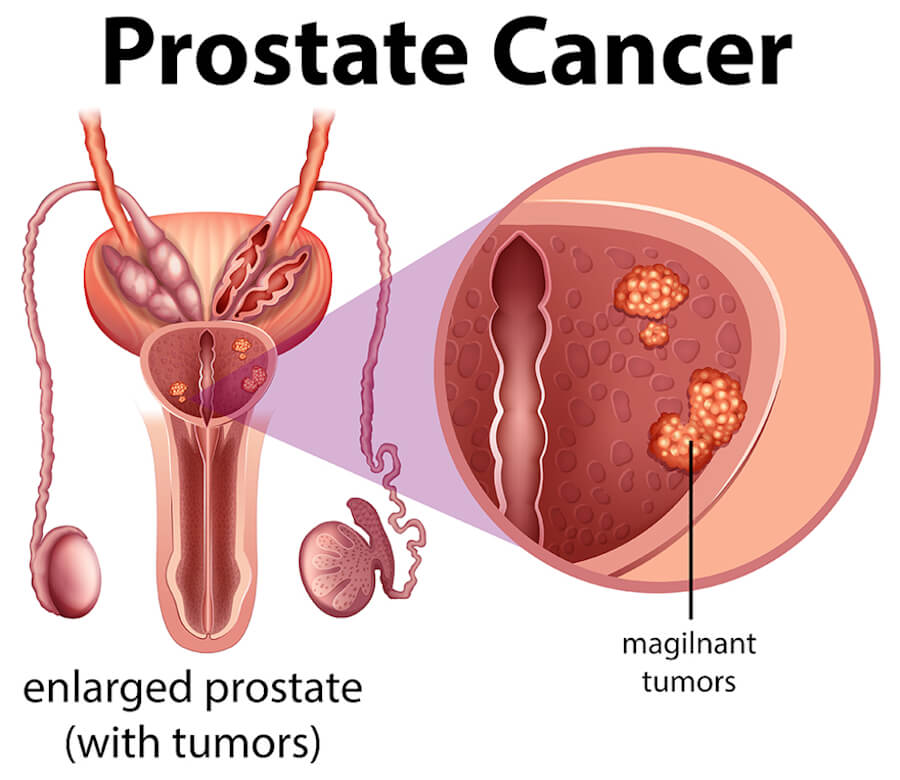
The prostate gland is located below the bladder and encircles the urethra. It forms part of the male reproductive system and contributes to seminal fluid production. Because of its anatomical position, prostate enlargement or tumors can cause urinary symptoms.
🧬 Types of Prostate Cancer
Prostate cancer is classified by the type of cell from which it originates. The overwhelming majority of cases are adenocarcinomas, but rare variants also exist.
🔬 Adenocarcinoma
Adenocarcinoma is by far the most common type of prostate cancer, accounting for approximately 99% of cases. It develops in the gland cells that line the prostate gland and its ducts. There are two main subtypes:
-
Acinar adenocarcinoma: The most common subtype, arising from the gland cells lining the prostate gland. It represents the vast majority of prostate cancer diagnoses.
-
Ductal adenocarcinoma: A less common subtype that starts in the cells lining the ducts of the prostate gland. It tends to grow and spread more quickly than acinar adenocarcinoma and often presents in mixed tumors together with acinar adenocarcinoma.
🧠 Neuroendocrine Cancer
Neuroendocrine prostate cancer develops from neuroendocrine cells in the prostate. The most common type is small cell prostate cancer, which tends to grow faster than other types and is often metastatic at diagnosis. Small cell prostate cancer can occur simultaneously with adenocarcinoma or develop after hormone treatment for adenocarcinoma (treatment-related neuroendocrine prostate carcinoma).
🛡️ Squamous Cell Carcinoma
Squamous cell prostate cancer develops from flat cells that cover the prostate. These cancers tend to grow and spread more quickly than adenocarcinoma and are very rare. A subtype called basal cell prostate cancer (adenoid cystic carcinoma) also exists.
🔄 Transitional Cell Carcinoma
Transitional cell carcinoma of the prostate typically starts in the bladder and spreads into the prostate. Rarely, it can originate in the prostate and spread to the bladder entrance and nearby tissues. This is sometimes called urothelial carcinoma of the prostate.
🦠 Other Rare Types
Other rare cancers that can develop in the prostate include sarcomas and lymphomas. These are treated differently from typical prostate cancers.
⚠️ What Causes Prostate Cancer? Risk Factors and Etiology
The exact cause of prostate cancer is not fully understood, but research has identified several key risk factors. Prostate cancer is a highly heritable disease, with up to 60% of risk attributed to inherited factors.
🧬 Genetic and Hereditary Factors
Family history and genetics play a significant role. Men with a first-degree relative (father, brother) with prostate cancer have approximately twice the risk of developing the disease. Inherited mutations in genes such as BRCA1 and BRCA2 increase prostate cancer risk, as does Lynch syndrome. The inherited risk comprises both common genetic variants (each conferring a slight increase in risk) and rare pathogenic variants in moderate- and high-risk genes.
👴 Age
Age is the strongest risk factor for prostate cancer. Incidence increases significantly after age 50, and the median age at diagnosis is approximately 67–72 years. Autopsy studies show prostate cancer in 15–60% of men aged 60–90 years.
🌍 Ancestry and Ethnicity
Prostate cancer risk varies by ancestry. Black men, particularly those of West African descent, have the highest incidence and mortality rates. The risk is also elevated in men from the Caribbean.
🥗 Lifestyle and Dietary Factors
While the evidence is mixed, some studies suggest that diets high in saturated fat and dairy products may increase risk, while diets rich in fruits and vegetables may be protective. Obesity is associated with a higher risk of aggressive prostate cancer. Smoking has been linked to higher recurrence rates and increased risk of cancer spread.
🧪 Hormonal Factors
Hormonal influences, particularly androgens like testosterone, contribute to the development and progression of adenocarcinoma. However, the effect of testosterone supplements on prostate cancer risk remains controversial, with data suggesting that testosterone supplementation for symptomatic hypogonadism does not increase risk.
🛡️ How to Avoid and Prevent Prostate Cancer
There is no proven strategy to completely prevent prostate cancer, but evidence suggests that certain lifestyle modifications may reduce risk. Healthcare professionals recommend healthy lifestyle choices for prostate cancer prevention.
🥗 Dietary Modifications
Choose low-fat foods: Some studies have linked high-fat diets to increased prostate cancer risk. Limiting fatty foods and choosing leaner cuts of meat, low-fat dairy products, and cooking with less fat may help.
Eat more fruits and vegetables: Fruits and vegetables are rich in vitamins and nutrients thought to reduce prostate cancer risk. Aim to add an extra serving to each meal and choose fruits and vegetables for snacks.
Cut down on dairy: Some studies have associated high dairy consumption with increased prostate cancer risk, though results are mixed. The risk linked to dairy is thought to be small.
🏃 Physical Activity and Weight Management
Maintain a healthy weight: Obesity (BMI ≥30) is associated with a higher risk of prostate cancer. Losing excess weight through calorie reduction and increased exercise is recommended.
Exercise most days of the week: Most studies show that men who exercise may have a lower risk of prostate cancer. Aim for 150–300 minutes of moderate-intensity activity or 75–150 minutes of vigorous-intensity activity per week.
🚭 Avoid Tobacco
While not all studies have found a link between smoking and prostate cancer, men with prostate cancer who smoke have a higher risk of cancer recurrence and spread.
🔍 Screening and Early Detection
Screening for prostate cancer is primarily performed through PSA (prostate-specific antigen) testing and digital rectal examination (DRE) . The benefits of PSA screening remain controversial, and men aged 50–69 should discuss the risks and benefits with their clinicians. PSA screening is generally not recommended for men older than 70 years.
🚨 Symptoms and Early Warning Signs
Most men with early-stage prostate cancer have no symptoms at the time of diagnosis. When symptoms do occur, they are often related to urinary function or, in advanced cases, bone pain.
🚽 Urinary Symptoms
Urinary symptoms are the most common presentation when symptoms occur:
-
Slow or weak urine flow
-
Difficulty starting urination (urinary hesitancy)
-
Frequent need to urinate, especially at night (nocturia)
-
Painful or burning urination (dysuria)
-
Blood in urine (hematuria)
-
Feeling that the bladder doesn’t empty completely
🦴 Advanced Disease Symptoms
When prostate cancer has spread beyond the prostate, symptoms may include:
-
Bone pain, particularly in the back, hips, or pelvis
-
Bone fractures
-
Loss of bladder or bowel control
-
Changes in sexual function, including erectile dysfunction
-
Unexplained weight loss
-
Fatigue
⚠️ When to Seek Medical Attention
Any persistent urinary symptoms or bone pain should prompt medical evaluation. While these symptoms are often caused by benign conditions such as benign prostatic hyperplasia (BPH) or urinary tract infections, only a urologist can determine the cause.
🩺 Diagnosis: PSA, Biopsy, CT, MRI, and Gleason Score
Diagnosing prostate cancer involves a combination of clinical evaluation, laboratory testing, imaging, and tissue analysis.
🩸 Prostate-Specific Antigen (PSA) Testing
PSA is a protein produced by the prostate gland. Elevated PSA levels may indicate prostate cancer, but can also be caused by noncancerous conditions such as enlarged prostate or prostatitis. Men with elevated PSA on two tests performed several months apart should be evaluated by a urologist for prostate biopsy.
🔬 Prostate Biopsy
Biopsy is the definitive method for diagnosing prostate cancer. It is typically performed using a needle guided by transrectal ultrasound (TRUS) . During the procedure, multiple tissue samples are taken from different areas of the prostate.
📊 Gleason Score and Grade Groups
The Gleason score is the most widely used grading system for prostate cancer. It ranges from 2 to 10, with higher scores indicating more aggressive cancer. The score is derived by adding the two most common Gleason patterns (grades 1–5) observed in the biopsy tissue.
The ISUP Grade Group system simplifies Gleason scores into five categories:
-
Grade Group 1: Gleason 6 (3+3) — least aggressive
-
Grade Group 2: Gleason 7 (3+4)
-
Grade Group 3: Gleason 7 (4+3)
-
Grade Group 4: Gleason 8
-
Grade Group 5: Gleason 9 or 10 — most aggressive
🖥️ Imaging Studies
Magnetic Resonance Imaging (MRI): MRI is increasingly used in prostate cancer diagnosis and staging. It provides detailed images of the prostate and surrounding tissues and is particularly valuable for identifying clinically significant cancers and guiding biopsies.
Computed Tomography (CT): CT scans are used to assess lymph node involvement and distant metastases, particularly in higher-risk disease.
Bone Scan: A bone scan may be performed to detect bone metastases in men with high-risk disease or symptoms suggestive of bone involvement.
Positron Emission Tomography (PET): PET scans, particularly with PSMA (prostate-specific membrane antigen) tracers, are increasingly used for staging and detecting recurrence.
💊 Treatment: Active Surveillance, Surgery, Radiation, Hormone Therapy, Chemotherapy, and Immunotherapy
Treatment for prostate cancer depends on the stage, grade, patient age, overall health, and patient preferences. Options range from active surveillance for low-risk disease to multimodal therapy for advanced disease.
👀 Active Surveillance
Active surveillance is a management strategy for low-risk prostate cancer that involves close monitoring with serial PSA tests, digital rectal examinations, prostate biopsies, and/or MRI. Treatment is initiated only if the cancer shows signs of progression. Approximately one-third of men with localized prostate cancer are appropriate candidates for active surveillance. Active surveillance aims to reduce overtreatment and its associated side effects while maintaining oncological safety.
🔪 Surgery (Radical Prostatectomy)
Radical prostatectomy involves surgical removal of the entire prostate gland and, in some cases, surrounding tissues and lymph nodes. It is a curative treatment for localized prostate cancer. Approaches include open surgery, laparoscopic surgery, and robot-assisted laparoscopic surgery. Potential side effects include erectile dysfunction, urinary incontinence, and bladder outlet obstruction.
☢️ Radiation Therapy
Radiation therapy uses high-energy beams to destroy cancer cells. It can be delivered externally (external beam radiation therapy, EBRT) or internally (brachytherapy).
-
External beam radiation therapy (EBRT) : Delivered from a machine outside the body, typically over several weeks.
-
Brachytherapy: Involves placing radioactive seeds or pellets directly into the prostate. Low-dose-rate (LDR) brachytherapy uses permanently implanted seeds, while high-dose-rate (HDR) brachytherapy delivers temporary high-energy radiation. Brachytherapy is typically used for early-stage, low-risk prostate cancer and can be combined with EBRT for higher-risk disease.
💊 Hormone Therapy (Androgen Deprivation Therapy, ADT)
Androgen deprivation therapy (ADT) is a mainstay treatment for advanced and metastatic prostate cancer. It works by reducing testosterone levels through medical castration (e.g., GnRH agonists/antagonists) or surgical castration (orchiectomy). ADT is also used in combination with radiation therapy for intermediate- and high-risk localized disease. Side effects include hot flashes, erectile dysfunction, breast enlargement, increased body fat, decreased bone density, and increased fracture risk.
💉 Chemotherapy
Chemotherapy (e.g., docetaxel, cabazitaxel) is used for metastatic castration-resistant prostate cancer (mCRPC) and can be given in combination with ADT for hormone-sensitive metastatic disease. Common side effects include fatigue, peripheral neuropathy, gastrointestinal toxicities, and febrile neutropenia.
🎯 Targeted Therapy
Androgen receptor pathway inhibitors (e.g., abiraterone, enzalutamide, apalutamide, darolutamide) are targeted therapies that block androgen signaling more effectively than traditional ADT. They are used in combination with ADT for metastatic hormone-sensitive prostate cancer and in castration-resistant disease.
🛡️ Immunotherapy
Sipuleucel-T is an autologous cellular immunotherapy approved for asymptomatic or minimally symptomatic metastatic castration-resistant prostate cancer. Immune checkpoint inhibitors (e.g., pembrolizumab) are being investigated and used in select patients with DNA repair mutations.
🦴 Bone-Targeted Therapy
Radium-223 is an intravenous agent used to treat prostate cancer that has spread to the bone. It delivers radiation directly to bone metastases, reducing pain and improving survival. Bisphosphonates and denosumab are used to prevent skeletal-related events.
📊 Stages of Prostate Cancer: The TNM System
Prostate cancer staging describes the extent of disease using the TNM system (Tumor, Node, Metastasis), developed by the American Joint Committee on Cancer (AJCC) and the Union for International Cancer Control (UICC).
-
T (Tumor) : Describes the size and extent of the primary tumor (T1–T4). T1 tumors are not palpable on digital rectal exam, while T2 tumors are palpable and confined to the prostate. T3 tumors extend beyond the prostate capsule, and T4 tumors invade adjacent structures.
-
N (Nodes) : Indicates whether cancer has spread to regional lymph nodes (N0 or N1).
-
M (Metastasis) : Indicates whether cancer has spread to distant organs (M0 or M1).
Stage Groups:
-
Stage I: cT1–cT2a, N0, M0, PSA <10, Grade Group 1
-
Stage IIA: cT1–cT2a, N0, M0, PSA 10–20, Grade Group 1; or cT2b–cT2c, N0, M0, PSA <20, Grade Group 1
-
Stage IIB: T1–T2, N0, M0, PSA <20, Grade Group 2
-
Stage IIC: T1–T2, N0, M0, PSA <20, Grade Group 3–4
-
Stage IIIA: T1–T2, N0, M0, PSA ≥20, Grade Group 1–4
-
Stage IIIB: T3–T4, N0, M0, any PSA, Grade Group 1–4
-
Stage IIIC: Any T, N0, M0, any PSA, Grade Group 5
-
Stage IVA: Any T, N1, M0, any PSA, any Grade Group
-
Stage IVB: Any T, any N, M1, any PSA, any Grade Group
🌐 Metastasis: The Spread of Prostate Cancer
Metastasis is the spread of cancer cells from the primary tumor to distant organs. Prostate cancer most commonly metastasizes to the bones and lymph nodes, but can also spread to the lungs and liver.
Bone metastases are the most common site of distant spread, occurring in approximately 80–90% of men who develop metastatic disease. Bone metastases can cause pain, fractures, spinal cord compression, and hypercalcemia.
The location of metastasis significantly affects prognosis:
-
Lymph node-only metastases have a better prognosis than bone or visceral metastases.
-
Lung metastases are associated with better survival than liver or brain metastases. Median overall survival for lung metastases is approximately 60 months, compared to 24 months for liver metastases.
📈 Cure Rate and Survival Rate
Prostate cancer survival rates have improved dramatically over recent decades due to earlier detection and more effective treatments.
🎯 5-Year Relative Survival Rates by Stage
-
Localized disease (Stages I–III) : The 5-year relative survival rate is nearly 100%. Approximately 80–85% of prostate cancers are diagnosed at local or regional stages, contributing to an overall 5-year survival rate of 97%.
-
Regional disease (spread to nearby lymph nodes) : 5-year survival remains high, generally >99% for many cases.
-
Distant metastatic disease (Stage IV) : The 5-year survival rate drops to approximately 28–38%. For every 100 men with metastatic prostate cancer, about 38 can expect to be living five years after diagnosis.
📊 Long-Term Survival
For men diagnosed with low-risk prostate cancer, 10-year relative survival exceeds 100% (meaning men are more likely to die from other causes than prostate cancer). For advanced or metastatic disease, 10-year survival drops to approximately 40–50%.
⏳ Life Expectancy With and Without Treatment
The natural history of untreated prostate cancer varies widely depending on tumor grade and patient age.
⏳ Without Treatment
Studies of untreated prostate cancer show:
-
For Grade Group 1 (Gleason 6) disease, metastatic progression rates are below 5% over 15–20 years, and prostate cancer-specific mortality is under 5% at two decades.
-
For high-grade (Gleason 8–10) disease, 10-year prostate cancer-specific survival ranges from <60%, with median overall survival of approximately 3 years for untreated high-grade disease.
-
A study of patients with localized prostate cancer found that without cancer treatment, 15.2% expected to live <5 years, 48.8% expected 5–10 years, 33.5% expected 11–19 years, and 2.4% expected ≥20 years.
💊 With Treatment
With modern treatment, outcomes are dramatically better. For metastatic (Stage IV) prostate cancer, the average life expectancy with treatment is approximately 5 to 6 years, though this can be significantly shorter if left untreated. Advances in combination therapies (ADT + androgen receptor pathway inhibitors ± chemotherapy) have extended survival for men with metastatic hormone-sensitive prostate cancer.
📌 Facts and Statistics
-
Prostate cancer is the most common cancer diagnosis among men in the United States, accounting for 30% of male cancers in 2025.
-
An estimated 313,780 new cases and 35,770 deaths from prostate cancer are projected in the U.S. in 2025.
-
Worldwide, prostate cancer is the second most commonly diagnosed cancer and the fifth leading cause of cancer death among men, with over 1.46 million estimated cases and 396,000 deaths in 2022.
-
An individual with a prostate has a 1 in 8 chance of being diagnosed with prostate cancer in their lifetime.
-
The median age at diagnosis is 67–72 years, with more than 60% of cases diagnosed in men over 65.
-
Prostate cancer incidence rates have reversed from a decline of 6.4% per year (2007–2014) to an increase of 3.0% annually (2014–2021). Distant-stage disease has increased by 2.6% annually in men younger than 55 years.
-
Black men have the highest incidence and mortality rates from prostate cancer, with mortality rates nearly double those of any other racial or ethnic group.
-
More than 3.4 million men in the U.S. were living with prostate cancer in 2021.
-
92% of prostate cancer cases are diagnosed in the first three stages, contributing to an overall survival rate of 97%.
❓ Questions and Answers
What is prostate cancer?
Prostate cancer is a malignant tumor that develops in the prostate gland, a small organ below the bladder that produces seminal fluid. It is the most common non-skin cancer in men.
What is the ICD-10 code for prostate cancer?
The ICD-10 code for malignant neoplasm of the prostate is C61.
What are the most common types of prostate cancer?
Adenocarcinoma is the most common type, accounting for approximately 99% of cases. Acinar adenocarcinoma is the most common subtype, followed by ductal adenocarcinoma. Rare types include neuroendocrine, squamous cell, and transitional cell carcinomas.
Can prostate cancer be prevented?
There is no proven way to completely prevent prostate cancer, but maintaining a healthy weight, exercising regularly, eating a diet rich in fruits and vegetables, limiting dairy and saturated fat, and avoiding smoking may reduce risk.
What are the early warning signs of prostate cancer?
Most men with early-stage prostate cancer have no symptoms. When symptoms occur, they may include slow or weak urine flow, frequent urination (especially at night), difficulty starting urination, painful urination, and blood in urine or semen.
How is prostate cancer diagnosed?
Diagnosis involves PSA testing, digital rectal examination, and prostate biopsy. The Gleason score (ranging from 2 to 10) determines the aggressiveness of the cancer. MRI is increasingly used for diagnosis and staging.
What is the Gleason score?
The Gleason score is a grading system that evaluates how closely prostate cancer cells resemble normal prostate cells. Scores range from 2 to 10, with higher scores indicating more aggressive cancer. The ISUP Grade Group system simplifies this into five categories.
What are the treatment options for prostate cancer?
Treatment options include active surveillance (for low-risk disease), surgery (radical prostatectomy), radiation therapy (EBRT and brachytherapy), hormone therapy (ADT), chemotherapy, targeted therapy, and immunotherapy. The choice depends on stage, grade, and patient factors.
What is active surveillance?
Active surveillance is a management strategy for low-risk prostate cancer that involves close monitoring with PSA tests, biopsies, and MRI, with treatment initiated only if the cancer progresses. It aims to avoid overtreatment and its side effects.
What is the survival rate for prostate cancer?
The 5-year relative survival rate for localized prostate cancer is nearly 100%. For regional disease, it remains high. For metastatic disease, the 5-year survival rate is approximately 28–38%.
Where does prostate cancer spread?
Prostate cancer most commonly metastasizes to the bones and lymph nodes, but can also spread to the lungs and liver.
What is the life expectancy with metastatic prostate cancer?
With treatment, the average life expectancy for metastatic prostate cancer is approximately 5 to 6 years, though this varies widely based on treatment response and overall health.
What is the life expectancy without treatment?
Without treatment, life expectancy varies by tumor grade. Low-grade (Gleason 6) cancers may not affect life expectancy for 15–20 years, while high-grade cancers can progress rapidly. For untreated high-grade disease, median overall survival is approximately 3 years.
What is androgen deprivation therapy (ADT)?
ADT is a hormone therapy that reduces testosterone levels to slow prostate cancer growth. It is used for advanced and metastatic disease and in combination with radiation for high-risk localized disease.
Does smoking increase prostate cancer risk?
Smoking has been linked to higher recurrence rates and increased risk of cancer spread in men with prostate cancer, though the evidence for an increased risk of developing prostate cancer is mixed.
🎯 Key Takeaways and Conclusions
-
Prostate cancer is the most common cancer in men and a leading cause of cancer death worldwide, classified under ICD-10 code C61.
-
Adenocarcinoma accounts for the vast majority of cases, with acinar adenocarcinoma being the most common subtype.
-
Genetic factors contribute up to 60% of prostate cancer risk, with age, ancestry, and family history being the strongest risk factors.
-
Prevention strategies include maintaining a healthy weight, regular exercise, a plant-rich diet, limiting dairy and saturated fat, and avoiding smoking.
-
Early detection through PSA testing and DRE can identify prostate cancer before symptoms develop, though the benefits of screening remain controversial.
-
Diagnosis is confirmed by prostate biopsy, with the Gleason score determining cancer aggressiveness.
-
Treatment options range from active surveillance for low-risk disease to surgery, radiation, hormone therapy, chemotherapy, and immunotherapy for advanced disease.
-
Staging using the TNM system guides prognosis and treatment decisions, with Stage IV indicating metastatic disease.
-
Metastasis most commonly affects the bones and lymph nodes, significantly impacting prognosis.
-
Survival rates are excellent for localized disease (nearly 100% at 5 years) but drop to approximately 28–38% for metastatic disease.
-
Life expectancy without treatment varies widely by tumor grade, from decades for low-grade disease to a few years for high-grade disease.
-
Facts and statistics reveal a growing global burden, with an estimated 1.46 million new cases and 396,000 deaths worldwide in 2022. The incidence of distant-stage disease is rising, particularly in younger men.
-
Research advances in imaging, genomics, and targeted therapies continue to improve outcomes and quality of life for men with prostate cancer.
Prostate cancer remains a significant health challenge, but with continued research, improved screening strategies, and personalized treatment approaches, the outlook for men diagnosed with this disease continues to improve.
📚 References
-
World Health Organization. Cancer Fact Sheet. https://www.who.int/news-room/fact-sheets/detail/cancer
-
National Cancer Institute. Prostate Cancer Treatment. https://www.cancer.gov/types/prostate/patient/prostate-treatment-pdq
-
Centers for Disease Control and Prevention. Prostate Cancer Statistics. https://www.cdc.gov/cancer/prostate/statistics/index.htm
-
American Cancer Society. Prostate Cancer. https://www.cancer.org/cancer/prostate-cancer.html
-
MSD Manual Professional Version. Prostate Cancer. https://www.msdmanuals.com/professional/oncology/genitourinary-cancers/prostate-cancer
-
Cancer Research UK. Types of Prostate Cancer. https://www.cancerresearchuk.org/about-cancer/prostate-cancer/stages/types
-
National Cancer Institute. Genetics of Prostate Cancer (PDQ®). https://www.cancer.gov/node/5499/syndication
-
Mayo Clinic. Prostate Cancer Prevention: Ways to Reduce Your Risk. https://www.mayoclinic.org/diseases-conditions/prostate-cancer/in-depth/prostate-cancer-prevention/art-20045641
-
Cleveland Clinic. Warning Signs of Prostate Cancer. https://health.clevelandclinic.org/warning-signs-of-prostate-cancer
-
JAMA. Patient Information: Prostate Cancer. https://jamanetwork.com/journals/jama/fullarticle/2836828
-
Merck Manuals. AJCC/TNM Staging of Prostate Cancer. https://www.merckmanuals.com/professional/multimedia/table/ajcctnm-staging-of-prostate-cancer
-
Johns Hopkins Medicine. Prostate Cancer Prognosis. https://www.hopkinsmedicine.org/health/conditions-and-diseases/prostate-cancer/prostate-cancer-prognosis
-
Mayo Clinic. Prostate Cancer Survival Rates. https://www.mayoclinic.org/diseases-conditions/prostate-cancer/in-depth/prostate-cancer-survival-rates/art-20046835
-
Mayo Clinic. Where Does Prostate Cancer Spread? https://www.mayoclinic.org/diseases-conditions/prostate-cancer/expert-answers/prostate-cancer-metastasis/faq-20057784
-
PubMed. Global Prostate Cancer Burden. https://pubmed.ncbi.nlm.nih.gov/
-
ScienceDirect. Recent Patterns and Trends in Global Prostate Cancer Incidence and Mortality. https://www.sciencedirect.com/
-
American Cancer Society. Prostate Cancer Statistics, 2025. https://acsjournals.onlinelibrary.wiley.com/
-
Cedars-Sinai. Prostate Cancer: Grade and Stage. https://www.cedars-sinai.org/health-library/diseases-and-conditions/p/prostate-cancer-grade-and-stage.html
-
Cancer Research UK. Grade Groups for Prostate Cancer. https://www.cancerresearchuk.org/about-cancer/prostate-cancer/grading
-
PubMed. Outcomes of Active Surveillance in Low-Risk Prostate Cancer. https://pubmed.ncbi.nlm.nih.gov/
-
UCSF Urology. Hormone Therapy for Prostate Cancer. https://urology.ucsf.edu/
-
ScienceDirect. Brachytherapy for Prostate Cancer. https://www.sciencedirect.com/
-
Urotoday. Natural History of Untreated Prostate Cancer. https://www.urotoday.com/
-
American Cancer Society. New ACS Prostate Cancer Statistics Report. https://pressroom.cancer.org/
-
Urology Group. Prostate Cancer Prognosis in Ohio. https://www.urologygroup.com/
-
Mayo Clinic. Prostate Cancer Survival Rates by Stage. https://www.mayoclinic.org/
-
Keck Medicine. Survival Rates for Prostate and Testicular Cancers. https://www.keckmedicine.org/
-
ScienceDirect. Metastatic Prostate Cancer Survival. https://www.sciencedirect.com/
-
Merck Manuals. Prostate Cancer Side Effects. https://www.merckmanuals.com/
-
JAMA Network. Long-Term Adverse Effects After Prostate Cancer Treatment. https://jamanetwork.com/
-
National Cancer Institute. SEER Cancer Statistics. https://seer.cancer.gov/
-
European Society for Medical Oncology. Prostate Cancer Guidelines. https://www.esmo.org/
-
National Comprehensive Cancer Network. Prostate Cancer Guidelines. https://www.nccn.org/
-
U.S. Preventive Services Task Force. Prostate Cancer Screening. https://www.uspreventiveservicestaskforce.org/
-
American Urological Association. Prostate Cancer Guidelines. https://www.auanet.org/
-
Prostate Cancer UK. Prostate Cancer Information. https://prostatecanceruk.org/
-
Zero Prostate Cancer. Prostate Cancer Facts. https://zerocancer.org/
-
National Cancer Institute. Prostate Cancer Prevention. https://www.cancer.gov/types/prostate/patient/prostate-prevention-pdq
-
World Cancer Research Fund. Diet, Nutrition, Physical Activity and Prostate Cancer. https://www.wcrf.org/
-
American Institute for Cancer Research. Prostate Cancer Risk Factors. https://www.aicr.org/
-
Centers for Disease Control and Prevention. Prostate Cancer Screening. https://www.cdc.gov/cancer/prostate/screening/index.htm
-
National Cancer Institute. Prostate Cancer Diagnosis. https://www.cancer.gov/types/prostate/patient/prostate-diagnosis-pdq
-
National Cancer Institute. Prostate Cancer Staging. https://www.cancer.gov/types/prostate/patient/prostate-staging-pdq
-
National Cancer Institute. Prostate Cancer Treatment. https://www.cancer.gov/types/prostate/patient/prostate-treatment-pdq
-
Urology Care Foundation. Prostate Cancer. https://www.urologyhealth.org/
-
Prostate Cancer Foundation. Prostate Cancer Facts. https://www.pcf.org/
-
International Agency for Research on Cancer. GLOBOCAN 2022. https://gco.iarc.fr/
-
American Cancer Society. Cancer Facts & Figures 2025. https://www.cancer.org/research/cancer-facts-statistics.html
-
National Cancer Institute. Prostate Cancer Genetics. https://www.cancer.gov/types/prostate/patient/prostate-genetics-pdq
-
World Health Organization. International Classification of Diseases (ICD-10). https://icd.who.int/

 (12 votes, average: 4.67 out of 5)
 Loading...